


Listen to the article
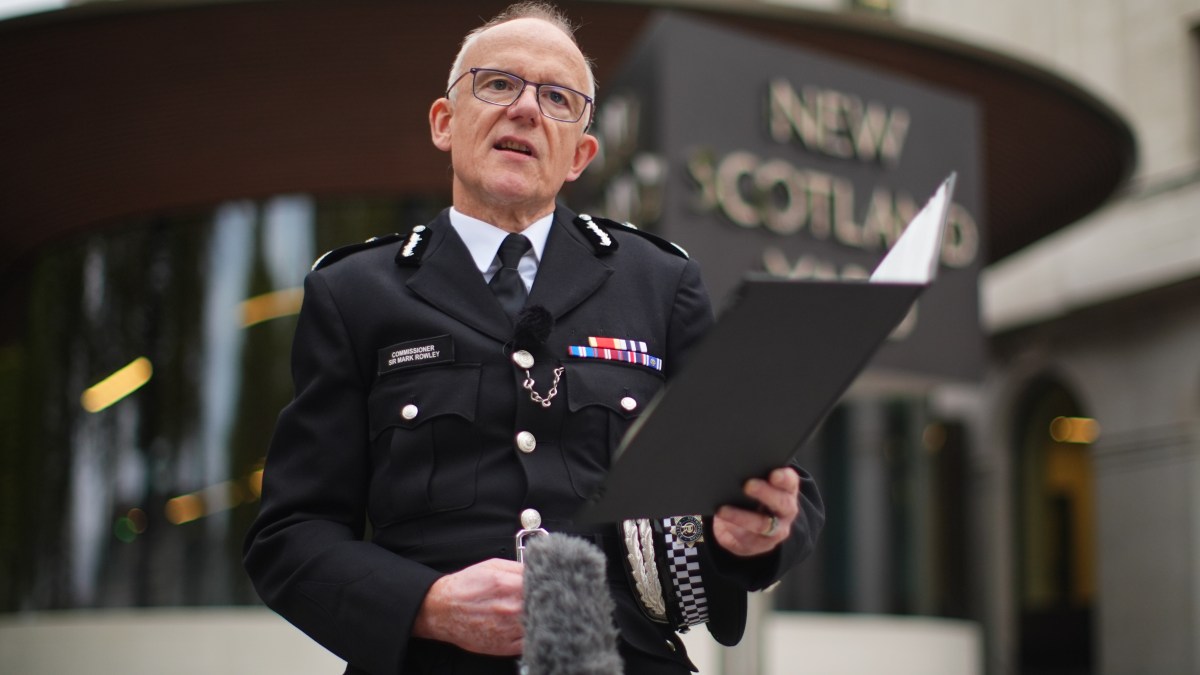
In a forceful response to what he describes as “false claims” about crime in the capital, London’s Metropolitan Police Commissioner has defended his force’s record as new statistics show a notable decline in homicide rates across the city.
Sir Mark Rowley, who took the helm at Scotland Yard in September 2022, pointed to the latest crime figures during a press conference yesterday, highlighting that London has seen a 20 percent reduction in homicides over the past year. This decrease comes despite increased public concern about violent crime following several high-profile incidents in recent months.
“The narrative that London is becoming more dangerous simply isn’t supported by the evidence,” Sir Mark stated. “While every homicide is a tragedy and we have more work to do, the trend is moving in the right direction through targeted enforcement and prevention strategies.”
The commissioner specifically addressed what he called “misleading comparisons” circulating on social media and in some media outlets, which have attempted to position London as one of Europe’s most dangerous capitals. Analysis of the data reveals that London’s homicide rate of 1.4 per 100,000 residents remains substantially lower than many comparable global cities.
The Met’s statistics show that knife crime, which has been a particular focus of public concern, has decreased by 17 percent year-on-year, with officials attributing this to enhanced stop-and-search operations in crime hotspots and community-based prevention programs targeting young people at risk of involvement in gang activity.
Criminologists have supported the commissioner’s assessment. Professor Elena Richardson from University College London’s Department of Security and Crime Science told reporters: “The data clearly shows improvement, though it’s important to acknowledge that statistical decreases provide little comfort to communities that have experienced these tragedies. The overall trend, however, is encouraging and suggests current strategies are having an impact.”
The reduction comes following the Met’s implementation of its Violent Crime Taskforce, which has recovered over 1,200 weapons through targeted operations in the past year. Additionally, the force has expanded its use of violence reduction units that employ a public health approach to address the root causes of violent crime.
Home Office Minister James Carroll welcomed the figures but cautioned against complacency. “While these statistics demonstrate progress, we recognize that more needs to be done to ensure all Londoners feel safe. The government remains committed to supporting police with the resources and powers they need to continue this positive trend.”
Community leaders have offered mixed responses to the commissioner’s statements. Diane Abbott, MP for Hackney North and Stoke Newington, acknowledged the statistical improvements but emphasized the continued disproportionate impact of violent crime on minority communities and economically disadvantaged areas.
“The overall reduction is welcome news, but we cannot ignore that certain communities continue to bear the brunt of these incidents,” Abbott said. “More focused attention is needed in these neighborhoods to address systemic issues driving crime.”
Youth worker Marcus Bennett, who runs intervention programs in South London, noted that perception often lags behind reality when it comes to crime statistics. “The fear of crime remains high even when actual incidents decrease. Building trust between communities and police takes time, especially in areas with historically tense relationships with law enforcement.”
The commissioner also outlined future plans to further reduce violent crime, including enhanced technological surveillance in high-risk areas, continued investment in neighborhood policing, and greater collaboration with mental health services to address underlying factors contributing to violent behavior.
London Mayor Sadiq Khan, who has faced criticism over crime rates during his tenure, said the figures vindicate his administration’s approach to public safety. “These results demonstrate that our strategy of combining tough enforcement with prevention and early intervention is working. However, every life lost is one too many, and we will continue working tirelessly to make London safer for everyone.”
The reduction in London’s homicide rate comes against a backdrop of fluctuating crime patterns nationwide, with some regions reporting increases in violent crime while others have seen similar reductions to the capital.
Fact Checker
Verify the accuracy of this article using The Disinformation Commission analysis and real-time sources.

13 Comments
As a Londoner, I’ve noticed a more visible police presence in recent months. While any homicide is a tragedy, the 20% drop in the homicide rate is a positive sign. Misleading comparisons don’t help the public debate on this complex issue.
You make a fair point. Sensationalism and false narratives can distort the real progress being made. Fact-based analysis is needed to have a constructive dialogue about public safety.
Interesting to see the Met Commissioner address the false claims about rising crime rates in London. The data shows a 20% decline in homicides over the past year – that’s an encouraging trend, though there’s still work to be done to improve public safety.
Agreed, the statistics indicate the situation is improving, even if the public perception may lag behind. It’s important the force continues its targeted enforcement and prevention strategies.
It’s good to see the Met taking a strong stance against the misleading narratives around crime in London. While there’s more work to be done, the 20% drop in homicides is an encouraging sign. Fact-based reporting is important for an informed public debate.
Absolutely. Sensationalism and cherry-picked data don’t help anyone. Constructive dialogue based on accurate information is crucial for developing effective public safety policies.
The Met Commissioner’s response is a welcome pushback against the false claims circulating about London’s crime rates. While every homicide is a tragedy, the data shows a 20% decline, which is a step in the right direction. Fact-based analysis is essential for meaningful public discourse on this issue.
The Met Commissioner’s comments highlight the importance of using reliable data and factual analysis when discussing complex issues like crime rates. While no level of homicide is acceptable, the 20% decline is a positive step that deserves recognition.
As someone who follows news on crime and public safety, I appreciate the Met Commissioner’s efforts to challenge the false narratives around London’s homicide rates. The 20% decline is an encouraging statistic, and I hope the force can build on this progress through targeted strategies.
Absolutely. Sensationalism and misleading comparisons only serve to undermine the public’s understanding of the real situation. Fact-based reporting and analysis are crucial for informed policy decisions.
As a Londoner, I’m glad to see the Met taking a proactive approach to address the false claims about rising crime rates. The 20% drop in homicides is an encouraging statistic, and I hope the force can build on this progress through targeted enforcement and prevention strategies.
Agreed. Fact-based dialogue is crucial for developing effective policies to improve public safety. Sensationalism and misleading narratives only serve to distort the real issues and hinder progress.
The Met Commissioner is right to challenge the false claims about London’s crime rates. The data shows a decline in homicides, even if the public perception hasn’t caught up yet. Targeted enforcement and prevention are key to building safer communities.