


Listen to the article
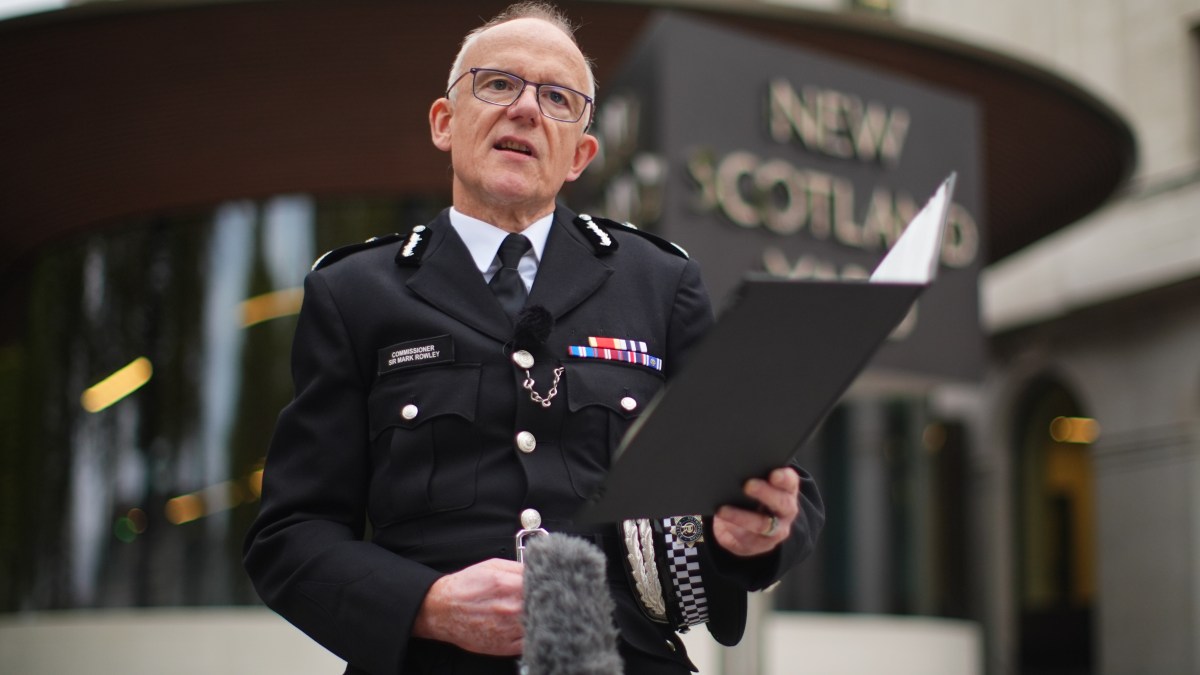
London’s murder rate has fallen to its lowest level in more than 50 years despite repeated claims to the contrary, according to the Metropolitan Police Commissioner Sir Mark Rowley.
In a forceful defense of his force’s performance, Sir Mark criticized politicians and commentators who have painted a picture of spiraling violent crime in the capital, describing such portrayals as “false narratives” that damage public confidence.
“London has never been safer from homicide in modern times,” Sir Mark told reporters at a briefing on crime statistics. “We’re now at the lowest homicide rate in over half a century, yet you wouldn’t know it from some of the discourse.”
According to official Met figures, London recorded 97 homicides in the year to March 2024, representing a significant drop from previous years and marking the lowest per-capita murder rate since the early 1970s. When adjusted for population growth, the current rate stands at approximately 1.1 killings per 100,000 residents, compared to nearly double that figure a decade ago.
The commissioner acknowledged that knife crime remains a serious concern but emphasized that it too has seen substantial reductions. “Knife-related homicides have fallen by 21 percent in the past two years,” he said. “These are real lives being saved, real families spared devastation.”
Sir Mark, who took over as Britain’s most senior police officer in September 2022, has been implementing a major reform program aimed at restoring public trust in the Met following a series of scandals including the murder of Sarah Everard by serving officer Wayne Couzens.
“We’re making progress, but that progress is sometimes obscured by misleading claims about crime trends,” Sir Mark said. “When people repeatedly hear that London is becoming more dangerous when the opposite is true, it erodes trust in policing and makes communities feel less safe than they actually are.”
The commissioner’s comments come amid ongoing political debates about crime and policing, with some opposition politicians and media commentators frequently highlighting violent incidents in the capital. During recent mayoral elections, crime rates became a central campaign issue, with some candidates claiming London faced an epidemic of violence.
Criminal justice experts have largely supported Sir Mark’s assessment. Dr. Rachel Forrester, a criminologist at University College London, said the data clearly shows positive trends.
“London’s homicide reduction is particularly impressive when we consider that many comparable global cities have seen increases in violent crime during the same period,” Dr. Forrester said. “New York, for instance, recorded 385 homicides last year, a rate more than twice London’s when adjusted for population.”
The Met’s success in reducing homicides has been attributed to several factors, including targeted operations against gang violence, better intelligence sharing, and improved emergency medical response that has saved more lives of seriously injured victims.
Despite these achievements, Sir Mark acknowledged significant ongoing challenges. Street robbery has increased in some areas, and public concerns about women’s safety remain high. The force is also working to rebuild community relations, particularly in areas where stop-and-search tactics have caused tension.
“We’re not claiming victory or suggesting London doesn’t face serious crime issues,” the commissioner said. “But addressing these challenges requires honest discussions based on facts rather than perception.”
Mayor of London Sadiq Khan welcomed the reduction in homicides but emphasized the need for continued vigilance. “Every life lost to violence is a tragedy, and we remain absolutely committed to driving these numbers down further,” Khan said in a statement. “The progress shows our strategies are working, but there is much more to do.”
Home Office officials noted that the capital’s success comes against a backdrop of complex policing challenges, including the increasing burden of responding to mental health incidents and monitoring unprecedented numbers of protests.
Sir Mark concluded by calling for a more nuanced public conversation about crime. “Londoners deserve to know that their city is getting safer in many important ways,” he said. “That doesn’t mean ignoring problems where they exist, but it does mean acknowledging progress where it’s being made.”
Fact Checker
Verify the accuracy of this article using The Disinformation Commission analysis and real-time sources.

11 Comments
While the lower homicide rate is positive news, it’s important not to overlook the ongoing challenges around knife crime and other violent offenses. A nuanced, holistic response is required.
The Met Commissioner’s comments highlight the need for responsible, fact-based reporting on crime trends. Sensationalism and political agendas can distort public perception and undermine efforts to improve public safety.
This seems like a nuanced issue – while the overall homicide rate has declined, there are still serious concerns around knife crime that need to be addressed. Balanced, evidence-based reporting is crucial.
Absolutely. Reducing violent crime requires a multi-faceted approach, not just focusing on a single data point. Transparency and collaboration are key.
It’s good to see the Met Commissioner pushing back against false narratives and providing context around the crime statistics. Maintaining public trust is vital for effective policing.
You make a fair point. Accurate, unbiased information is essential for citizens to understand the real state of their communities.
The decline in London’s homicide rate is certainly encouraging, though the persistent issue of knife crime remains concerning. A balanced, data-driven approach is needed to address these complex challenges.
I agree. Simplistic narratives around crime trends can be counterproductive. Policymakers should focus on evidence-based solutions rather than political posturing.
Interesting to see the Met Commissioner addressing false claims about rising crime in London. Lower homicide rates are certainly good news, though more work is needed to address persistent issues like knife crime.
Agreed, statistics can often be misleading or taken out of context. It’s important to look at the full picture and avoid sensationalism.
It’s encouraging to see the Met taking a data-driven approach and pushing back against false narratives. Addressing complex social issues like violent crime requires an evidence-based strategy, not knee-jerk reactions.