


Listen to the article
London’s top police officer has sharply rebuked claims about rising homicide rates in the capital, pointing to new data that shows murder rates have actually decreased in recent months.
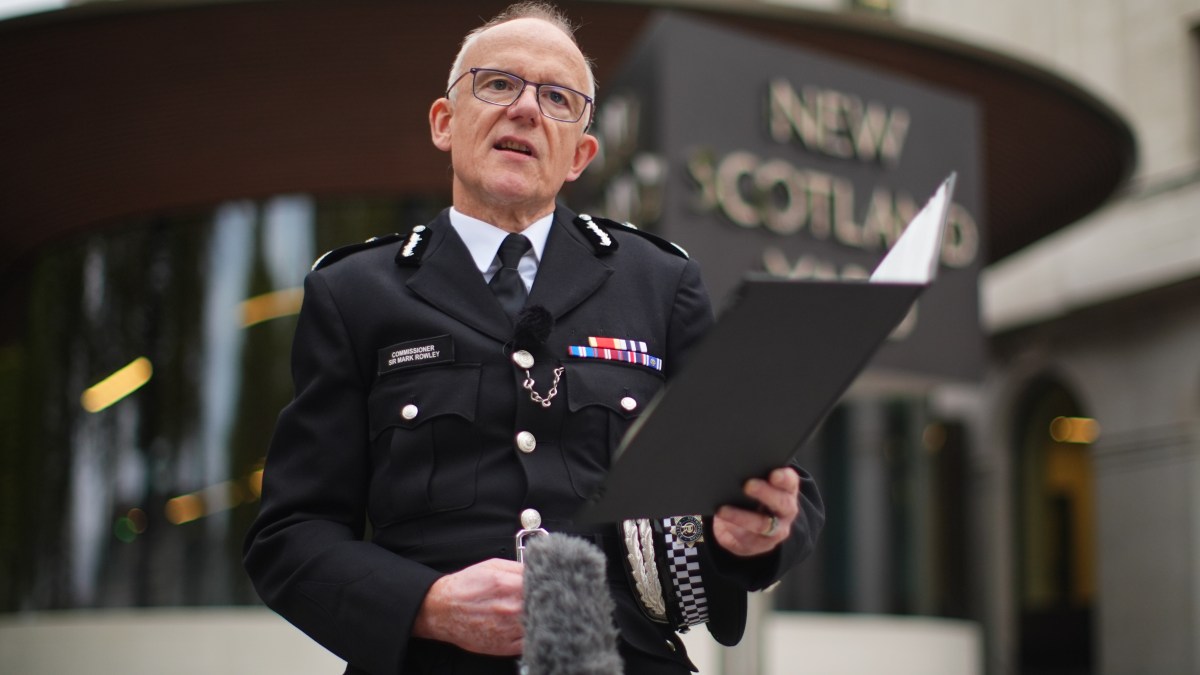
Metropolitan Police Commissioner Sir Mark Rowley addressed the misleading narrative during a press briefing yesterday, where he presented statistics showing a 20 percent reduction in homicides across London during the first quarter of 2024 compared to the same period last year.
“There has been persistent misinformation circulating about London becoming more dangerous, which simply isn’t supported by the evidence,” Sir Mark said. “While we take every violent crime seriously, it’s important that public discourse is based on accurate information rather than sensationalism.”
The commissioner’s comments come amid a series of social media posts and political statements suggesting that London has become increasingly dangerous under the current mayor’s administration. These claims have been particularly prevalent during the lead-up to the mayoral election scheduled for next month.
According to the Metropolitan Police data, London recorded 42 homicides between January and March 2024, down from 53 during the same period in 2023. The figures represent the lowest first-quarter homicide count in the capital since 2018.
Criminal justice experts note that while the reduction is encouraging, homicide statistics can fluctuate significantly from quarter to quarter, making longer-term trends more meaningful for policy considerations.
Dr. Eleanor Simmons, criminologist at University College London, explained: “What we’re seeing is positive, but the focus should be on sustained reductions over multiple years. Single-quarter comparisons can be influenced by various factors including seasonal variations in crime patterns.”
The Met’s analysis shows that knife crime, often a major concern for Londoners, has seen a modest 8 percent decrease over the same period. However, robbery offenses increased by 3 percent, suggesting a more complex picture of overall crime trends in the capital.
Sir Mark also highlighted the force’s ongoing operational challenges, including budget constraints and officer recruitment targets. “We’ve made significant progress in rebuilding public confidence in the Met, but there’s still considerable work to do,” he acknowledged.
The Metropolitan Police has implemented several initiatives aimed at reducing violent crime in recent months, including targeted operations in high-risk areas and enhanced community engagement programs. The Violent Crime Task Force has been expanded to focus on knife crime hotspots, with additional resources deployed to areas with historically higher incident rates.
London Mayor Sadiq Khan welcomed the homicide reduction figures but emphasized that “every life lost to violence is one too many.” In a statement, his office noted that the mayor’s Violence Reduction Unit has received additional funding to continue prevention work with at-risk youth across the city.
Opposition candidates in the mayoral race have argued that the quarterly figures don’t reflect Londoners’ everyday experiences with crime and safety. Conservative mayoral candidate Susan Hall suggested that “many crimes go unreported” and called for more visible policing in residential neighborhoods.
The debate over London’s crime rates reflects broader national discussions about public safety and policing priorities. Recent Home Office figures show varied crime patterns across the UK, with some regions experiencing increases in violent crime while others report reductions similar to London’s.
Community safety advocates have called for a more nuanced public conversation about crime statistics. Community activist Michael Thompson, who works with youth in East London, said: “These numbers matter, but what matters more is how safe people feel in their neighborhoods. That’s about more than just homicide rates—it’s about visible policing, community resources, and addressing the root causes of crime.”
The Metropolitan Police has committed to publishing more detailed crime data on a quarterly basis to improve transparency and combat misinformation. Sir Mark concluded his briefing by urging politicians and media outlets to “report responsibly on crime statistics to avoid unnecessarily increasing public fear.”
Fact Checker
Verify the accuracy of this article using The Disinformation Commission analysis and real-time sources.

21 Comments
Glad to see the Met Chief taking a firm stance against the spread of false information about London’s crime rates. Reliable data and honest dialogue are critical for maintaining public trust.
Transparent and evidence-based communication from authorities is essential for maintaining public trust, especially on sensitive issues like crime rates. The Met Chief’s response is a step in the right direction.
Absolutely. Fact-checking and debunking misinformation should be a priority for public officials, particularly leading up to elections.
The decline in London homicides is a positive development, though the work to address violence is far from over. Fact-based policymaking and open communication are key to making further progress.
Well said. Sensationalism and misinformation can undermine efforts to tackle complex societal issues like crime and public safety.
While any reduction in homicides is welcome news, there’s clearly more work to be done to address violence in London. Relying on official data and factual information is crucial for developing effective policies.
The decline in London homicides is an encouraging sign, though the city still faces significant challenges when it comes to public safety. Fact-based policymaking and open communication from authorities are essential for making further progress.
It’s disheartening to see political rhetoric trumping empirical evidence when it comes to public safety. Kudos to the Met Chief for standing up for data-driven decision-making and fact-based reporting.
Absolutely. Maintaining public trust requires transparency and a commitment to providing accurate information, especially on sensitive issues like crime rates.
It’s encouraging to see the Met Chief pushing back against the spread of misleading narratives about London’s crime rates. Fact-based reporting and transparent communication from public officials are essential for maintaining public trust.
Well said. Sensationalism and misinformation can undermine efforts to tackle complex problems, so this proactive response from the police is commendable.
Interesting to see the Met Chief pushing back on misleading narratives about London’s crime rates. It’s important to rely on official data rather than unsubstantiated claims, especially around sensitive issues like public safety.
Absolutely, factual information and transparency from authorities is crucial for an informed public discourse.
The decline in London homicides is encouraging, though even one violent crime is too many. Maintaining public trust requires police to consistently communicate accurate, evidence-based information.
Well said. Sensationalism and misinformation can erode faith in institutions, so this proactive response from the Met Chief is commendable.
It’s concerning to see political rhetoric trumping facts when it comes to public safety. Kudos to the Met for pushing back and providing the data to counter misleading claims.
Absolutely. Fact-based reporting and transparent communication from authorities are essential, especially leading up to an election.
It’s good to see the Met Chief taking a strong stance against the spread of false claims about London’s crime rates. Maintaining public trust requires transparency and a commitment to evidence-based reporting.
Agreed. Sensationalism and misinformation can undermine efforts to address complex social issues, so this proactive response from the police is commendable.
Reliable data and honest dialogue from authorities are crucial for developing effective policies to address complex societal issues like crime and violence. The Met Chief’s response is a step in the right direction.
It’s concerning to see political narratives take precedence over empirical evidence when it comes to public safety. Kudos to the Met Chief for standing up for data-driven decision-making.