


Listen to the article
The Metropolitan Police Commissioner has strongly rejected accusations that London’s murder rates are spiraling out of control, pointing to new statistics showing a significant decline in homicides across the capital.
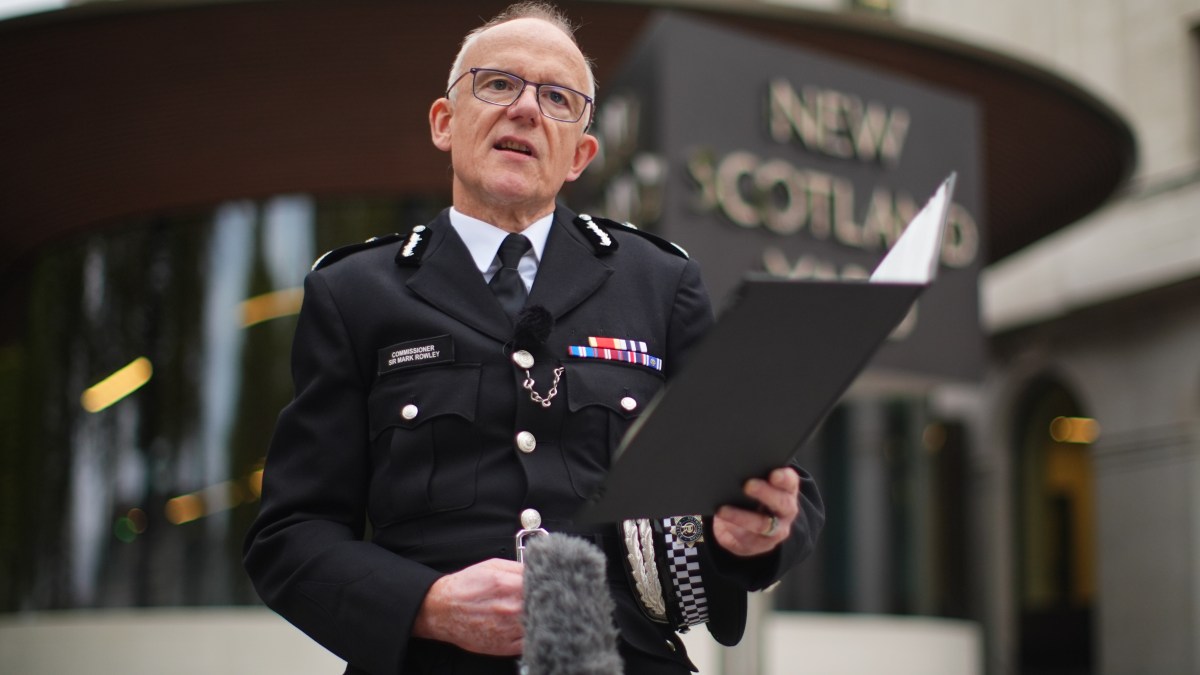
Sir Mark Rowley, speaking at a press conference yesterday, presented data revealing that homicide rates in London have fallen by 15 percent over the past year, marking the lowest level in five years. The figures show 105 homicides recorded in the 12 months to March 2023, down from 124 in the previous year.
“There’s been a concerning narrative developing that London has become increasingly dangerous, with homicide rates supposedly skyrocketing. The facts simply don’t support these claims,” said Sir Mark. “This reduction represents dozens of families who have been spared the devastation of losing a loved one to violence.”
The Commissioner acknowledged that while any murder is a tragedy, the downward trend demonstrates the effectiveness of targeted policing strategies implemented since he took office in September 2022. These include increased stop and search in high-risk areas, a specialized violent crime taskforce, and enhanced community engagement programs.
London Mayor Sadiq Khan welcomed the figures, calling them “encouraging evidence” that the city’s public safety strategy is working. “Every life lost to violence is one too many, but these statistics show we’re moving in the right direction,” Khan said. “We’re investing record amounts in policing and crime prevention, and the results are beginning to show.”
The Metropolitan Police, Britain’s largest police force with over 33,000 officers, has faced significant criticism in recent years over its handling of violent crime. Opposition politicians and some media outlets have frequently characterized London as experiencing a “crime epidemic,” particularly regarding knife crime and youth violence.
However, the new data indicates that knife crime specifically has decreased by 21 percent year-on-year, with 11,500 recorded offenses compared to 14,600 in the previous period. Gun crime showed a similar reduction of 18 percent.
Criminologists suggest multiple factors have contributed to the decline. Dr. Rachel Bennett from University College London points to both operational changes and broader social trends.
“The Met has improved its intelligence-led approach to violent crime hotspots, while pandemic-related behavior changes have altered nighttime economy patterns,” Bennett explained. “Additionally, increased community intervention programs in vulnerable neighborhoods are showing promising results.”
Not all crime categories saw reductions, however. The data revealed concerning increases in sexual offenses (up 7 percent) and domestic abuse cases (up 12 percent). Sir Mark acknowledged these areas remain priorities for improvement.
“While we’re seeing positive trends in homicide and weapons offenses, we must remain vigilant about other serious crimes, particularly those that disproportionately affect women and vulnerable people,” he said.
The Commissioner also addressed criticism of response times to emergency calls, which have been under scrutiny following several high-profile incidents. The force has committed to reducing average response times for emergency calls from 11 minutes to under eight minutes by the end of 2023.
Community leaders have cautiously welcomed the homicide reduction but stressed the importance of continued effort. Reverend James Cook, who leads a youth intervention program in Hackney, said: “These numbers represent progress, but behind each statistic is a community still healing from trauma. The work is far from complete.”
The Met’s findings align with broader national trends, with Office for National Statistics data showing a 3 percent overall reduction in violent crime across England and Wales. However, regional variations remain significant, with some areas outside London continuing to experience increases.
Home Secretary Suella Braverman commented that the government remains committed to its pledge of recruiting 20,000 additional police officers nationally, with approximately 3,000 allocated to London.
As London approaches local elections next May, crime statistics will likely remain a contentious political issue. However, Sir Mark emphasized that the force’s focus remains non-partisan.
“Our job is to make London safer through professional policing and partnership with communities,” he concluded. “These figures don’t represent mission accomplished, but rather evidence that our strategy is working. We have much more to do.”
Fact Checker
Verify the accuracy of this article using The Disinformation Commission analysis and real-time sources.

12 Comments
The declining homicide rates in London are certainly encouraging, though any loss of life is still a tragedy. It’s important to focus on evidence-based strategies to improve public safety.
Absolutely. Fact-based policymaking and community engagement are key to addressing complex societal issues.
Glad to see the Met Chief pushing back against false claims and highlighting the declining homicide rates in London. Objective data is crucial to dispel misleading narratives.
Agreed. Transparency and factual reporting are essential for maintaining public trust in law enforcement.
Kudos to the Met Chief for presenting the data and pushing back against false claims. Declining homicide rates are a positive sign, though there’s always more work to be done.
Agreed. It’s refreshing to see a law enforcement leader prioritize transparency and data-driven approaches.
Encouraging to see the Met Chief present data showing a decline in London’s homicide rates. It’s important to counter false narratives with facts, even if any murder is still tragic. Targeted policing strategies seem to be having a positive impact.
Yes, data-driven policymaking is crucial. Glad to see the Met Commissioner taking a proactive approach to address the issue.
Interesting to see the Met Chief provide data-driven insights on the declining homicide rates in London. It’s important to address false claims and focus on effective, community-oriented policing approaches.
Absolutely. Transparency and fact-based communication from law enforcement leaders can go a long way in building public confidence.
The Met Chief’s remarks on the decline in London’s homicide rates are reassuring. It’s crucial to counter false narratives with facts and highlight the effectiveness of targeted policing strategies.
Indeed. Objective data and evidence-based policymaking are essential for maintaining public trust and improving community safety.