


Listen to the article
A prominent lawyer has been sentenced to prison after falsely claiming that President Lee had ties to organized crime, marking a significant legal precedent in cases involving defamation of high-ranking government officials.
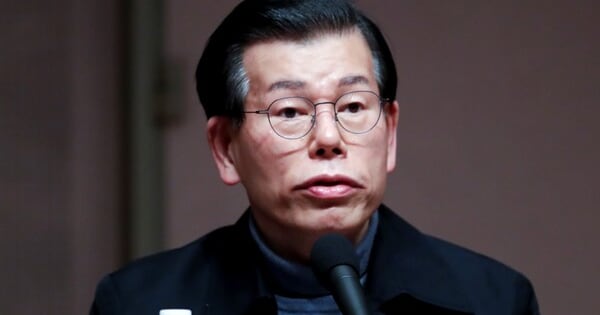
The Seoul Central District Court handed down an 18-month prison term to attorney Kim, who was found guilty of disseminating false information that deliberately damaged the president’s reputation. The court determined that Kim had fabricated allegations connecting President Lee to various organized crime syndicates without any substantial evidence to support these claims.
“The defendant’s actions went beyond legitimate criticism of a public figure and crossed into deliberate defamation with malicious intent,” stated Judge Park in the ruling. “Such behavior undermines public trust in our democratic institutions and threatens the integrity of our political discourse.”
According to court documents, Kim had published multiple social media posts and gave interviews to several news outlets last year, claiming to possess “irrefutable evidence” of President Lee’s alleged connections to criminal organizations. These allegations quickly spread across various platforms, causing significant damage to the president’s public image and creating political turmoil.
Prosecutors presented evidence showing that Kim had manipulated documents and fabricated testimonies to support his claims. The investigation revealed that Kim’s motivations appeared to be politically driven rather than based on genuine concerns about corruption.
The case has sparked intense debate among legal experts regarding the balance between protecting public figures from defamation and preserving freedom of speech. Constitutional law professor Choi Jin-woo from Seoul National University noted that the case highlights the tension between these competing interests.
“While we must protect free speech and the right to criticize government officials, there must also be consequences for deliberately spreading falsehoods,” said Professor Choi. “The challenge is establishing clear standards that don’t discourage legitimate whistleblowers while preventing malicious defamation.”
South Korea’s defamation laws are notably stricter than those in many Western democracies, with truth not always being an absolute defense against charges. Cases involving high-ranking officials typically receive heightened scrutiny, reflecting the potential for significant political and social ramifications.
The Korea Press Foundation expressed concern about the potential chilling effect the verdict might have on investigative journalism. “Reporters must remain vigilant in verifying facts before publication, but we must ensure that legitimate investigation into potential wrongdoing is not stifled,” said Foundation Director Han Sung-joo.
President Lee’s office released a brief statement acknowledging the verdict but emphasized that the president “remains focused on governing rather than personal vindication.” The statement added that President Lee “continues to support the independence of the judicial system and respects the court’s decision.”
Kim’s legal team has announced plans to appeal the verdict, arguing that the punishment is disproportionate and that their client genuinely believed the information to be true at the time of disclosure. Defense attorney Park Ji-hyun stated, “My client acted on information he believed to be credible. This verdict sets a dangerous precedent that could silence legitimate concerns about those in power.”
Legal analysts note that the case reflects broader tensions in South Korean society regarding transparency in government and accountability for public officials. In recent years, several high-profile corruption cases involving politicians have heightened public skepticism about those in positions of power.
The sentence includes a three-year probationary period following release, during which Kim will face restrictions on his legal practice and public communications regarding government officials.
The case has drawn international attention from press freedom organizations, with Reporters Without Borders expressing concern about the potential impact on investigative reporting in South Korea, particularly in matters involving government officials.
As the case moves to the appeals process, it continues to raise fundamental questions about the boundaries of free speech, the responsibilities of legal professionals, and the protections afforded to public figures in South Korea’s democratic system.
Fact Checker
Verify the accuracy of this article using The Disinformation Commission analysis and real-time sources.

9 Comments
While freedom of speech is crucial, deliberately fabricating allegations to damage a leader’s reputation crosses an ethical line. The court’s decision signals that there are consequences for such malicious behavior, which is reassuring for rule of law.
This seems like an important legal precedent regarding defamation of public officials. While freedom of speech is vital, deliberately fabricating allegations crosses an ethical line. I’m glad the court took decisive action to uphold the integrity of democratic institutions.
I agree, the court’s ruling sends a strong message that there are consequences for this kind of behavior. It will be interesting to see if this case influences how similar situations are handled in the future.
This is a concerning case of defamation against a sitting president. It’s important that public figures are held accountable for spreading misinformation, even if it’s politically motivated. Fact-checking and due process are critical to maintaining trust in democratic institutions.
Hmm, this seems like a complex legal and political issue. I’m curious to learn more about the specific evidence and reasoning behind the court’s ruling. What do you think motivated the lawyer to make these false claims in the first place?
Fascinating development in this case. I’m curious to learn more about the lawyer’s motivations and the broader political context. It’s crucial that public figures are held accountable for spreading misinformation, but the details here seem complex.
You raise a good point. The political dynamics and potential ulterior motives at play here are worth digging into further. Responsible journalism and fact-checking will be key to understanding the full story.
It’s good to see the justice system taking action against this kind of defamation. Protecting the integrity of our democratic processes should be a top priority. I wonder if this case will set a precedent for how similar situations are handled going forward.
This case highlights the importance of maintaining high ethical standards, even for those in positions of power. While criticism of leaders is important, fabricating allegations crosses a line. I’m glad the court took this seriously and issued a meaningful sentence.