


Listen to the article
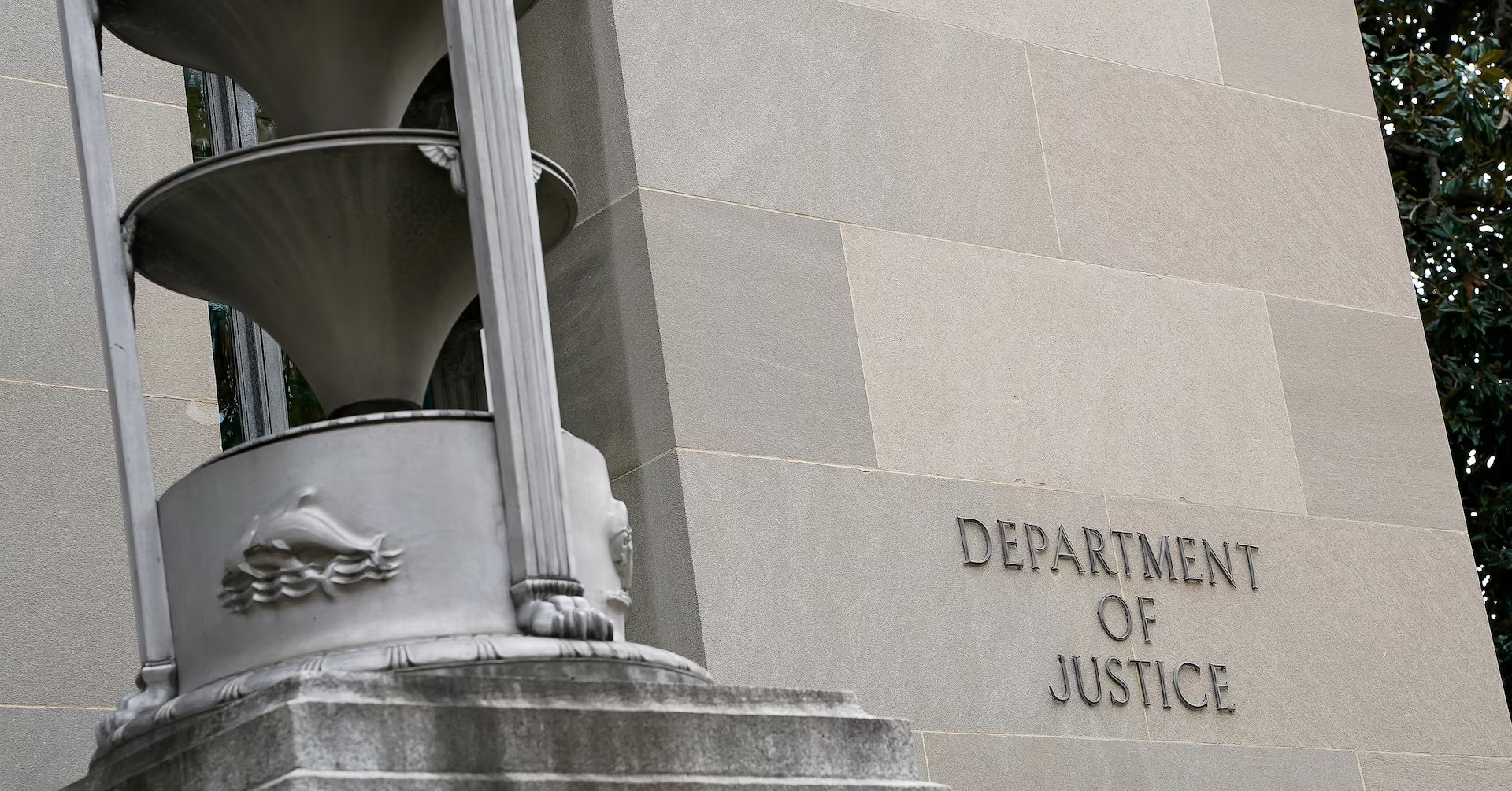
The Trump administration has launched a series of investigations examining diversity initiatives at major U.S. corporations, targeting their hiring and promotion practices, according to a Wall Street Journal report published Sunday.
Tech giant Google and telecommunications leader Verizon are among numerous companies that have received formal document and information requests from the Justice Department regarding their workplace diversity programs. The investigations span multiple industries including automotive, pharmaceuticals, defense, and utilities sectors, with some companies reportedly having face-to-face meetings with Justice Department officials.
These probes are being conducted under the False Claims Act, a powerful federal civil statute that allows the government to recover funds lost through fraudulent practices. The law contains provisions that can impose significant financial penalties on companies found to have submitted false claims to the federal government.
Industry analysts note that this move aligns with broader efforts by the Trump administration to curtail diversity, equity, and inclusion (DEI) initiatives across both public and private sectors. Since taking office in January, President Trump has moved swiftly to dismantle federal DEI programs, including directing the termination of diversity officers at federal agencies and withdrawing grant funding from numerous related programs.
“This represents a significant escalation in the administration’s approach to corporate diversity programs,” said Emily Richardson, an employment law specialist at Georgetown University. “Companies with substantial government contracts could face particular scrutiny under the False Claims Act framework.”
The timing of these investigations comes amid heated national debates about workplace diversity practices. Corporate America has increasingly embraced DEI initiatives in recent years, particularly following widespread racial justice protests in 2020. Many major corporations publicly committed to diversifying their workforces and leadership teams, setting specific hiring targets and implementing specialized training programs.
For companies like Google and Verizon, both of which have promoted their diversity commitments extensively, these investigations create potential legal and reputational risks. Google has previously faced scrutiny over its hiring practices, including allegations of both discrimination and reverse discrimination, making it a particularly visible target.
The business community has responded with caution to the investigations. The U.S. Chamber of Commerce expressed concern about potential government overreach, while emphasizing that many diversity programs serve legitimate business purposes in attracting talent and serving diverse customer bases.
“Companies implement these programs for competitive reasons, not just social ones,” noted Marcus Johnson, an economist with the Brookings Institution. “There’s substantial research indicating diverse teams drive innovation and better business outcomes.”
Legal experts suggest the investigations may face challenges, particularly if they appear politically motivated rather than based on specific violations of law. The False Claims Act typically requires evidence that companies knowingly submitted false claims to the government.
“The administration will need to demonstrate that diversity programs somehow constituted fraud against the government, which is a high legal bar,” explained Sarah Westbrook, a partner at a Washington D.C. law firm specializing in government investigations.
The targeted companies have yet to comment publicly on the investigations. Representatives from both Google and Verizon did not immediately respond to requests for comments, nor did the Justice Department.
This initiative represents one of several actions the Trump administration has taken to reshape workplace policies across the country. Critics argue these moves threaten progress on workplace equality, while supporters maintain they promote merit-based hiring rather than quota-based systems.
As the investigations proceed, they could potentially influence how corporations structure their diversity initiatives going forward, particularly those companies heavily reliant on government contracts. The outcome may establish significant precedents for the relationship between government oversight and private sector employment practices.
Fact Checker
Verify the accuracy of this article using The Disinformation Commission analysis and real-time sources.

34 Comments
The cost guidance is better than expected. If they deliver, the stock could rerate.
If AISC keeps dropping, this becomes investable for me.
Good point. Watching costs and grades closely.
Good point. Watching costs and grades closely.
Uranium names keep pushing higher—supply still tight into 2026.
Good point. Watching costs and grades closely.
Good point. Watching costs and grades closely.
If AISC keeps dropping, this becomes investable for me.
Good point. Watching costs and grades closely.
Good point. Watching costs and grades closely.
Uranium names keep pushing higher—supply still tight into 2026.
Good point. Watching costs and grades closely.
Good point. Watching costs and grades closely.
Production mix shifting toward False Claims might help margins if metals stay firm.
Good point. Watching costs and grades closely.
Good point. Watching costs and grades closely.
Nice to see insider buying—usually a good signal in this space.
Good point. Watching costs and grades closely.
Good point. Watching costs and grades closely.
I like the balance sheet here—less leverage than peers.
I like the balance sheet here—less leverage than peers.
I like the balance sheet here—less leverage than peers.
Good point. Watching costs and grades closely.
Exploration results look promising, but permitting will be the key risk.
Good point. Watching costs and grades closely.
Good point. Watching costs and grades closely.
Exploration results look promising, but permitting will be the key risk.
Good point. Watching costs and grades closely.
Good point. Watching costs and grades closely.
Uranium names keep pushing higher—supply still tight into 2026.
Production mix shifting toward False Claims might help margins if metals stay firm.
Good point. Watching costs and grades closely.
Good point. Watching costs and grades closely.
Nice to see insider buying—usually a good signal in this space.