


Listen to the article
Iranian Parliament Speaker Dismisses Trump’s Claims as Falsehoods
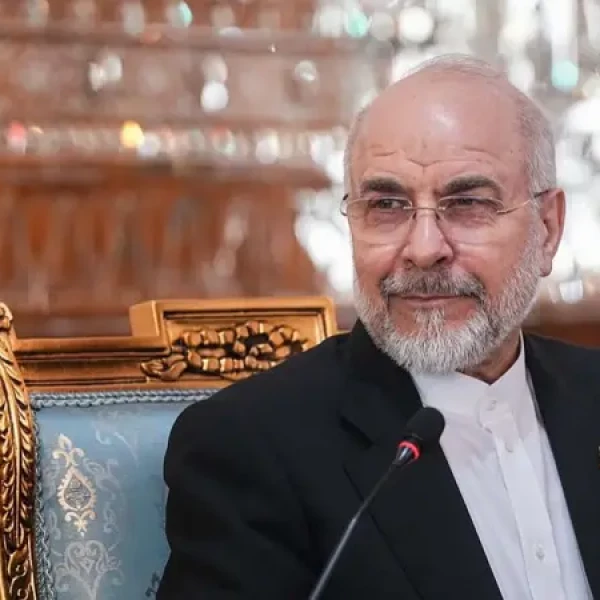
Mohammad Bagher Ghalibaf, Iran’s Parliament Speaker and head of the recent Iranian delegation to US talks in Islamabad, has publicly rejected statements made by former US President Donald Trump, describing them as entirely false.
“Donald Trump made seven claims in one hour, all seven of which were false,” Ghalibaf stated in a post on the social media platform X. “They did not win the war, and they will certainly not get anywhere in negotiations either with these lies,” he added, though he did not specify which particular statements he was referring to.
The parliamentary leader’s comments come amid heightened tensions regarding the strategic Strait of Hormuz, a critical maritime chokepoint through which approximately 20% of global oil shipments pass. Addressing the status of the strait, Ghalibaf warned that with the “continuation of the [US] blockade,” the waterway “will not remain open.”
This stance echoes earlier statements from Iranian Foreign Ministry spokesman Esmail Baghaei, who asserted that “whether the strait is open or closed and the regulations governing it will be determined on the ground, not on social media.” Both officials’ comments appear to be a direct response to a statement made by Iranian Foreign Minister Abbas Araghchi.
Araghchi had previously stated on X that “passage for all commercial vessels” through the Strait of Hormuz was “completely open for the remaining period of the ceasefire.” This comment sparked significant backlash within Iran, with several state media outlets and hardline factions demanding clarification of the foreign minister’s remarks, viewing them as potentially too conciliatory toward Western interests.
The apparent contradiction between Iranian officials highlights internal divisions within the Islamic Republic’s leadership regarding diplomatic posture toward the United States and its allies. Ghalibaf, who represents the more conservative faction in Iranian politics, emphasized that “media warfare and the shaping of public opinion are an important part of war, and the Iranian nation is not influenced by these tactics.”
Regional security experts note that control over the Strait of Hormuz represents one of Iran’s most significant geopolitical leverage points. Any disruption to shipping through the narrow waterway could have dramatic effects on global energy prices and supply chains, potentially causing economic shockwaves throughout international markets.
The diplomatic tensions come at a delicate time, as indirect discussions between Tehran and Washington have been taking place through various channels, including the recent talks in Islamabad. These discussions have covered a range of issues including regional security, sanctions relief, and nuclear proliferation concerns.
The International Energy Agency has repeatedly warned that any closure of the strait could temporarily remove up to 30% of seaborne-traded crude oil from global markets. This would likely trigger a substantial spike in energy prices worldwide, affecting everything from transportation to manufacturing costs across major economies.
The rhetorical exchange also occurs against a backdrop of Iran’s ongoing efforts to expand its influence throughout the Middle East, including its support for various proxy groups in Syria, Yemen, Iraq, and Lebanon. The United States maintains significant military assets in the region, including naval forces specifically positioned to ensure the strait remains open to international shipping.
Analysts suggest that the public disagreement among Iranian officials might indicate internal policy debates about how to leverage the strait issue in broader negotiations with Western powers, particularly regarding economic sanctions that have severely impacted Iran’s economy in recent years.
As tensions persist, shipping companies and energy markets continue to closely monitor developments regarding the vital waterway, with any escalation likely to have immediate repercussions for global trade and energy security.
Fact Checker
Verify the accuracy of this article using The Disinformation Commission analysis and real-time sources.

22 Comments
Exploration results look promising, but permitting will be the key risk.
The cost guidance is better than expected. If they deliver, the stock could rerate.
Silver leverage is strong here; beta cuts both ways though.
Good point. Watching costs and grades closely.
Good point. Watching costs and grades closely.
Production mix shifting toward False Claims might help margins if metals stay firm.
Good point. Watching costs and grades closely.
Good point. Watching costs and grades closely.
The cost guidance is better than expected. If they deliver, the stock could rerate.
Good point. Watching costs and grades closely.
Good point. Watching costs and grades closely.
If AISC keeps dropping, this becomes investable for me.
Nice to see insider buying—usually a good signal in this space.
Uranium names keep pushing higher—supply still tight into 2026.
Good point. Watching costs and grades closely.
Nice to see insider buying—usually a good signal in this space.
Good point. Watching costs and grades closely.
Exploration results look promising, but permitting will be the key risk.
Good point. Watching costs and grades closely.
Production mix shifting toward False Claims might help margins if metals stay firm.
Good point. Watching costs and grades closely.
Good point. Watching costs and grades closely.