


Listen to the article
Iran Threatens to Close Strait of Hormuz as Tensions with U.S. Escalate
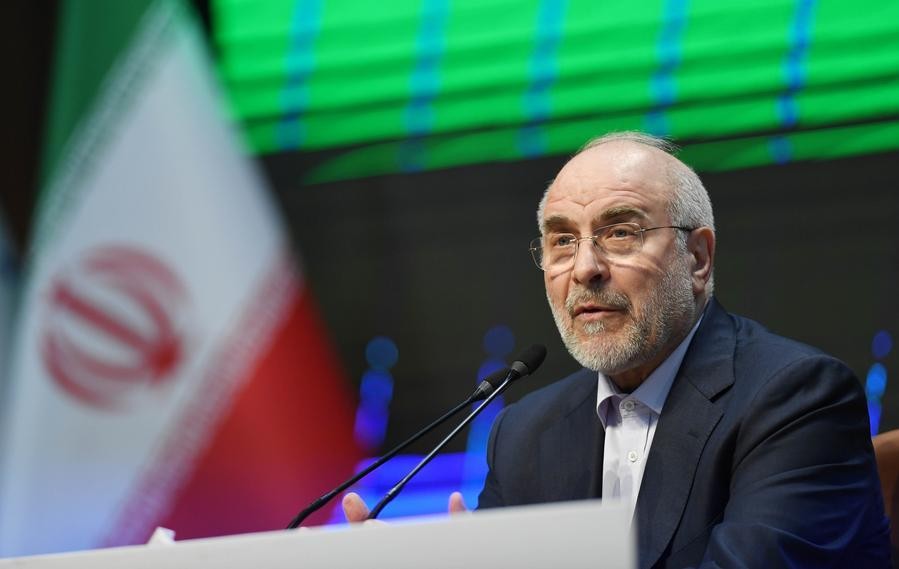
Iran’s Parliament Speaker Mohammed Bagher Ghalibaf issued a stark warning to the United States on Wednesday, threatening to shut down the Strait of Hormuz if the American naval blockade continues.
“With the continuation of the blockade, the Strait of Hormuz will not remain open,” Ghalibaf declared in a post on social media platform X. He specified that if the waterway remains accessible, passage would be limited to a “designated route” and would require “Iranian authorisation.”
The threat comes at a critical moment of diplomatic tension between Tehran and Washington. Donald Trump has insisted that U.S. naval restrictions in the region will remain in “full force” until a broader agreement with Iran is reached.
The Strait of Hormuz represents one of the world’s most vital maritime chokepoints, with approximately 20% of global oil supply passing through this narrow waterway between Iran and Oman. Any disruption to shipping in this corridor could send shockwaves through international energy markets and potentially trigger significant price volatility.
Iran’s rhetoric marks an apparent shift from its previous position. Earlier, Iran’s Foreign Minister Abbas Araghchi had announced that the strait would remain open to commercial shipping during the ongoing ceasefire in Lebanon. “In line with the ceasefire in Lebanon, the passage for all commercial vessels through the Strait of Hormuz is declared completely open for the remaining period of the ceasefire,” Araghchi stated, noting that ships would need to follow a coordinated route announced by Iran’s Ports and Maritime Organisation.
The escalating tensions reflect broader regional instability. The naval blockade represents one facet of the complex U.S.-Iran relationship, which has deteriorated in recent years following the U.S. withdrawal from the nuclear deal under the previous Trump administration and the reimposition of sanctions that have severely damaged Iran’s economy.
Trump has suggested that negotiations with Iran could conclude “very quickly,” claiming that key sticking points have already been addressed. However, Ghalibaf forcefully rejected this characterization, stating: “They did not win the war with these lies, and they will certainly not get anywhere in negotiations either.”
The Iranian official added that the status of the Strait “will be determined by the field, not by social media,” suggesting that practical military and strategic considerations would dictate Iran’s actions rather than diplomatic posturing. He also alleged that Trump had made “seven claims in one hour,” describing all of them as “false,” though he did not specify which statements he was referencing.
Energy analysts warn that any closure of the Strait would have immediate and far-reaching consequences. Major Asian economies including China, Japan, and South Korea rely heavily on oil shipments that transit through this waterway. Similarly, European markets would face supply disruptions that could compound existing energy challenges.
Maritime security experts note that Iran has previously threatened to close the Strait during moments of heightened tension but has rarely taken steps that would completely block international shipping. However, the Iranian Revolutionary Guard Corps maintains significant naval capabilities in the region, including fast attack craft and anti-ship missiles that could threaten commercial vessels.
International shipping companies are closely monitoring the situation. Several major carriers have already adjusted their risk assessments for the region, potentially leading to higher insurance premiums for vessels operating in the Persian Gulf.
As the standoff continues, diplomatic efforts to reduce tensions remain uncertain. The situation underscores the strategic importance of the Strait of Hormuz not just as a shipping lane but as a geopolitical leverage point in the ongoing power struggle between Iran and Western nations.
Fact Checker
Verify the accuracy of this article using The Disinformation Commission analysis and real-time sources.

23 Comments
Interesting update on Iran Denies Trump’s Claims and Threatens Strait of Hormuz Closure in Response to US Sanctions. Curious how the grades will trend next quarter.
If AISC keeps dropping, this becomes investable for me.
Good point. Watching costs and grades closely.
Good point. Watching costs and grades closely.
Uranium names keep pushing higher—supply still tight into 2026.
Good point. Watching costs and grades closely.
Good point. Watching costs and grades closely.
Interesting update on Iran Denies Trump’s Claims and Threatens Strait of Hormuz Closure in Response to US Sanctions. Curious how the grades will trend next quarter.
Good point. Watching costs and grades closely.
Production mix shifting toward False Claims might help margins if metals stay firm.
Good point. Watching costs and grades closely.
Silver leverage is strong here; beta cuts both ways though.
I like the balance sheet here—less leverage than peers.
Good point. Watching costs and grades closely.
Good point. Watching costs and grades closely.
Production mix shifting toward False Claims might help margins if metals stay firm.
Good point. Watching costs and grades closely.
Good point. Watching costs and grades closely.
Exploration results look promising, but permitting will be the key risk.
Good point. Watching costs and grades closely.
If AISC keeps dropping, this becomes investable for me.
Good point. Watching costs and grades closely.
If AISC keeps dropping, this becomes investable for me.