


Listen to the article
Iran Rejects Arab Nations’ Claims Over Three Persian Gulf Islands
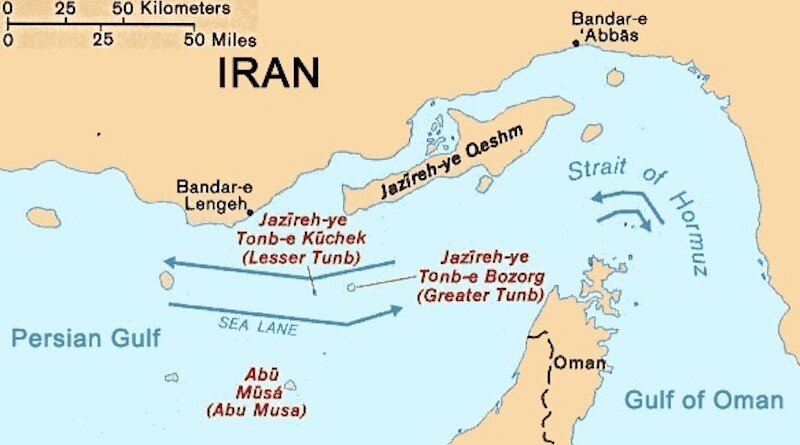
Iranian officials have firmly dismissed recent claims by the UAE and other Arab nations regarding sovereignty over three Persian Gulf islands, calling the assertions “baseless” and contrary to historical evidence. The islands of Abu Musa, Greater Tunb, and Lesser Tunb remain at the center of a long-standing territorial dispute that has periodically strained relations between Iran and its Arab neighbors.
In recent weeks, the UAE has renewed its claims to the islands, gaining support from several Arab countries. Iran maintains that these islands are “inseparable parts” of its territory, with sovereignty dating back to ancient Persian dynasties including the Achaemenid, Parthian, and Sassanid periods.
The dispute has deep historical roots tied to British colonial presence in the region. During the colonial era, Britain occupied various areas in the Persian Gulf, including what would later become the United Arab Emirates. According to Iranian sources, the British forcibly took control of these territories from Iran, though successive Iranian governments never accepted this occupation.
The contemporary dispute traces back to 1971, when Britain prepared to withdraw from the Persian Gulf region. Iranian officials state that an agreement was reached between Britain and Iran at that time, resulting in the islands being returned to Iranian control after approximately 70 years of diplomatic protests. Both Iran and the Emirates reportedly recognized the islands as Iranian territory at that point.
Following Iran’s 1979 Islamic Revolution, tensions resurfaced. Iranian officials allege that Britain, opposed to the new revolutionary government, encouraged UAE and other Persian Gulf states to revive territorial claims over the islands. This campaign has reportedly gained support from Western powers, including the United States and European nations, with statements issued by the Gulf Cooperation Council, the Arab League, and more recently, the European Union.
The strategic significance of these islands cannot be overstated. Located near the Strait of Hormuz—through which approximately 20% of the world’s oil passes—they occupy a critical position in one of the world’s most important maritime corridors. Control of these territories provides significant advantage in monitoring regional maritime activity and potentially influencing global energy security.
Currently, the islands remain under complete Iranian control, with Iranian flags flying and armed forces stationed there. The Iranian government has officially designated November 30 as “Trio Islands Day” in its national calendar, and the country’s judiciary has formally recognized Iranian ownership based on historical documentation.
Iranian officials warn that the primary objective behind Western support for these territorial claims is to undermine improving relations between Iran and Gulf Arab states. They argue that “repeating an unfounded claim to a part of a country’s territory does not change geographical and historical realities” nor establish legal rights for claimants.
The dispute illustrates the complex geopolitical dynamics of the Persian Gulf region, where historical grievances, colonial legacies, and modern strategic interests continue to shape international relations. As regional powers compete for influence, territorial disputes like this one can quickly become focal points for broader geopolitical tensions.
Analysts note that resolution of this dispute would require substantial diplomatic engagement from all parties involved, potentially with international mediation. However, given Iran’s firm stance on its territorial integrity and the strategic importance of the islands, a quick resolution appears unlikely in the current regional climate.
Fact Checker
Verify the accuracy of this article using The Disinformation Commission analysis and real-time sources.

8 Comments
This is a sensitive geopolitical issue with high stakes for the countries involved. I hope the relevant parties can approach it in a measured, diplomatic manner and avoid any further escalation of tensions.
You make a good point. De-escalation and conflict resolution should be the top priorities here, rather than taking hardline stances that could inflame the situation.
The territorial dispute over these Persian Gulf islands is a long-standing and complex issue. It will be interesting to see how Iran and the UAE navigate this challenge, and whether they can find a mutually acceptable solution.
The dispute over these Persian Gulf islands highlights the complexities of territorial claims and the lingering effects of colonial-era policies. I’m curious to learn more about the specific historical evidence and legal arguments being made by Iran and the UAE.
This is a complex territorial dispute with deep historical roots. Iran’s claims to sovereignty over these islands seem well-grounded, though the UAE has also made assertions. It will be interesting to see how this long-standing conflict continues to unfold.
You’re right, the historical context is crucial here. Resolving these types of border disputes can be extremely challenging, especially when they involve sensitive regional dynamics.
Hmm, it seems like both sides have plausible arguments based on historical precedent. Hopefully the parties can engage in constructive dialogue to find a mutually acceptable solution, rather than escalating tensions further.
Agreed. Open and honest communication will be key to making progress on this issue. Resorting to inflammatory rhetoric or unilateral actions is unlikely to lead to a lasting resolution.