


Listen to the article
Iran’s State Broadcaster Admits False Report of Downed Israeli F-35s
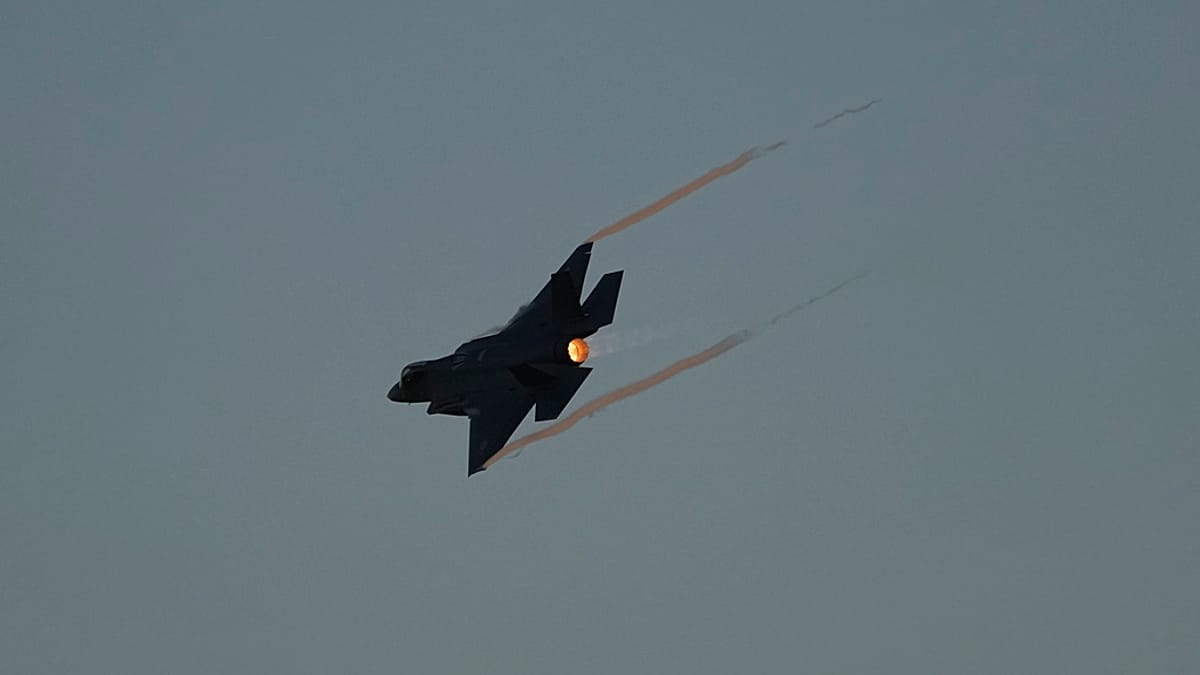
Iran’s state broadcaster has acknowledged spreading false information during the June conflict with Israel, admitting it incorrectly reported that two Israeli F-35 fighter jets had been shot down.
Peyman Jabali, head of the Iranian Broadcasting Corporation, revealed during a speech at Beheshti University in Tehran that the organization had committed a “professional error” by broadcasting unverified claims.
“We reported what we received as it was, but then it turned out that the information was not correct,” Jabali said, according to Iran’s Eqtesad website. “A military official told us that the incident occurred, so we reported the news as it was, but it turned out later that the information was not reliable.”
The admission comes months after the 12-day conflict that saw significant military exchanges between the two adversaries. The false report had raised immediate skepticism among military analysts worldwide, as no F-35 stealth fighter has ever been confirmed shot down in combat operations since the aircraft entered service.
Jabali acknowledged that the incident undermined the broadcaster’s credibility, emphasizing that media organizations should exercise greater caution when handling sensitive military information. He specifically warned against relying on unofficial sources, particularly regarding claims about combat losses or the deaths of military personnel.
The broadcasting chief also criticized what he described as a “rhetoric of weakness” from within Iran, suggesting that such internal messaging contributed to intelligence vulnerabilities that Israel exploited during the confrontation.
The conflict, one of the most direct military exchanges between the two long-standing adversaries, began on June 13 when Israel launched “Operation Rising Lion.” The Israeli offensive targeted Iranian military installations and infrastructure allegedly housing senior military leaders and nuclear scientists.
Tehran responded the same day with “Operation Honest Promise 3,” launching waves of ballistic missiles and drones toward Israeli territory. The intense exchange resulted in casualties among Iran’s Revolutionary Guard commanders and damage to several strategic facilities, while Israeli cities faced impacts from hundreds of Iranian missiles.
The conflict escalated further on June 22 when the United States directly entered the fray, deploying B-2 Spirit stealth bombers to strike Iranian nuclear facilities. The American aircraft delivered specialized bunker-buster munitions against hardened underground sites at Fordow, Natanz, and Isfahan—all critical components of Iran’s controversial nuclear program.
Iran subsequently launched attacks against the U.S. al-Udeid air base in Qatar, a major American military installation in the region. The escalating situation was finally contained when then-President Donald Trump announced a ceasefire on June 24.
Military analysts view the twelve-day conflict as the culmination of decades of hostility between Iran and Israel. Israel has consistently identified Iran’s nuclear ambitions as an existential threat to its security, while the Iranian regime has maintained its refusal to recognize Israel’s legitimacy.
The Iranian broadcaster’s false reporting highlights the challenges of information reliability during modern conflicts, where media narratives can significantly impact public perception and diplomatic dynamics. Jabali’s admission represents a rare acknowledgment of misinformation from an official Iranian source in a region where state media typically maintains rigid control over conflict narratives.
Media watchdogs have noted that such false reporting is particularly dangerous during active military operations, as it can influence decision-making at critical moments and potentially lead to further escalation based on incorrect information.
Fact Checker
Verify the accuracy of this article using The Disinformation Commission analysis and real-time sources.

4 Comments
The admission by Iran’s state broadcaster is a rare moment of transparency. However, the initial false claim about shooting down Israeli F-35s raises questions about their overall credibility when reporting on military matters. Fact-checking and verification should be a top priority for state media.
This false reporting by Iran’s state media is quite concerning. Spreading unverified claims, especially about military operations, can seriously undermine public trust. It’s good they acknowledged the error, but they should be more careful about fact-checking in the future.
While I appreciate Iran’s acknowledgment of the false report, it’s troubling that their state media broadcast unverified information in the first place. Reporting military claims without proper scrutiny can have serious consequences. I hope they learn from this experience and improve their journalistic standards.
This incident highlights the importance of verifying information, especially when it comes to military claims. Iran’s state broadcaster should have done more due diligence before broadcasting the report about the downed F-35s. Admitting the error is a positive step, but they need to strengthen their fact-checking procedures.