


Listen to the article
In a groundbreaking decision that could reshape corporate environmental accountability across Africa, a French court has found oil and gas giant TotalEnergies guilty of misleading commercial practices for false environmental claims. The October 2025 ruling by the Paris Judicial Court marks the first time a major fossil fuel company has been legally penalized for greenwashing.
The case, brought by three environmental organizations, centered on TotalEnergies’ advertising campaign that portrayed the company as a “major player in the energy transition” despite its increasing greenhouse gas emissions. The court determined that the company misled consumers by claiming it would achieve net zero emissions by 2050 while simultaneously planning to expand fossil fuel production.
“The average consumer would understand these advertisements as claims that the company was actively fighting climate change,” the court stated in its ruling, noting that TotalEnergies’ actual business strategy contradicted the Paris Agreement’s target of limiting global warming to 1.5°C above pre-industrial levels.
The court ordered TotalEnergies to cease its misleading advertising and publish the ruling on its website for 180 days or face a €20,000 ($23,000) daily penalty. Additionally, the company must pay €8,000 ($9,230) to the plaintiffs for non-financial harm.
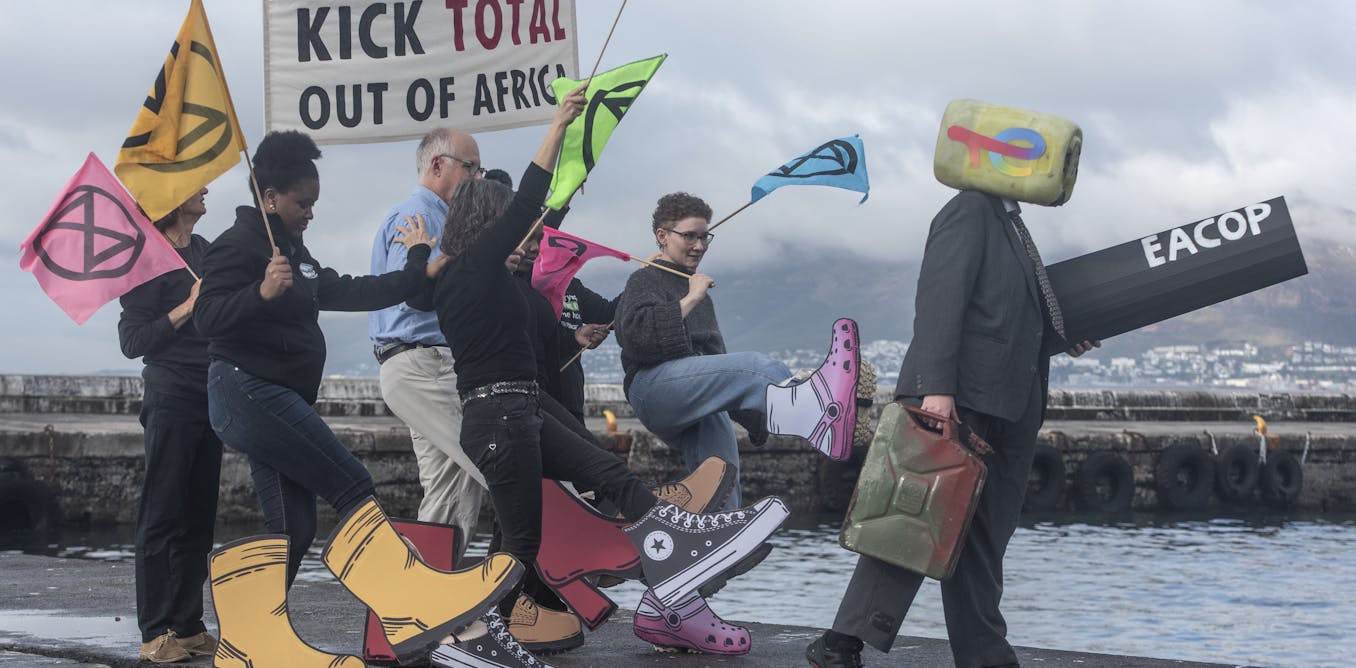
TotalEnergies maintains a significant presence across 43 African countries, where its operations have frequently sparked controversy. The company recently announced plans for offshore drilling in South Africa in 2026, pending environmental approvals, after previously pausing gas exploration in the region’s offshore blocks in August 2024.
In Mozambique, TotalEnergies has completed just 40% of a $20 billion gas project that was paused for four years due to insurgent attacks in Cabo Delgado. The company now faces potential challenges from the Mozambican government after requesting a 10-year contract extension to offset delay-related costs.
The company is also behind the contentious East African Crude Oil Pipeline project in Uganda and Tanzania, which non-profit organizations have condemned as a “humanitarian and environmental disaster.”
The French court’s ruling represents a significant shift in climate litigation, moving beyond simply regulating emissions to scrutinizing corporate representations about environmental commitments. The court applied a science-based standard to evaluate TotalEnergies’ claims, finding it misleading for the company to promise carbon reduction while simultaneously planning to increase oil and gas production.
This judgment follows several landmark climate cases in European courts. The European Court of Human Rights recently found Switzerland had failed to develop sufficient climate policies to protect citizens’ rights to life and ruled that Norway must conduct comprehensive climate impact assessments before approving new oil and gas projects.
The International Court of Justice and the International Tribunal for the Law of the Sea have also affirmed that countries must take precautionary measures against human-caused greenhouse gas emissions, with the former confirming that access to a clean, healthy, and sustainable environment is a human right.
For African nations, the ruling creates significant precedent. The African Charter on Human and Peoples’ Rights already recognizes the right “to a general satisfactory environment favorable to development,” and this ruling clarifies that misleading climate claims violate this right.
Several African countries have existing legal frameworks that could be leveraged in similar cases. South Africa’s Consumer Protection Act, Nigeria’s Federal Competition and Consumer Protection Act, and Kenya’s Competition Act all prohibit misleading advertising claims. South Africa has already tested these laws against climate communication, with its Advertising Regulatory Board finding TotalEnergies guilty of misleading sustainability advertising in August 2024.
Legal experts believe this French court decision could empower African consumers and environmental organizations to hold corporations accountable for environmental claims in national and regional courts across the continent. The ruling demonstrates that civil society can effectively use consumer protection laws to challenge major polluters, potentially opening new avenues for climate litigation throughout Africa.
As companies increasingly face scrutiny over their environmental promises, the message from the courts is clear: corporate climate pledges must be backed by concrete, scientifically verifiable targets and actions.
Fact Checker
Verify the accuracy of this article using The Disinformation Commission analysis and real-time sources.

11 Comments
Misleading claims about environmental efforts are unacceptable. This ruling sends a strong message that companies must align their actions with their public statements on sustainability and climate change.
Absolutely. Transparency and honesty are critical when it comes to corporate environmental responsibilities.
The expansion of fossil fuel production while claiming climate leadership is a clear contradiction. This ruling underscores the importance of aligning business strategies with the goals of the Paris Agreement.
Absolutely. Companies need to walk the walk, not just talk the talk, when it comes to climate action and environmental stewardship.
While this case is specific to the French market, the implications could reverberate globally. It will be interesting to see if similar lawsuits emerge in other regions, particularly in Africa where environmental degradation is a major issue.
This ruling highlights the need for stricter regulations and enforcement around corporate sustainability claims. Holding companies accountable for misleading advertising is an important step towards more transparent and responsible business practices.
While this ruling focuses on the French energy market, the implications could extend globally. Stricter regulations and enforcement around climate-related claims could drive more meaningful action from major polluters.
This case highlights the need for robust verification and accountability mechanisms when it comes to corporate sustainability claims. Consumers and investors deserve truthful information to make informed decisions.
It’s encouraging to see the courts taking a stand against greenwashing. Hopefully this sets a precedent that empowers more communities, especially in Africa, to seek justice for environmental harms.
Greenwashing poses a serious threat to genuine sustainability efforts. This ruling could empower more legal challenges against companies making false environmental claims.
This is an important ruling that could set a precedent for holding fossil fuel companies accountable for greenwashing. It will be interesting to see if similar cases emerge in Africa, where environmental pollution is a major concern.