


Listen to the article
French Court Convicts 10 for Online Harassment of First Lady Brigitte Macron
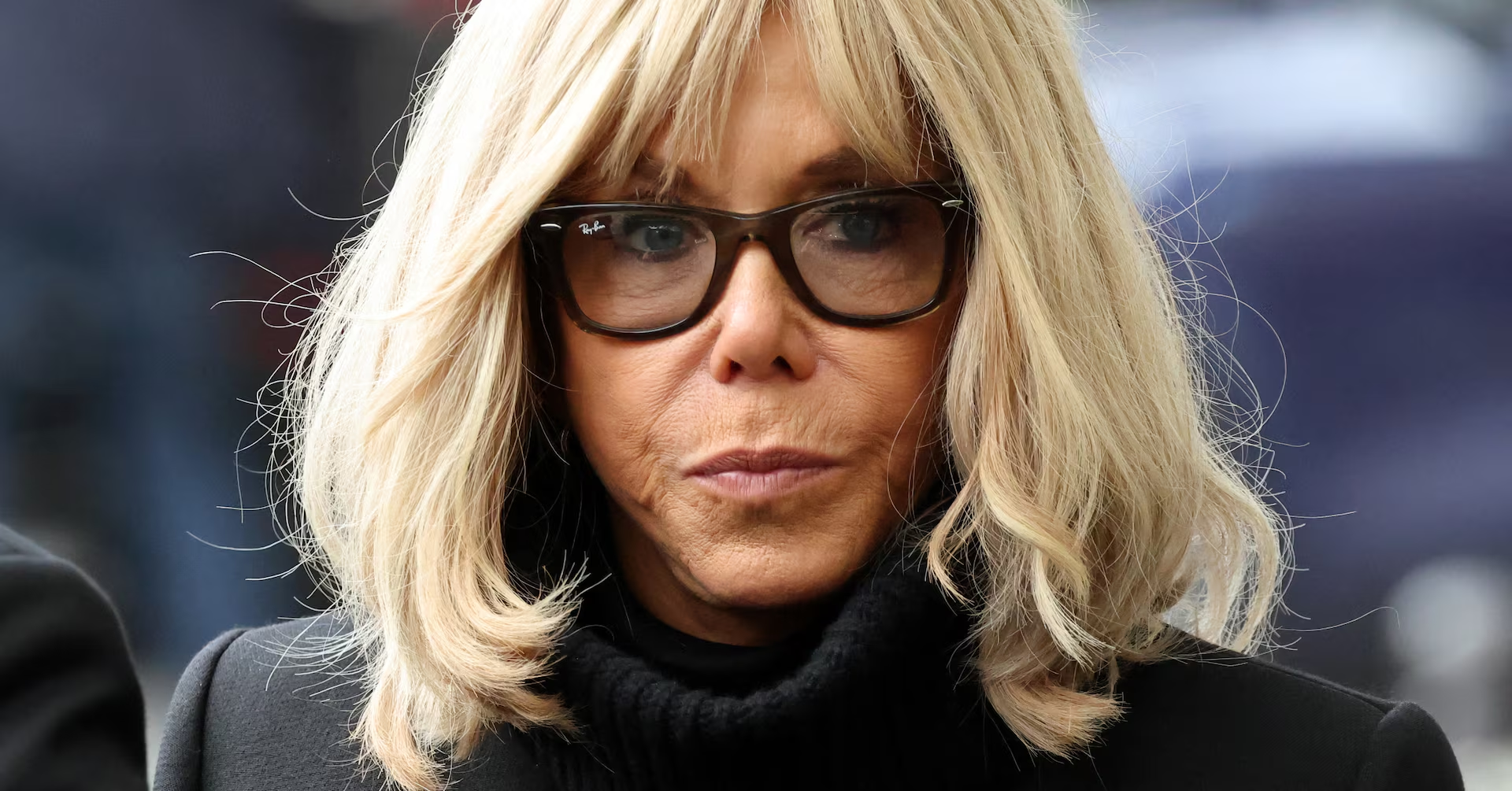
A Paris court on Monday found ten people guilty of cyber-harassment against France’s first lady Brigitte Macron, marking a significant legal victory against a persistent online conspiracy theory claiming she was born male.
The eight men and two women were convicted of spreading malicious claims that Brigitte Macron was transgender and born under the name Jean-Michel Trogneux – which is actually the name of her older brother. The court rejected arguments from some defendants that their comments were merely satirical.
The defendants received various sentences, reflecting the severity of their actions. One individual was handed a six-month prison term without suspension, while others received suspended jail sentences of up to eight months. Additional penalties included fines and mandatory participation in cyber harassment awareness courses. Five were banned from using the social media platforms where they had posted the defamatory content.
“This is horrible. It’s abominable,” said Bertrand Scholler, a 55-year-old gallerist and writer who was given a six-month suspended jail sentence. “This shows just how far French society is drifting toward less freedom of speech. Freedom of speech no longer exists.” Scholler announced his intention to appeal the court’s decision.
The ruling represents a milestone for the Macrons, who have endured years of online harassment regarding not only Brigitte’s gender but also the couple’s 24-year age gap – a difference that some attackers have maliciously equated to “pedophilia.” After long ignoring such attacks, the presidential couple has recently begun challenging them in court.
This case comes amid the Macrons’ separate high-profile defamation lawsuit filed in the United States against conservative commentator Candace Owens, who has made similar false claims about Brigitte Macron’s gender on her podcast.
In a Sunday interview with French broadcaster TF1, Brigitte Macron defended her decision to pursue legal action against online harassers, stating she wanted to set an example for young people facing similar abuse.
“I want to help adolescents to fight against harassment, and if I do not set an example, it will be difficult,” she explained. She described the relentless nature of the attacks, which went beyond mere comments to include “people who broke into my tax website and modified my identity.”
Addressing the absurdity of the false claims, the first lady pointed to clear documentation of her identity: “A birth certificate is not nothing. It is a father or a mother who goes to declare their child, who says who he is or who she is.”
The court decision comes against a backdrop of growing transatlantic tensions over online speech regulation. The Trump administration has characterized European efforts to combat disinformation as censorship, recently imposing visa bans on five Europeans involved in fighting online hate and falsehoods, including former EU commissioner Thierry Breton and several anti-disinformation campaigners.
French legal experts note that the case highlights France’s more stringent approach to regulating online speech compared to the United States, where First Amendment protections often shield similar content from legal consequences. The ruling may set an important precedent for future cases involving high-profile targets of online conspiracy theories and harassment.
The French presidential palace has not issued an official statement on the verdict, maintaining its typical restraint on matters involving the first lady’s personal affairs. However, sources close to the Élysée indicate the ruling is viewed as an important step in establishing boundaries for acceptable online discourse about public figures.
Fact Checker
Verify the accuracy of this article using The Disinformation Commission analysis and real-time sources.

9 Comments
This is an interesting case at the intersection of public discourse, privacy rights, and the challenges of the digital age. The convictions demonstrate that there are limits to what can be said, even about public figures, when it crosses the line into harassment and defamation.
Cyber-bullying and the spread of disinformation online are serious problems that erode public discourse. This ruling demonstrates that there are legal consequences for those who cross the line and engage in harassment, even against high-profile individuals.
Cyber-bullying and the spread of false claims online are serious issues that deserve strong legal responses. This ruling sends a clear message that individuals cannot hide behind anonymity to attack and demean others without consequences.
This is an important ruling that recognizes the real-world harm caused by online harassment and misinformation campaigns. Targeting public figures with false claims can have serious consequences, and I’m glad to see the courts taking it seriously.
While I generally believe in freedom of speech, this case highlights how that principle can be abused to harass and defame others, even prominent public figures. The court was right to draw a firm line and hold the perpetrators accountable.
Agreed. Free speech doesn’t mean freedom from accountability, especially when it comes to malicious falsehoods. This ruling upholds the important principle that individual privacy and dignity must be protected, even online.
While freedom of speech is important, it does not extend to spreading harmful falsehoods. I’m glad the court recognized the severity of these actions and handed down appropriate sentences. Combating online harassment is crucial for maintaining a civil discourse.
Agreed. Striking the right balance between free expression and accountability is crucial. This case shows the courts taking a firm stance against abusive behavior masquerading as satire or free speech.
This is a clear victory for the rule of law and against the spread of malicious misinformation. Cyber-harassment should not be tolerated, especially when targeting public figures. Hopefully this sets a strong precedent for protecting individual privacy and dignity online.