


Listen to the article
False Claims Link Myanmar Military Airstrikes to KNU’s Crackdown on Telecom Scam Operations
Disinformation circulating on social media platforms falsely claims that Myanmar’s military junta is conducting airstrikes targeting businesses linked to the Karen National Union (KNU), according to an investigation by the Karen Information Center (KIC), a member of the Myanmar Fact-Checking Network.
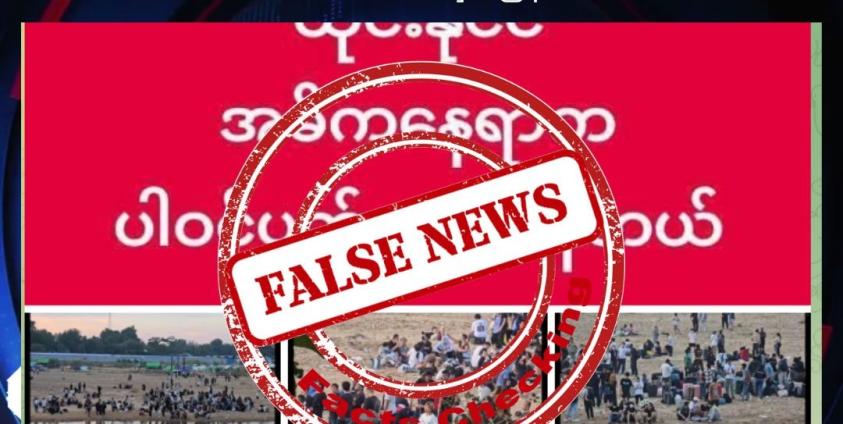
The misleading narrative began when a Facebook account named “Ayeyarwady May” published a post claiming the military was targeting “Zhapian businesses” allegedly connected to the KNU. The post included three photographs showing workers gathered near the Thaungyin (Moei) River, which forms the natural border between Myanmar and Thailand. The same content later appeared on a pro-junta Telegram channel, where it received over 3,000 views.
However, fact-checkers determined these claims were fabricated. A reverse image search revealed that the photographs actually showed Zhapian workers who had fled to the riverbank to escape escalating conflict between junta forces and resistance fighters. The workers were stranded at the border because Thai authorities had not yet permitted them to cross into Thailand.
The images were originally published by Thai news outlet Amarin News and began circulating on social media around 10:00 a.m. on November 27. Multiple regional media organizations, including Than Lwin Times, Network Media Group, Mizzima, and KIC itself, have reported on the plight of these stranded workers.
The reality behind the conflict reveals a very different situation. On November 21, KNU forces and their allies discovered a previously hidden telecom scam compound operating near Min Let Pan Village in Myawaddy Township. According to Myanmar Now, the compound was operating under protection from the Democratic Karen Benevolent Army (DKBA), a group aligned with the military junta.
Following this discovery, the KNU began systematically detaining workers at the facility, gathering evidence of criminal activities, and coordinating with relevant authorities to address the telecom fraud operations. On November 25, the KNU announced it had taken full control of the compound and was seeking international cooperation to combat these criminal networks.
It was after this announcement that the junta escalated its military response, intensifying ground assaults, artillery shelling, and airstrikes targeting the area. Media outlets including BBC, The Irrawaddy, and People’s Spring have documented this escalation.
The KIC investigation concluded that the junta’s increased use of airstrikes and artillery barrages directly followed the KNU’s public announcements about evidence collection at the telecom scam compound. This timeline directly contradicts the narrative that airstrikes were targeting KNU-protected businesses.
Furthermore, the KNU has released detailed updates about conditions inside the compound, including information about the workforce, operational methods, and coordination efforts with Thai authorities. These reports further demonstrate that claims of KNU leadership protecting Zhapian criminal networks are entirely unfounded.
The investigation highlights a deliberate pattern of misinformation. While the junta did conduct airstrikes in the Min Let Pan area, the context and motivations presented in the social media posts were intentionally distorted to mislead the public and discredit the KNU’s actions against criminal operations.
The Myanmar Fact-Checking Network encourages social media users to verify information through reliable fact-checking organizations before sharing potentially misleading content. The network maintains a website and Facebook page where users can request fact-checking services or access verified information about events in the region.
This case illustrates the complex information environment surrounding Myanmar’s ongoing conflict, where social media platforms have become battlegrounds for competing narratives about military operations and resistance activities.
Fact Checker
Verify the accuracy of this article using The Disinformation Commission analysis and real-time sources.

8 Comments
Glad to see this fact-checking investigation debunk the false claims about Myanmar military airstrikes. It’s crucial to separate truth from disinformation, especially in conflict zones where information can be manipulated for political purposes.
Agreed, verifying claims through reliable sources is essential. Spreading misinformation can have serious real-world consequences, so I’m glad the Myanmar Fact-Checking Network is working to provide accurate information.
This sounds like a classic case of fabricated social media narratives designed to inflame tensions. I’m curious to learn more about the dynamics between the military, KNU, and scam operations in the region.
Yes, understanding the complex local context is key. It would be interesting to get insights from on-the-ground journalists and analysts to better grasp the nuances of this situation.
This is a good example of why we should be skeptical of unverified claims, especially those with inflammatory implications. I’m glad the Myanmar Fact-Checking Network was able to set the record straight.
Absolutely. Maintaining a critical eye and cross-checking information from reliable sources is crucial to avoid falling for manipulation or disinformation, particularly in volatile regions like this.
Fact-checking is so important, especially when it comes to conflict zones where information can be easily distorted. I appreciate the diligent investigation that debunked these false claims about Myanmar military airstrikes.
It’s concerning to see disinformation campaigns spreading false narratives about military actions in Myanmar. I appreciate the fact-checking work being done to provide accurate information and counter these misleading claims.