


Listen to the article
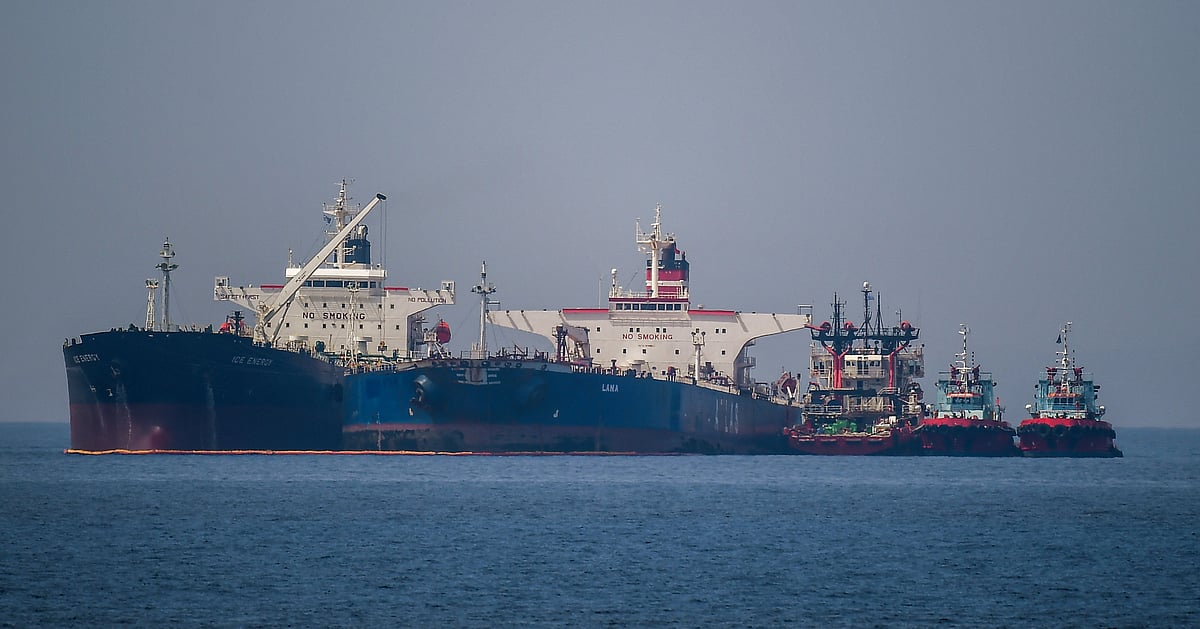
Russian oil tankers are increasingly using deceptive registration practices to evade international sanctions, according to a new report from the Centre for Research on Energy and Clean Air (CREA).
The think tank identified 85 vessels that changed their flags at least twice within six months of being sanctioned by the European Union, the United States Department of the Treasury’s Office of Foreign Assets Control (OFAC), or the United Kingdom. This practice allows Russian tankers to continue transporting oil despite international restrictions imposed following Russia’s 2022 invasion of Ukraine.
In a particularly alarming trend, six flag registries that had previously not registered any Russian vessels since the start of the Ukraine conflict were found to be hosting at least 10 such vessels each by September 2023, with the total number of these “shadow vessels” reaching 162.
“The number of Russian ‘shadow’ tankers sailing under false flags is now increasing at an alarming rate,” said Luke Wickenden, Energy Analyst and co-author of the report. According to CREA’s data, these falsely registered vessels transported Russian crude oil and petroleum products worth €1.4 billion through the Danish Straits in September alone.
The practice raises significant safety and environmental concerns for coastal nations. “The insurance of any vessel flying a false flag is void, which, combined with the fact that a lot of these tankers are old and have been re-commissioned almost from scrap, increases risk for coastal states which fall on their routes, in the event of accidents or an oil spill,” Wickenden explained.
This shadow fleet phenomenon represents a deliberate attempt to circumvent the price cap mechanism implemented by G7 nations, the European Union, and Australia. The price cap, introduced in December 2022, was designed to limit Russian oil revenues while still allowing petroleum to flow to global markets. Under these restrictions, Western companies can only provide shipping and insurance services for Russian oil if it’s sold below the cap threshold.
The report underscores that these false-flag operations violate Article 94 of the UN Convention on the Law of the Sea (UNCLOS), which requires a “genuine link” between a vessel and its flag state. Many of these vessels are registering with nations that have limited capacity to properly regulate their maritime fleets.
“Shadow vessel operators are taking advantage of capacity limitations of economically weak nations to exploit their flags and existing regulations to gain passage rights to deliver blood oil,” said Vaibhav Raghunandan, CREA EU-Russia Analyst and co-author of the report.
The shadow fleet’s expansion represents a significant challenge to the effectiveness of Western sanctions. While the price cap initially disrupted Russian oil exports and depressed prices, Russia has gradually adapted its logistics and found new buyers, primarily in India and China, allowing it to stabilize its petroleum exports despite Western restrictions.
CREA is urging decisive action from the international community, particularly calling on the EU and UK to lead global reforms of flag state regulations. The think tank recommends detaining falsely flagged vessels to disrupt Russian export logistics, which would increase operational costs and reduce the reliability of oil flows that provide crucial funding for Russia’s war effort.
Maritime experts note that addressing this issue will require coordinated international action and potentially expanded monitoring capabilities to track vessel ownership structures that have become increasingly opaque since the beginning of sanctions.
The report comes as Western nations continue to seek ways to tighten restrictions on Russian energy exports while minimizing disruption to global energy markets, highlighting the ongoing challenges in implementing effective sanctions against major energy producers in an interconnected global economy.
Fact Checker
Verify the accuracy of this article using The Disinformation Commission analysis and real-time sources.

16 Comments
So Russia is exploiting loopholes and finding new ways to keep its oil exports flowing despite international restrictions. This highlights the challenges of enforcing sanctions in a globalized economy.
You’re right, sanctions are difficult to fully implement when bad actors are willing to go to such lengths to circumvent them. Closing these gaps will require coordination and vigilance.
It’s disheartening to see Russia continue to find ways around the sanctions. This undermines the effectiveness of the measures taken to pressure Russia over the Ukraine invasion. Tighter controls and more transparency in global shipping are needed.
Absolutely. Sanctions only work if they are enforced rigorously. The international community must redouble efforts to monitor and restrict these illicit oil flows.
This report is a sobering reminder of the challenges in enforcing sanctions in a globalized world. Russia’s use of false-flag tankers to continue its oil exports is a concerning tactic that undermines the intended impact of the restrictions. Stricter controls and international cooperation will be crucial to address this issue.
You make a good point. Sanctions are a powerful tool, but their effectiveness depends on the ability to adapt and close any gaps that bad actors may exploit. This situation calls for a coordinated, multilateral response.
This is very concerning if true. Sanctions are meant to apply pressure, but it’s troubling to see Russian oil continuing to flow through deception. I hope authorities can crack down on these false-flag tankers to uphold the international order.
Agreed, the scale of this evasion is alarming. Robust monitoring and enforcement will be crucial to ensure the integrity of sanctions.
This report highlights the challenges of enforcing sanctions in a globalized world. Russia appears to be finding creative ways to keep its oil exports flowing, which undermines the intended impact of the restrictions. Closer international cooperation will be crucial to address this problem.
You’re absolutely right. Sanctions are a complex policy tool, and Russia’s evasion tactics demonstrate the need for a coordinated, multi-pronged approach to enforcement.
The use of false-flag tankers to transport Russian oil is very troubling. It demonstrates Russia’s determination to maintain its energy exports despite international pressure. Robust monitoring and enforcement will be essential to uphold the sanctions.
I agree. Sanctions are only effective if they are implemented consistently and without loopholes. This issue deserves close attention from policymakers and regulators.
This report highlights the cat-and-mouse game between Russia and the West when it comes to sanctions evasion. It’s a complex challenge, but closing these loopholes is crucial to maintaining the integrity of the sanctions regime.
You make a good point. Sanctions are an important tool, but they require constant vigilance and adaptation to counter the efforts of bad actors to circumvent them.
The scale of Russian oil exports through false-flag tankers is alarming and demonstrates the resourcefulness of Russia in circumventing sanctions. This is a concerning development that requires a strong international response to maintain the integrity of the restrictions.
Agreed. Russia’s ability to find workarounds highlights the importance of robust monitoring and enforcement mechanisms to ensure the effectiveness of sanctions. Closing these loopholes should be a top priority.