


Listen to the article
Trump’s Address: Fact-Checking the President’s Claims on Economy and Immigration
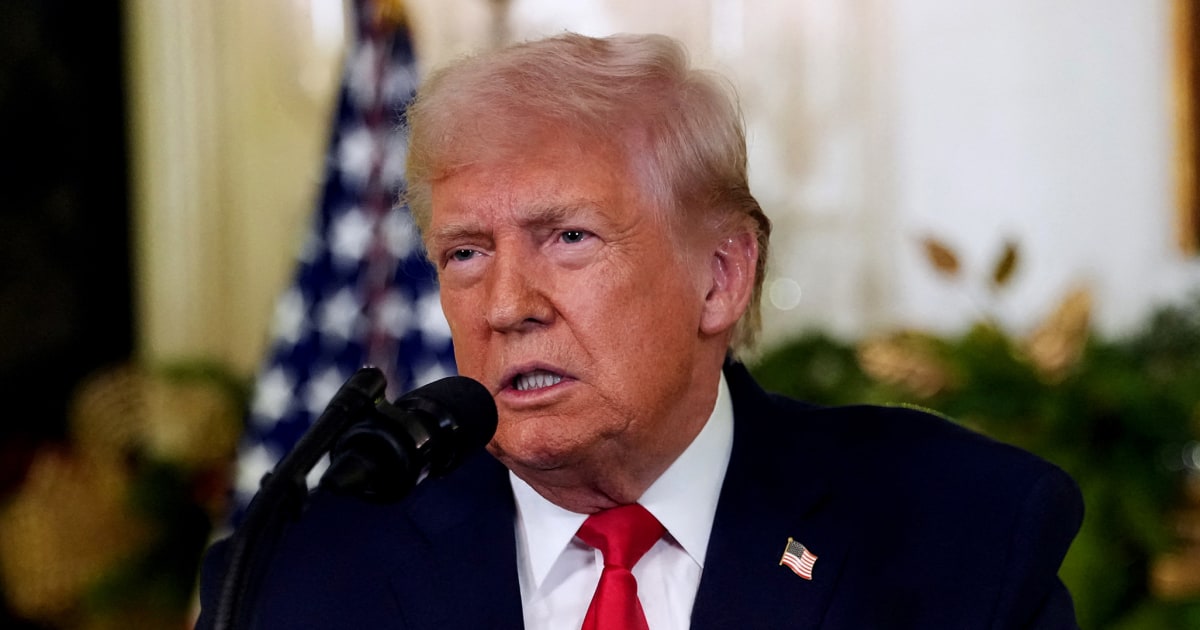
President Donald Trump delivered an 18-minute address Wednesday evening, making numerous claims about his administration’s first-year achievements spanning the economy, military readiness, and immigration policy. An examination of these statements reveals a mixed record of accuracy.
The President asserted that “wages are going up much faster than inflation,” a claim that contains some truth but requires context. While wages are indeed outpacing inflation, the margin isn’t as dramatic as suggested. Wage growth has actually slowed considerably this year, declining from 4.1% in January to 3.5% according to the most recent Bureau of Labor Statistics data. Meanwhile, inflation stands at 3.0% and has been rising monthly since April.
On immigration, Trump made one of his most significant misstatements, claiming the previous administration allowed “an army of 25 million people” to cross the border, many allegedly from “prisons, jails, mental institutions and insane asylums.” Official data from Customs and Border Protection shows approximately 7.4 million undocumented immigrants crossed outside legal checkpoints during the Biden administration. Even counting those who arrived at legal entry points without documentation, the figure reaches only 10.2 million.
The President’s claims about consumer prices contained several inaccuracies. He stated that egg prices have fallen 82% since March, but government Consumer Price Index data shows the decrease was actually 43.9%. His assertion that “everything else is falling rapidly” contradicts current inflation trends, as prices broadly continue to rise, albeit at a slower pace.
Regarding fuel costs, Trump’s claim that gasoline is “under $2.50 a gallon in much of the country” doesn’t align with national averages. The Energy Information Administration reports the average regular gas price at $2.89, while AAA shows $2.90. While GasBuddy does identify isolated stations in seven states with prices approaching $1.99, these represent a tiny fraction of service stations nationwide.
The President also significantly overstated price decreases for Thanksgiving turkeys, claiming a 33% reduction compared to last year. Data from the Wells Fargo Agri-Foods Institute indicates the actual decrease was just 3.7% for national brands, with overall Thanksgiving meal costs falling only 2-3%.
One of Trump’s boldest claims involved securing “$18 trillion of investment into the United States.” This figure appears substantially inflated, with the White House’s own website listing $9.6 trillion. Bloomberg News places the real figure closer to $7 trillion, noting many investments are vague pledges or framework trade deals not yet finalized.
On employment, Trump’s assertion that “100% of all net job creation has gone to American-born citizens” misrepresents complex workforce dynamics. Unemployment among native-born workers has actually risen under his administration, from 3.9% in November 2023 to 4.3% last month. Conversely, unemployment among foreign-born workers decreased from 4.5% to 4.4% during the same period.
The President’s claims about pharmaceutical price reductions of “400%, 500% and even 600%” lack substantiation. While his administration has announced several deals with drugmakers, none approach these figures. Pfizer, for example, announced average cost reductions of 50%, with potential savings up to 85%. Novo Nordisk agreed to cut prices for its weight-loss drug Ozempic by approximately 40%, contingent on sales through the yet-to-launch TrumpRX platform.
Complicating these pharmaceutical initiatives are Trump’s tariff policies. The administration has imposed tariffs as high as 20% on European Union members like Germany and Ireland—major sources of U.S. drug imports. While a recent agreement with the UK eliminated pharmaceutical tariffs, many EU drug imports still face 15% tariffs.
As the administration approaches the end of its first year, these statements highlight the continuing challenge of separating political rhetoric from economic reality.
Fact Checker
Verify the accuracy of this article using The Disinformation Commission analysis and real-time sources.

8 Comments
The immigration statistics cited seem questionable. Fact-checking is crucial to separate rhetoric from reality on this sensitive issue. We need an objective, data-driven approach to assess trends and impacts.
Agreed. Immigration policy should be based on reliable data, not unsubstantiated claims. A balanced, evidence-based discussion is needed to address this challenge effectively.
It’s good to see a fact-checking analysis of the President’s economic and immigration claims. While some points may have validity, the data and context are crucial for understanding the true trends and impacts. Objective analysis is essential for informed policymaking.
This article underscores the need for rigorous fact-checking, especially when it comes to high-profile political claims. While the economy and immigration are complex topics, we must rely on verifiable data rather than unsubstantiated assertions. Objective analysis is key to informed policymaking.
The wage growth and immigration data cited in this article provide an important reality check on the rhetoric. Careful examination of the facts is needed to separate truth from exaggeration, especially on sensitive issues. Nuanced, evidence-based discussions should guide policy decisions.
Interesting article on the nuances of wage growth and immigration trends. While some of the President’s claims may be exaggerated, it’s important to look at the full data and context. Wage gains are positive, but the pace has slowed recently as inflation ticks up.
Good point. Wage growth is a complex issue, and the headline numbers don’t tell the whole story. Policymakers should examine the details to understand the full economic picture.
This article highlights the importance of economic indicators beyond just the top-line numbers. Wage growth, inflation, and immigration all have nuanced dynamics that require careful analysis. Simplistic narratives often miss the full complexity.