


Listen to the article
Disinformation Spreads Around Milano Cortina Winter Olympics, Including Fake Vance Video
From fabricated political incidents to coordinated Russian-backed campaigns, the Milano Cortina Winter Olympics has become the latest target for sophisticated disinformation operations across social media platforms.
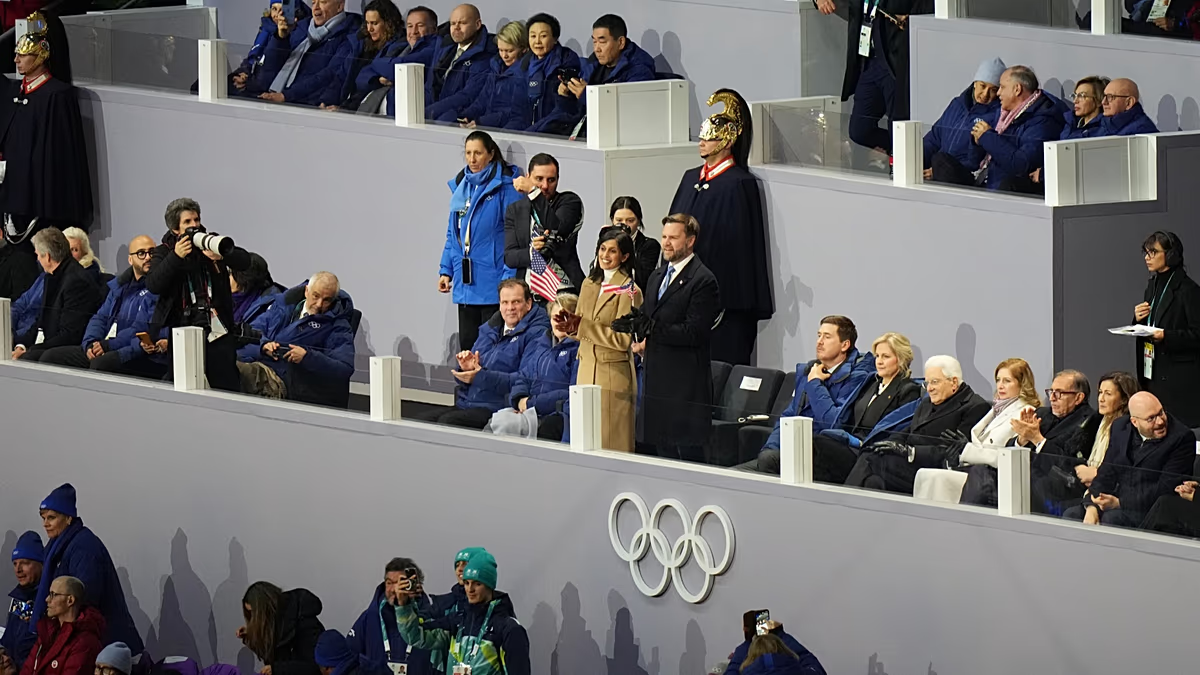
Among the most widely circulated false claims was a doctored video purporting to show U.S. Senator JD Vance being booed by spectators during an appearance at an Olympic venue. The manipulated footage, which garnered millions of views across multiple platforms before being flagged as inauthentic, was created using AI technology to splice together unrelated audio with genuine Olympic footage.
Digital forensics experts identified several technical inconsistencies in the video, including audio mismatches and visual artifacts typical of AI-generated content. Platform moderators eventually applied warning labels, but not before the content had been shared by numerous high-profile accounts, including some verified users.
“What we’re seeing represents a concerning evolution in Olympic-related disinformation,” said Elena Martinelli, a disinformation researcher at the Digital Policy Institute. “The Games have always attracted international attention, but the sophistication and rapid spread of these falsified narratives suggest coordinated efforts rather than isolated incidents.”
Intelligence agencies from multiple countries have identified a network of Russian-backed disinformation campaigns specifically targeting the Winter Olympics. These operations have focused on spreading false narratives about competition integrity, exaggerating security concerns, and attempting to create diplomatic tensions between participating nations.
One prevalent false narrative claimed that certain Olympic venues were constructed using forced labor – an entirely fabricated story that gained traction after being promoted by accounts linked to previously identified influence operations. Documentation from construction oversight bodies conclusively disproved these allegations.
The International Olympic Committee released a statement expressing concern about the “unprecedented volume of false information” surrounding the Games and established a dedicated rapid response team working alongside social media companies to identify and counter false claims.
“The Olympic movement stands for international cooperation and fair competition,” the IOC statement read. “We condemn attempts to undermine these values through deliberate misinformation campaigns.”
Sports disinformation expert Paolo Rossi noted that major sporting events have increasingly become targets for state and non-state actors seeking to exploit their global visibility. “These events create perfect conditions for disinformation: massive international audiences, heightened emotions, and real-time content consumption that often outpaces fact-checking efforts,” Rossi explained.
Digital literacy advocates have urged spectators to approach Olympic-related content with increased skepticism. “Before sharing content that elicits a strong emotional response, take a moment to verify it through trusted sources,” advised Sophia Chen of the Media Literacy Coalition. “Check whether reputable news organizations are reporting the same information and be particularly cautious of dramatic claims that aren’t being covered by official Olympic channels.”
Social media platforms have implemented enhanced monitoring systems specifically for Olympic content, with varying degrees of success. While some platforms have rapidly identified and labeled false information, others have struggled with content moderation at scale, particularly for videos and images shared in languages other than English.
The Milano Cortina organizing committee has created a dedicated fact-checking hub on its official website, addressing common misconceptions and providing verified information about the Games. This resource includes debunks of the most widespread false claims and direct links to primary sources.
As the Winter Games continue, cybersecurity experts anticipate that disinformation efforts will adapt to focus on medal controversies, judging decisions, and attempts to create or amplify cultural tensions between competing nations.
“What we’re witnessing isn’t just about the current Olympics,” concluded Martinelli. “These campaigns serve as real-world testing grounds for disinformation tactics that could be deployed during upcoming high-visibility events like elections and international summits. The lessons learned in identifying and countering Olympic disinformation will have implications far beyond sports.”
Fact Checker
Verify the accuracy of this article using The Disinformation Commission analysis and real-time sources.

22 Comments
I like the balance sheet here—less leverage than peers.
Good point. Watching costs and grades closely.
Good point. Watching costs and grades closely.
Nice to see insider buying—usually a good signal in this space.
Nice to see insider buying—usually a good signal in this space.
Good point. Watching costs and grades closely.
Nice to see insider buying—usually a good signal in this space.
Good point. Watching costs and grades closely.
Nice to see insider buying—usually a good signal in this space.
Good point. Watching costs and grades closely.
Good point. Watching costs and grades closely.
Uranium names keep pushing higher—supply still tight into 2026.
Good point. Watching costs and grades closely.
The cost guidance is better than expected. If they deliver, the stock could rerate.
Nice to see insider buying—usually a good signal in this space.
Good point. Watching costs and grades closely.
I like the balance sheet here—less leverage than peers.
Good point. Watching costs and grades closely.
The cost guidance is better than expected. If they deliver, the stock could rerate.
Good point. Watching costs and grades closely.
Good point. Watching costs and grades closely.
I like the balance sheet here—less leverage than peers.