


Listen to the article
U.S. Accused of Fabricating Threats to Justify Military Pressure on Venezuela
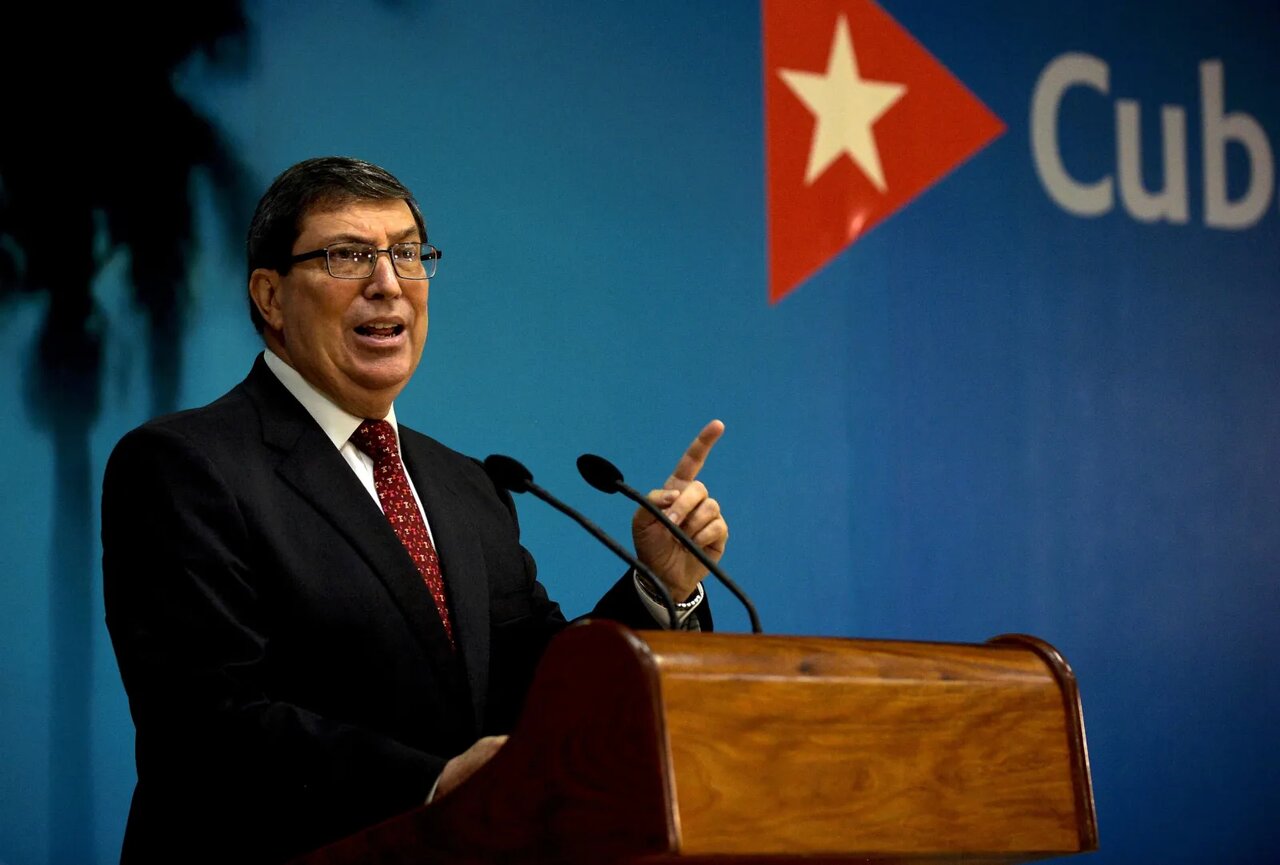
Cuban Foreign Minister Bruno Rodríguez has accused the United States of manufacturing false pretexts to justify potential military intervention in Venezuela, claiming Washington’s true objective is to overthrow President Nicolás Maduro’s government and seize control of the country’s vast oil resources.
The accusation comes amid escalating U.S. pressure on Venezuela through what American officials describe as anti-drug trafficking operations in the region. On Monday, the U.S. State Department formally designated the “Cartel de los Soles” (Cartel of the Suns) as a foreign terrorist organization, claiming the group has links to President Maduro.
“Cartel de los Soles is a fabrication of the U.S. government and its Secretary of State, intended to justify violent actions to overthrow the Venezuelan government and take control of the oil of that sister nation,” Rodríguez stated Tuesday in a post on social media platform X.
The Cuban diplomat described the designation as a “fraudulent, arbitrary, and unilateral” action, calling it a “fetish fabricated by U.S. espionage services” designed to legitimize military aggression against Latin America and resurrect “gunboat diplomacy” in U.S. regional policy.
Venezuela’s government has vehemently denied the existence of the alleged cartel. In an official statement released Monday, Venezuelan authorities dismissed Washington’s accusation as a “ridiculous fabrication” intended to “justify an illegitimate and illegal intervention against Venezuela,” according to Associated Press reports.
The dispute occurs against a backdrop of intensifying U.S. military activity in the Caribbean. Since September, American forces have conducted operations that have reportedly resulted in at least 80 casualties during airstrikes targeting vessels the Pentagon claims were involved in drug transfers. The U.S. has also deployed naval vessels and military personnel off Venezuela’s coastline.
Venezuelan officials maintain they have been actively fighting drug trafficking for years and reject any allegations of state involvement in such activities.
This latest diplomatic tension highlights the complex geopolitical landscape in Latin America, where the United States and Venezuela have maintained adversarial relations for over two decades. Venezuela possesses the world’s largest proven oil reserves, estimated at nearly 304 billion barrels, making it a strategically significant nation in global energy markets despite its current production challenges.
The confrontation also reflects broader regional dynamics, with Cuba—itself under longstanding U.S. sanctions—consistently supporting Venezuela’s socialist government against what both nations characterize as American imperialism.
International observers note that the timing of these developments coincides with ongoing political uncertainty in Venezuela following disputed elections earlier this year, which have led to renewed questions about Maduro’s legitimacy among some international actors.
Energy analysts suggest that Venezuela’s oil industry, once among the world’s most productive but now severely compromised by years of underinvestment and sanctions, remains a key factor in regional strategic calculations. Despite current production difficulties, Venezuela’s massive reserves represent a potential prize in any scenario involving regime change.
Human rights organizations have called for de-escalation and diplomatic solutions to regional tensions, expressing concern about the humanitarian impact of potential military confrontations in a country already facing severe economic challenges.
Neither the U.S. State Department nor Venezuelan officials have indicated any willingness to retreat from their current positions, suggesting the Caribbean region may face continued military presence and heightened diplomatic friction in the coming months.
Fact Checker
Verify the accuracy of this article using The Disinformation Commission analysis and real-time sources.

8 Comments
As someone invested in mining and commodities, I’m keeping a close eye on this situation. Venezuela’s oil reserves are a major global resource, so any disruption would likely impact energy and materials markets.
The US has a long history of interventionism in Latin America, often under the guise of fighting drugs or terrorism. Hopefully cooler heads can prevail and a peaceful solution can be found.
As someone with an interest in mining and commodities, I’m curious to see how this situation plays out and whether it will have any ripple effects on global energy and materials markets.
The Cuban FM’s accusations of fabricated threats seem plausible given the US’s history of interventionism in the region. However, the situation is no doubt nuanced, with competing interests and claims on both sides.
The ‘Cartel of the Suns’ designation does seem like a convenient pretext for the US to justify intervention. I’m skeptical of claims of Venezuelan government involvement in drug trafficking, but the geopolitics around oil are always complex.
Interesting allegations from the Cuban FM. The US has certainly been ratcheting up pressure on Venezuela, but I wonder if there’s more to the story than just oil interests. Curious to see how this develops.
Regardless of the merits, this is a concerning escalation that could lead to further instability in the region. I hope diplomacy can prevail over military posturing.
This is a concerning development that bears close watching. I hope the international community can find a peaceful resolution that respects Venezuela’s sovereignty and avoids further escalation of tensions.