


Listen to the article
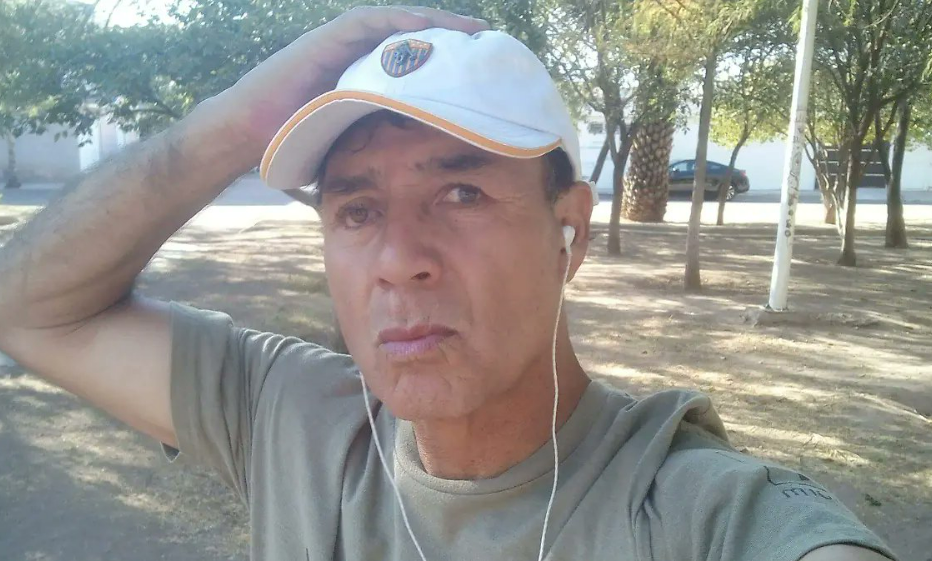
Mexican journalist Miguel Ángel Beltrán was found murdered along a highway connecting Durango and Mazatlán on October 25, becoming the seventh journalist killed in Mexico this year in what continues to be one of the world’s most dangerous environments for media professionals.
Beltrán, who gained prominence for his crime reporting on social media, was discovered with a threatening message left near his body that read, “For spreading false accusations against the people of Durango.” The location and circumstances of his death suggest a direct link to his journalistic work, particularly his coverage of criminal organizations operating in the region.
Just days before his murder, Beltrán had reported on the arrest of a leader from the Cabrera Sarabia crime cell, a group operating in Durango that competes with the more powerful Sinaloa and Jalisco cartels. Security experts familiar with the region note that such reporting often puts journalists in the crosshairs of criminal organizations seeking to control information flow in their territories.
Reporters Without Borders, which monitors press freedom globally, indicated that there was no evidence Beltrán had reported receiving threats before his death. The organization also confirmed he was not enrolled in Mexico’s Federal Protection Mechanism for Human Rights Defenders and Journalists, a program designed to provide state protection for media workers facing security risks.
“The murder of Miguel Ángel Beltrán Martínez represents a new blow to the press in Durango and to the right to freedom of information in Mexico,” said Artur Romeu, director of Reporters Without Borders’ Latin America office. “We call on authorities to prioritize investigations linked to his journalistic work and to identify and prosecute both the perpetrators and intellectual authors of the crime.”
Beltrán’s death adds to a troubling historical pattern in Durango state. Since 2009, at least three other journalists have been killed there for conducting their professional work, according to press freedom organizations.
The killing marks a continued deterioration of press safety in Mexico. With seven journalists murdered so far in 2025, the country is approaching its 2022 toll when 12 journalists were killed. According to the 2025 World Press Freedom Index, Mexico ranks 121st out of 180 countries evaluated, making it the most dangerous nation for journalists in Latin America.
The violence against media workers extends beyond Durango. In July, Pedro Ronald Paz, who worked as both a municipal law enforcement officer and journalist in Acapulco, Guerrero, was shot 17 times just minutes after broadcasting a report critical of an abandoned public works project. Paz had livestreamed footage of an incomplete construction site in the Progreso neighborhood, criticizing local officials for leaving hazardous conditions that endangered pedestrians.
“Unfortunately, the municipal government came to tear up part of the street,” Paz said in his final broadcast. “But as you can see, they left behind the rubble, and there’s no sign of progress. People walking here could easily fall into this hole. They just came and made a mess.”
Press freedom advocates point to a troubling pattern where local journalists covering corruption, public mismanagement, or organized crime face deadly consequences, often with minimal protection from authorities.
The persistent violence against journalists has created what media experts call “silence zones” across parts of Mexico—regions where criminal groups effectively control what can be reported, with journalists self-censoring to avoid becoming targets. This information vacuum further empowers criminal organizations and weakens democratic institutions.
Mexican authorities have repeatedly pledged to improve protections for journalists and to combat impunity in cases of violence against the press. However, prosecutions remain rare, with most cases unresolved. The Federal Protection Mechanism, established in 2012, has been criticized for insufficient resources and inconsistent implementation.
As investigations into Beltrán’s murder continue, press freedom organizations are calling for concrete actions to break what Reporters Without Borders describes as “the cycle of violence and impunity suffocating local journalism” in Mexico.
Fact Checker
Verify the accuracy of this article using The Disinformation Commission analysis and real-time sources.

9 Comments
It’s appalling that Beltrán was apparently killed for his reporting. Criminal organizations must not be allowed to silence critical voices through violence. This incident underscores the urgent need for better protections for media professionals in Mexico.
This murder highlights the challenges journalists face in covering criminal groups and their activities. While details are still emerging, it seems Beltrán’s reporting may have threatened the Cabrera Sarabia cell’s interests, leading to his tragic demise.
Journalists play a vital role in exposing corruption and holding the powerful accountable, even at great personal risk. Beltrán’s death is a devastating loss for his community and a blow to press freedom. I hope his legacy will inspire others to continue his important work.
While the details are still unfolding, this appears to be a targeted killing of a journalist who was doing his job. I hope the authorities can quickly identify and bring to justice those responsible for this heinous crime.
Absolutely. Impunity for attacks on journalists is unacceptable. The perpetrators must be held accountable, and the government must take stronger measures to safeguard press freedom and the safety of media workers.
Sadly, this is not an isolated incident. Mexico is consistently one of the most dangerous countries in the world for journalists. The authorities must do more to safeguard media professionals and ensure they can report freely without fear of reprisal.
I agree. Impunity for crimes against journalists is a major issue that enables further violence. Stronger protections and robust investigations are needed to send a clear message that these attacks will not be tolerated.
This is a grim reminder of the dangers journalists face, especially those covering organized crime. My condolences go out to Beltrán’s loved ones. I hope his murder spurs renewed efforts to protect reporters and ensure they can work without fear of retribution.
This is a tragic story. Journalists in Mexico face grave dangers for reporting on criminal organizations. My heart goes out to Miguel Ángel Beltrán’s family and colleagues. Holding those responsible accountable is crucial to protect press freedom.