


Listen to the article
Flash Flooding in Texas Sparks False Claims About Cloud Seeding
In the wake of devastating flash floods that swept through Central Texas, a wave of misinformation has spread online attributing the disaster to cloud seeding operations in the region. These claims, which have garnered millions of views on social media platforms, suggest that a deliberate weather modification technique caused the catastrophic flooding.
Rainmaker Technology, a California-based company, acknowledged conducting a small cloud seeding operation in the area on July 2, two days before the floods. However, meteorologists and weather experts have unanimously rejected any connection between this operation and the subsequent disaster.
“Cloud seeding cannot create a storm of this magnitude or size. In fact, cloud seeding cannot even create a single cloud,” explained Travis Herzog, a Houston-based meteorologist, in a social media post addressing the misinformation. Herzog noted that cloud seeding can only enhance rainfall in existing clouds by up to 20% – nowhere near the volume needed to create the devastating floods that struck the region.
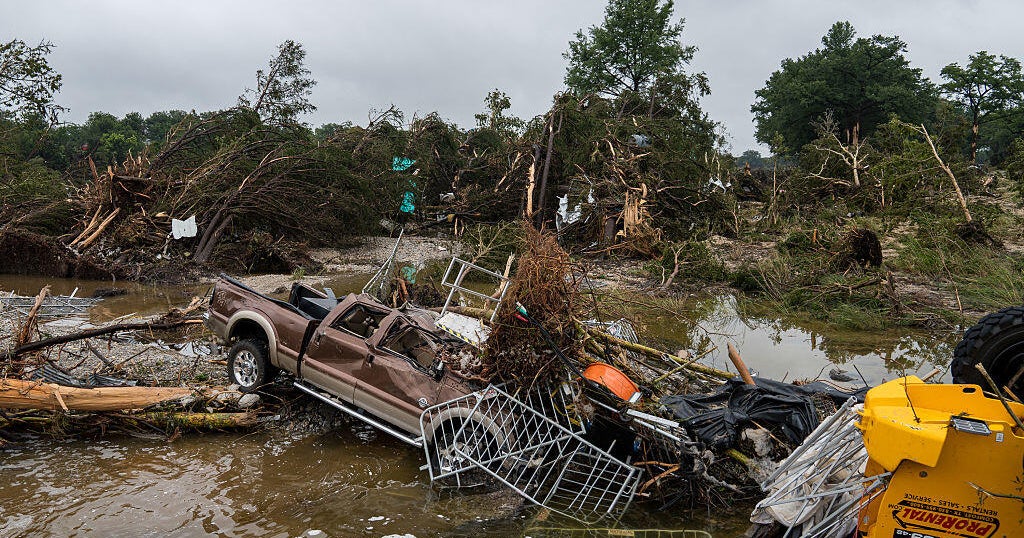
The flooding in Kerrville, Texas, saw waters reach the height of a two-story building in less than an hour on July 4. This extreme weather event resulted from a confluence of natural factors, as CBS News meteorologist Scott Padgett explained: “The combination of the steep terrain and the poor absorbing soil coupled with downbursts of heavy rain led to a textbook case for flash flooding.”
The affected region has long been known as “Flash Flood Alley” due to its high susceptibility to such events, according to the Lower Colorado River Authority. Meteorologists attribute the recent flooding to heavy rainfall when storms converged with the remnants of Tropical Storm Barry – not to human intervention.
Augustus Doricko, CEO of Rainmaker Technology, has publicly released flight logs of the company’s operations to counter speculation. According to these records, the company’s most recent cloud seeding activity took place on the afternoon of July 2, targeting two small clouds in Runge, Texas – approximately 150 miles south of Kerr County, where the worst flooding occurred. Doricko emphasized that these clouds dissipated within hours.
“The natural disaster in the Texan Hill Country is a tragedy. My prayers are with Texas. Rainmaker did not operate in the affected area on the 3rd or 4th or contribute to the floods that occurred over the region,” Doricko stated. The company had been contracted to attempt to boost water supplies in local reservoirs and aquifers but suspended operations when their meteorologist noticed moisture inflow from the Gulf.
Despite scientific consensus, conspiracy theories about cloud seeding have gained traction, with some prominent political figures amplifying these claims. Rep. Marjorie Taylor Greene of Georgia has promoted legislation to make weather modification a felony and shared critical posts about cloud seeding. Her office has not responded to requests for comment from CBS News.
Texas Senator Ted Cruz has publicly rejected these theories, stating, “To the best of my knowledge, there is zero evidence of anything related to weather modification. And look, the internet can be a strange place. People can come up with all sorts of crazy theories.”
Cloud seeding, developed in the 1940s, is used by dozens of countries to enhance precipitation. Federal regulations require that such operations be reported to the government at least ten days in advance. The National Oceanic and Atmospheric Administration confirmed that Rainmaker had filed an initial activity report in February indicating their intention to conduct cloud seeding.
Misinformation researcher Abbie Richards suggests that conspiracy theories often emerge as a coping mechanism following traumatic events. “The more emotionally overwhelming it is, the more likely we are to just see high volumes of conspiracy theories to cope and make people feel like they have control,” Richards told CBS News earlier this year.
Similar conspiracy theories have circulated after other major weather events, including flooding in Dubai, California wildfires, and Hurricanes Helene and Milton, underscoring a pattern of misinformation that often accompanies natural disasters.
Fact Checker
Verify the accuracy of this article using The Disinformation Commission analysis and real-time sources.

18 Comments
I appreciate the experts taking the time to clearly explain why the cloud seeding claims are unfounded. It’s important to counter misinformation with facts, especially on issues that can impact public safety.
Agreed. Providing clear, evidence-based information is crucial to maintaining trust in science and helping the public understand the real causes of these events.
It’s concerning to see how quickly misinformation can spread, especially around natural disasters. I’m glad the experts were able to provide a clear, evidence-based explanation to counter the false claims.
I’m curious to learn more about the potential impacts of cloud seeding. Even though it wasn’t the cause here, I wonder if there are other situations where it could have unintended consequences that need to be considered.
That’s a good point. Weather modification techniques like cloud seeding should be studied carefully to understand their full implications and potential risks.
This is a good reminder that we need to be cautious about accepting claims, especially around complex environmental and scientific topics. The experts’ analysis seems thorough and credible.
The flooding in Texas was clearly a devastating natural event, not something caused by artificial cloud seeding. It’s important to rely on scientific expertise rather than unsubstantiated theories.
Absolutely. Spreading misinformation can distract from the real issues and undermine efforts to understand and address the root causes of these disasters.
While cloud seeding can be a useful tool in certain situations, it’s important to understand its limitations and not overstate its capabilities. The experts have provided a helpful perspective on this issue.
Absolutely. It’s critical to rely on scientific expertise and not jump to conclusions, especially when it comes to complex environmental phenomena like extreme weather events.
This is a good example of the importance of verifying information, especially when it comes to scientific and environmental topics. I appreciate the experts taking the time to provide a clear, evidence-based explanation.
Agreed. Spreading misinformation, even unintentionally, can have real consequences. It’s crucial to rely on credible sources and expert analysis.
I’m glad the experts were able to quickly address the misinformation around the Texas flooding and cloud seeding. It’s important to counter false claims with facts, especially on issues that can impact public safety.
The flooding in Texas was clearly a devastating natural disaster, not the result of some kind of weather modification experiment. I’m glad the experts were able to set the record straight.
It’s good to see experts debunk the misinformation around cloud seeding and the Texas flooding. Weather modification is a complex topic, and it’s important to rely on factual information from meteorologists and other scientific authorities.
Agreed. Spreading false claims can be harmful and undermine trust in science. I’m glad the experts were able to clarify the limitations of cloud seeding technology.
While cloud seeding can enhance rainfall, the experts are right that it couldn’t have caused the catastrophic flooding in Texas. Natural weather patterns and climate change are more likely culprits behind these extreme events.
Exactly. It’s important to understand the science and not jump to conclusions, especially when it comes to complex environmental issues like this.