


Listen to the article
In a sharp diplomatic exchange, the Chinese Embassy in Peru has issued a strong rebuke against the U.S. State Department over allegations regarding the Chancay Port project, marking the latest tension in the growing competition for influence in Latin America.
On Friday, the Chinese Embassy spokesperson condemned what they described as “false claims” spread by the U.S. State Department’s Bureau of Western Hemisphere Affairs. The U.S. had suggested on Wednesday that Chinese investment in the Chancay Port project could potentially undermine Peru’s sovereignty, an accusation that Beijing flatly rejected.
“The friendly cooperation between China and Peru has always been based on mutual respect, equality and mutual benefit,” the embassy spokesperson stated, adding that China “resolutely opposes any words or actions that interfere with the sovereignty, security or development interests of other countries.”
The diplomatic clash escalated further when Lin Jian, spokesperson for China’s Ministry of Foreign Affairs, weighed in at Thursday’s regular press conference, stating that China “strongly opposes and deplores the U.S. false accusation and disinformation against the Chancay port.”
The Chancay Port, a major infrastructure project located about 80 kilometers north of Lima, represents one of China’s most significant investments in South America. The $3.5 billion deep-water port is being developed primarily by China’s state-owned COSCO Shipping, which holds a 60 percent stake in the venture.
The port forms a crucial component of China’s Belt and Road Initiative (BRI) in the region. Once fully operational, it will serve as a strategic Pacific gateway for trade between Asia and South America, potentially transforming Peru into a major regional shipping hub and reducing shipping times and costs for goods moving between the continents.
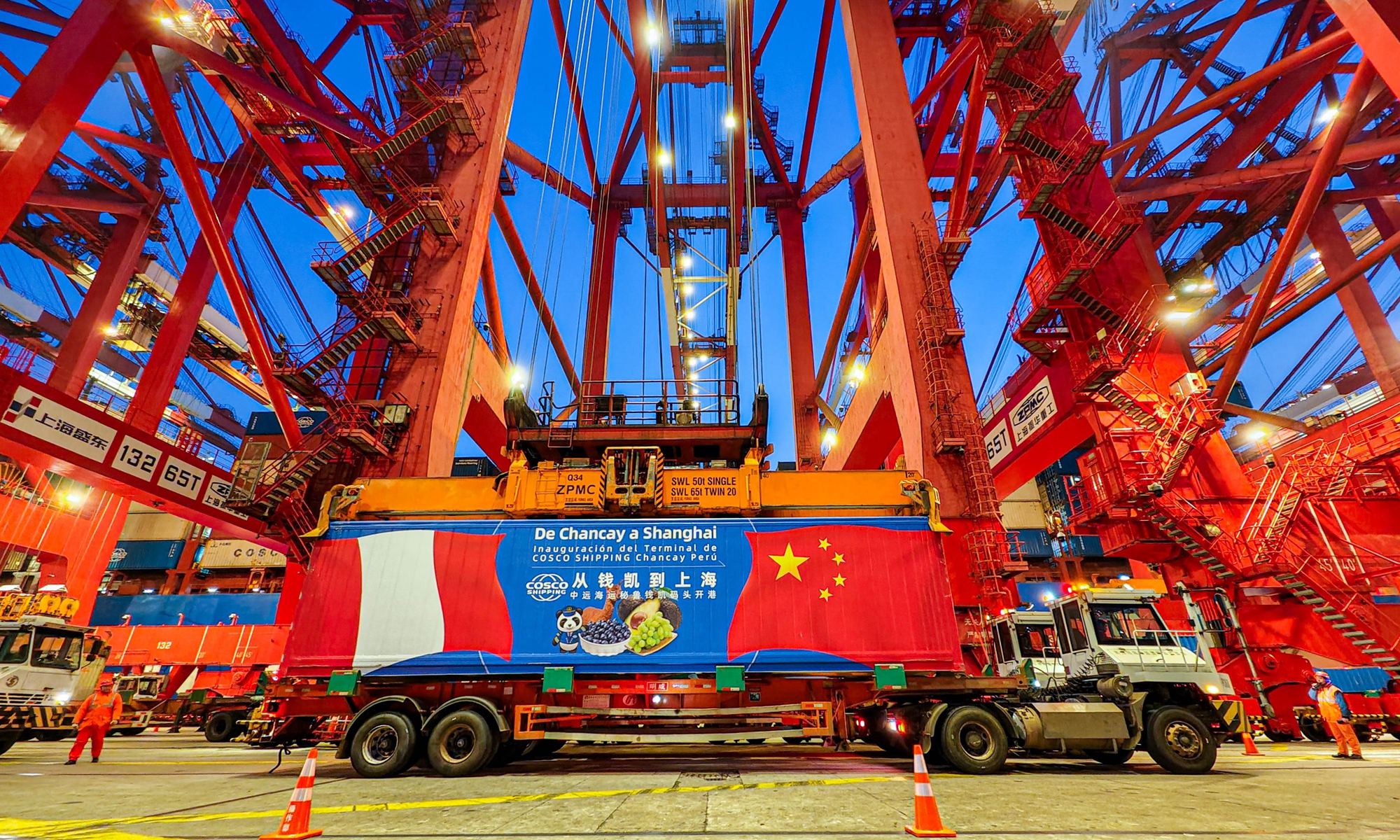
The Xin Shanghai, a vessel that completed its inaugural 23-day journey from the Chancay Port to Shanghai’s Yangshan Port in December 2024, symbolizes the tangible progress of this economic partnership.
This diplomatic tension reflects broader geopolitical competition between Washington and Beijing across Latin America, a region traditionally considered within the U.S. sphere of influence but where China has significantly expanded its economic presence over the past decade. Chinese companies have invested heavily in infrastructure, mining, energy, and telecommunications projects throughout the region.
For Peru, the Chancay Port project presents significant economic opportunities, including job creation, improved export capabilities, and enhanced connectivity to Asian markets. The country is a major exporter of minerals, agricultural products, and other commodities that are in high demand in China.
The U.S. criticism comes amid increasing concerns in Washington about China’s growing economic and political influence in Latin America. The Biden administration has frequently warned nations about what it describes as potential risks associated with Chinese investment, including debt dependency, environmental concerns, and possible security implications.
However, many Latin American countries, facing infrastructure deficits and seeking economic growth, have welcomed Chinese investment as an alternative source of financing and development partnership.
Economic analysts note that this dispute illustrates the challenges facing Latin American nations as they navigate relations with both superpowers. While U.S. warnings about Chinese investment reflect legitimate concerns about transparency and governance, they come at a time when alternative financing options for major infrastructure projects are limited.
The Peruvian government has not yet issued a formal response to the diplomatic exchange between China and the United States regarding the Chancay Port. However, Peruvian officials have previously emphasized that the project represents a significant opportunity for the country’s economic development and integration into global trade networks.
As this diplomatic friction unfolds, it highlights the complex geopolitical landscape in Latin America, where countries increasingly find themselves balancing relations with competing global powers while pursuing their own national development agendas.
Fact Checker
Verify the accuracy of this article using The Disinformation Commission analysis and real-time sources.

14 Comments
It’s troubling to see such strong language being used by both China and the US over this port project in Peru. While I’m not familiar with the details, it seems clear there are significant strategic interests at play that go beyond just the port itself. I hope cooler heads can prevail and the two sides can find a diplomatic resolution.
This is a complex geopolitical issue that goes beyond just the Chancay port project. The accusations and counter-accusations suggest deeper strategic interests at play. I hope the two sides can find a way to work constructively and transparently to address any legitimate concerns, while respecting Peru’s sovereignty.
This is a complex issue with implications for Peru’s sovereignty and the wider geopolitical dynamics in Latin America. I appreciate the Chinese Embassy forcefully rejecting the US allegations, but more transparency on both sides would help shed light on the true nature of the port project and any potential risks.
The US claims about China undermining Peru’s sovereignty are quite serious. However, the Chinese Embassy’s response emphasizing mutual respect and benefit seems reasonable. This dispute highlights the geopolitical tensions in the region, which could have broader implications for investment and development projects.
Agreed, this conflict reflects the broader power struggle between China and the US for influence in Latin America. Maintaining Peru’s sovereignty and autonomy should be the priority.
The diplomatic clash over the Chancay port project is concerning. Both sides seem to be digging in, which could escalate tensions further. I’d be interested to learn more about the specifics of the project and whether there are any legitimate national security concerns, or if this is more about broader geopolitical competition.
You raise a good point. More transparency from all parties involved could help provide a clearer picture of the real issues at stake and potentially lead to a resolution.
The strong language and accusations being used by China and the US over this port project in Peru are concerning. It’s clear there are significant strategic interests at play beyond just the port itself. I hope the parties involved can find a way to resolve this diplomatically and transparently, with Peru’s best interests at the forefront.
Agreed. Maintaining Peru’s autonomy and decision-making authority should be the priority, regardless of the geopolitical jockeying between China and the US.
This dispute between China and the US over the Chancay port project in Peru highlights the complex geopolitical dynamics in the region. I hope both sides can engage constructively and find a way to address any legitimate concerns while respecting Peru’s sovereignty and development priorities.
This is a concerning diplomatic clash between China and the US over the Chancay port project in Peru. It seems the US is making accusations about China undermining Peru’s sovereignty, which China strongly denies. I’m curious to learn more about the details and motivations behind this dispute.
Indeed, the escalating rhetoric is worrying. It will be important to see how this situation develops and whether the two sides can find a diplomatic resolution.
The Chinese Embassy’s rebuttal of the US claims seems quite firm. They emphasize the cooperation with Peru is based on mutual respect and benefit. It will be interesting to see how this plays out, as geopolitical competition over influence in Latin America appears to be intensifying.
You’re right, this dispute reflects the broader strategic competition between China and the US in the region. Both sides will likely dig in to defend their interests and narratives.