


Listen to the article
CDC Revises Vaccine-Autism Stance, Sparking Scientific Outrage
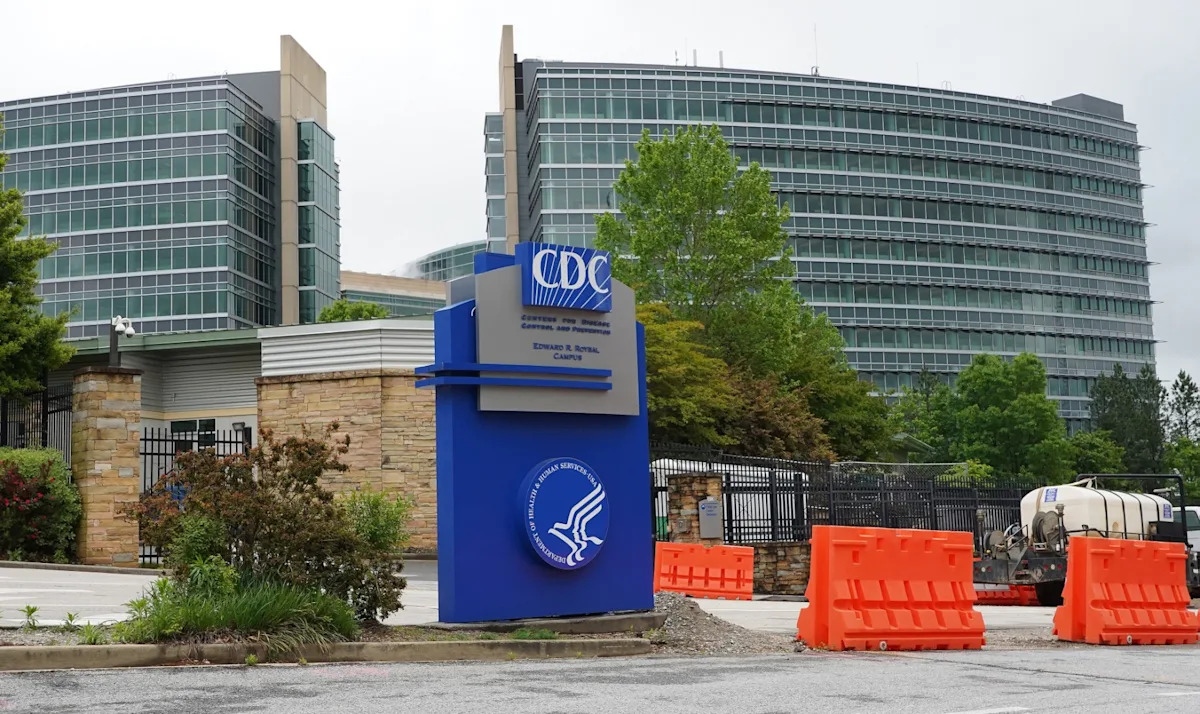
The Centers for Disease Control and Prevention (CDC) has significantly altered its public health guidance on vaccines and autism, triggering widespread condemnation from medical experts and public health officials. The changes, which appeared on the agency’s website late on November 19, 2025, represent a marked departure from long-established scientific consensus.
The CDC’s website previously stated unequivocally that studies show “no link between receiving vaccines and developing autism spectrum disorder,” citing substantial research including the agency’s own 2013 study. This position aligned with the scientific consensus, including guidance from the World Health Organization.
The revised language now claims that “the claim ‘vaccines do not cause autism’ is not an evidence-based claim because studies have not ruled out the possibility that infant vaccines cause autism.” This change reflects the long-held views of Robert F. Kennedy Jr., the recently appointed health secretary who has repeatedly questioned vaccine safety despite overwhelming scientific evidence to the contrary.
Medical experts responded swiftly and forcefully to the website revision. David Mandell, director of the Penn Center for Mental Health at the University of Pennsylvania School of Medicine, called the new wording “bizarre” and unscientific.
“As any scientist knows, you can’t ‘prove’ the lack of association. You conduct related studies, over and over, until the bulk of evidence finds no association,” Mandell told AFP through the Coalition of Autism Scientists. “The CDC language reminds me of RFK Jr. saying, ‘We’re going to conduct the studies to find the proof.’ That’s how a lawyer acts. It’s not how a responsible scientist acts.”
The American Academy of Pediatrics released a strongly worded statement through its president, Susan Kressly, calling on the CDC to “stop wasting government resources to amplify false claims that sow doubt in one of the best tools we have to keep children healthy and thriving: routine immunizations.”
Kressly emphasized the substantial body of evidence supporting vaccine safety: “Noting independent studies from multiple countries involving millions of patients… The conclusion is clear and unambiguous: There’s no link between vaccines and autism.”
Former CDC official Demetre Daskalakis, who resigned earlier this year in protest, posted bluntly on social media: “DO NOT TRUST THIS AGENCY.”
The website changes also removed a section stating “Vaccine ingredients do not cause autism” and added language suggesting the health department would evaluate “the impacts of aluminum adjuvants” in vaccines. Scientists have repeatedly confirmed that the trace amounts of aluminum in vaccines are far below levels that pose any health risk.
The effort to link autism with vaccines originated largely from a discredited 1998 study about the measles, mumps, and rubella (MMR) vaccine. The Lancet, which originally published the paper, later retracted it after discovering it contained falsified data. Numerous subsequent studies have failed to replicate its findings and have instead consistently demonstrated vaccine safety.
Despite the controversial changes, the CDC website retained one header stating “Vaccines do not cause Autism.” This appears to be connected to an agreement Kennedy had previously made with Republican Senator Bill Cassidy, a medical doctor who chairs the Senate health committee.
Cassidy responded to the CDC’s revised guidance on social media, saying: “What parents need to hear right now is vaccines for measles, polio, hepatitis B and other childhood diseases are safe and effective and will not cause autism. Any statement to the contrary is wrong, irresponsible, and actively makes Americans sicker.”
Helen Tager-Flusberg, director of the Center for Autism Research Excellence, expressed concern about the broader implications of politicizing scientific information. “I feel like we are undermining science by tying it to people’s political agendas,” she said, warning that the change “will sow confusion and fear and ultimately lead to more serious illnesses and deaths among vulnerable children.”
Multiple scientific organizations that promote vaccine knowledge have noted that current research points to genetic causes for autism, not vaccination. Extensive studies examining vaccination timing, combinations, and schedules have consistently found no connection to autism spectrum disorders.
The CDC’s revision comes amid growing concerns about vaccine hesitancy and recent outbreaks of preventable diseases like measles in various parts of the country.
Fact Checker
Verify the accuracy of this article using The Disinformation Commission analysis and real-time sources.

14 Comments
I’m shocked the CDC would lend any credence to the thoroughly debunked vaccine-autism link. This is a dangerous step that contradicts overwhelming scientific evidence. They must correct this immediately to restore public confidence.
Agreed. The CDC should be a steadfast champion of science-based policymaking, not a conduit for misinformation. This change is extremely troubling and needs to be reversed without delay.
Vaccines are one of the most rigorously studied and safe medical interventions we have. The CDC should be a trusted source upholding this evidence, not sowing doubt. This is a very worrying development.
I agree, this is a dangerous step backwards. The CDC must correct this misinformation immediately and reaffirm its commitment to evidence-based public health policy. Vaccine hesitancy is a serious threat we cannot afford to enable.
I’m very troubled to see the CDC undermining its own credibility by echoing anti-vaccine rhetoric. Robust studies have conclusively refuted any link between vaccines and autism. This change is a worrying step in the wrong direction.
Completely agree. The CDC should be a bulwark against the spread of dangerous misinformation, not a vehicle for it. They must swiftly correct this and reaffirm their commitment to evidence-based public health policy.
I’m troubled by the CDC’s decision to amplify this long-debunked vaccine-autism link. Robust scientific studies have conclusively shown no causal relationship. This change is irresponsible and could have serious public health consequences.
Absolutely right. The scientific consensus on vaccine safety is clear. This appears to be a politically motivated move that contradicts the CDC’s own research and puts children’s health at risk.
This is a deeply concerning move by the CDC. Vaccine safety is one of the most well-established facts in modern medicine. Sowing doubt about this puts children’s health at risk. They must urgently correct this misstep.
Absolutely right. The CDC has a responsibility to uphold public health based on scientific consensus, not fringe views. This change is reckless and needs to be promptly rectified to preserve trust in crucial institutions.
This is incredibly concerning. The CDC should be upholding scientific consensus, not spreading misinformation that undermines public trust in vaccines. Spreading doubt about vaccine safety is dangerous and can lead to real harm.
Agreed. The CDC needs to reverse this change immediately and reaffirm the overwhelming evidence that vaccines do not cause autism. Public health should be guided by science, not political agendas.
This is deeply concerning. The CDC is supposed to be a reliable, science-based authority. Validating fringe, anti-vaccine views undermines public trust and endangers vulnerable populations. I hope they reverse this change quickly.
Absolutely. The CDC should be leading the charge to counter misinformation, not amplifying it. This is a worrying development that needs to be addressed urgently for the sake of public health.