


Listen to the article
BSF Denies Bangladeshi Media Claims About Murder Suspects Crossing Border
The Border Security Force (BSF) has issued a firm denial regarding recent reports in Bangladeshi media claiming that two suspects in the murder of student leader Sharif Osman Hadi had illegally entered India through the Haluaghat border area of Bangladesh.
“The claims are completely false, fabricated, and misleading, and there is no evidence to support them,” said BSF Inspector General OP Upadhyay, who oversees operations in the Meghalaya sector. The statement came in response to growing speculation in Bangladeshi media outlets about the whereabouts of the murder suspects.
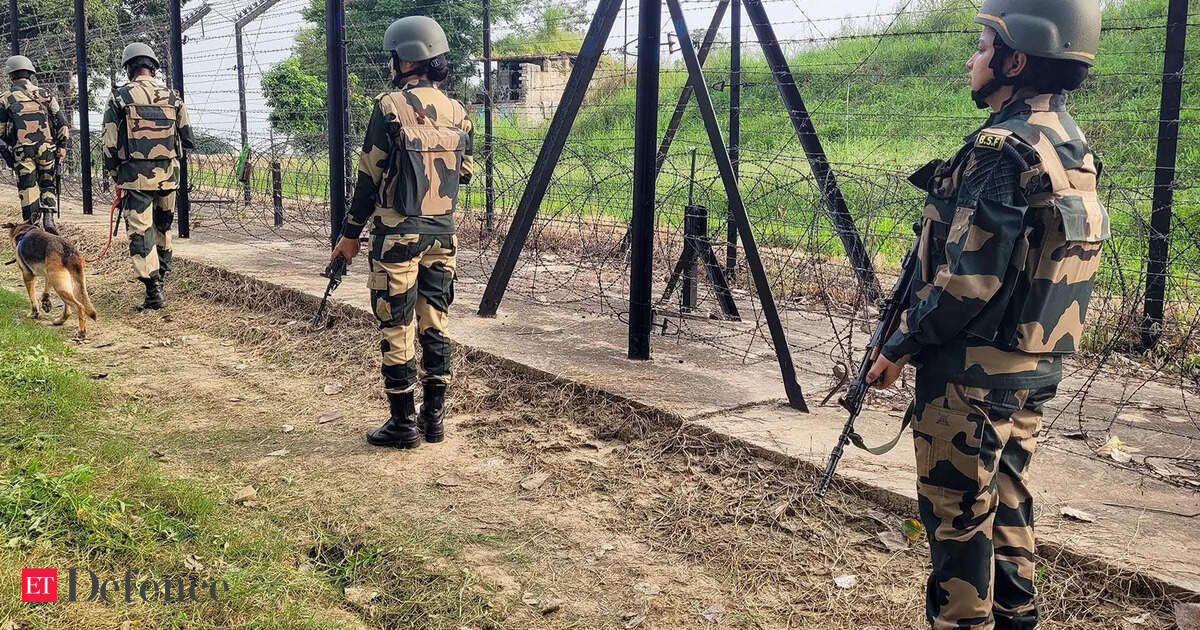
According to Upadhyay, no arrests or interceptions have taken place along the border in the Meghalaya sector, and there has been no evidence of illegal cross-border movement in the area. The BSF, which is tasked with guarding the India-Bangladesh border, maintains that these claims lack any factual basis.
The controversy stems from reports in Bangladesh that claimed two suspects in the Hadi murder case – Faisal Karim Masud and Alamgir Sheikh – had fled to India through the Haluaghat border in Mymensingh district. Bangladeshi media outlets cited an Additional Commissioner of the Dhaka Metropolitan Police, who allegedly stated during a press briefing that the suspects had entered India with assistance from local accomplices.
Upadhyay pointed to inconsistencies in the Bangladeshi media reports, noting, “Just three days ago, Bangladeshi media quoted an IG-rank officer stating that no such evidence existed. Now, a DIG-level officer has made contradictory remarks.” He also confirmed that allegations about the Meghalaya Police apprehending these individuals were false, stating that the Meghalaya Police had denied these claims when contacted for verification.
The BSF official further questioned the logistical feasibility of such a border crossing. “The claim that the individuals entered India from a location nearly 300 km from Dhaka, despite extensive CCTV surveillance and checkpoints in Bangladesh, is highly implausible,” Upadhyay explained. He also noted that the Bangladesh Border Guard (BGB), which he described as “a highly professional force,” has not reported any such incident to their Indian counterparts.
The case has attracted significant attention due to the high-profile nature of the victim. Sharif Osman Hadi, 32, was critically injured after being shot in the head during an election campaign in Dhaka on December 12. Following the attack, he was airlifted to Singapore for specialized medical treatment, where he succumbed to his injuries on December 18.
The murder has heightened tensions in Bangladesh, particularly during an already volatile election period. The allegations about suspects fleeing to India add an international dimension to the case, potentially affecting diplomatic relations between the two neighboring countries.
Border security between India and Bangladesh has long been a sensitive issue, with illegal immigration, smuggling, and cross-border movement of fugitives being regular concerns. The BSF maintains strict vigilance along the 4,096-kilometer shared border, which spans five Indian states: West Bengal, Assam, Meghalaya, Tripura, and Mizoram.
This incident highlights the challenges of managing border security and the sometimes contradictory narratives that emerge in media across national boundaries. As investigations into Hadi’s murder continue in Bangladesh, the BSF remains firm in its position that no illegal border crossing connected to this case has occurred in the areas under its jurisdiction.
Fact Checker
Verify the accuracy of this article using The Disinformation Commission analysis and real-time sources.

6 Comments
Interesting development in the Hadi murder case. It’s good to see the BSF denying the claims from Bangladeshi media as false and fabricated. Factual responses from authorities are important to counter speculation and misinformation.
This denial from the Indian border security force is a prudent move. Unverified reports of suspects fleeing across the border can easily escalate tensions, so it’s good to see the authorities clarifying the situation and affirming no evidence of illegal crossings.
The border security force’s denial of these reports seems appropriate. Without solid evidence, it’s wise not to jump to conclusions about suspects crossing the India-Bangladesh border. Maintaining transparency and accuracy is crucial in sensitive cases like this.
I agree. The BSF’s statement provides a measured, factual response to counter the speculative claims from Bangladeshi media. Verification of information is key, especially when dealing with potential cross-border issues.
It’s encouraging to see the BSF taking a proactive stance in refuting the unsubstantiated reports from Bangladeshi media. Maintaining clear communication and dispelling misinformation is crucial for managing sensitive border-related issues effectively.
The BSF’s firm denial of the Bangladeshi media’s claims is a necessary step to maintain transparency and avoid further speculation. Providing factual information helps to counter any false narratives and uphold the integrity of the investigation.