


Listen to the article
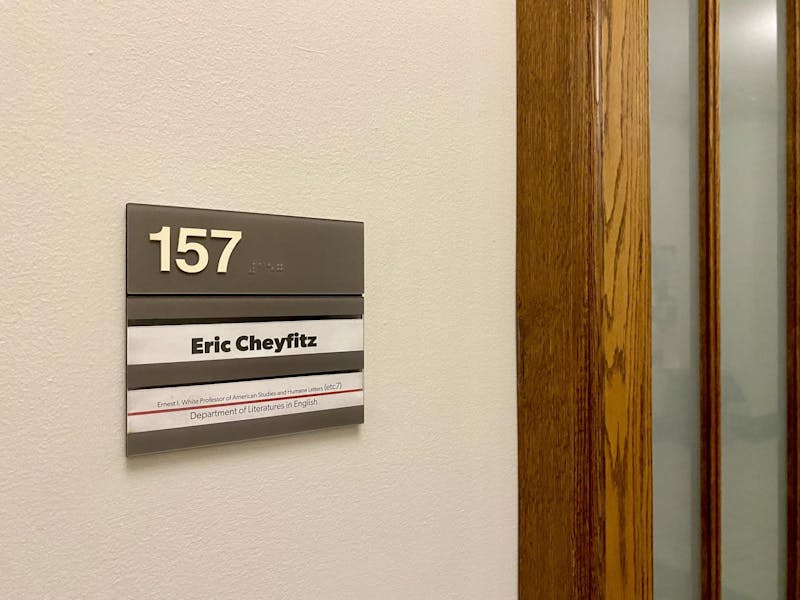
Cornell University Provost Kavita Bala addressed what she described as “misleading information” regarding a discrimination case involving former professor Eric Cheyfitz during a Faculty Senate meeting on October 22. The case centered on allegations that Cheyfitz asked an Israeli graduate student to drop his spring course on Gaza due to the student’s nationality.
Breaking with standard protocol on personnel matters, Bala stated that an exception was made “because of the amount of false and misleading information that’s out there that’s created understandable concern and confusion.”
According to Bala, Cheyfitz was scheduled to face a faculty review panel on November 3, but instead accepted a retirement deal before the review, effectively ending the investigation. While a Faculty Senate committee had initially ruled in Cheyfitz’s favor, the University ultimately deferred to the Cornell Office of Civil Rights’ finding of discrimination following his retirement.
At the heart of the controversy is a conversation between Cheyfitz and graduate student Oren Renard. Bala stated that after the third class session, Cheyfitz explicitly told Renard he was “not welcome in the class because ‘he was an Israeli citizen supporting an Israeli stance in Gaza.'”
The provost recounted Cheyfitz allegedly telling Renard: “If people want to take a course with your point of view, God bless them, and if there’s a course out there for them, they should take that course.” Bala claimed that when Renard attempted to explain that his viewpoint was being “mischaracterized,” Cheyfitz cut him off.
“This is not a case of academic freedom,” Bala emphasized. “This is a case of discrimination based on national origin.”
Cheyfitz’s lawyer, Luna Droubi, firmly denied these allegations in a response to The Cornell Sun. She pointed to the Faculty Senate Committee on Academic Freedom and Professional Status, which had unanimously found that Cheyfitz did not violate University policy. According to Droubi, the committee determined that Cheyfitz’s comments related to national origin did not provide sufficient evidence that he had asked Renard to leave because of his nationality.
Droubi challenged the veracity of Bala’s account, stating that many of the provost’s statements were selectively chosen from a transcript of what she described as a “secretly recorded” conversation between Cheyfitz and Renard. She claimed Cheyfitz was unaware of the recording and characterized it as “unauthenticated,” adding that Renard had “refused to hand over the audio file to investigators.”
The case includes additional context regarding Renard’s background. According to reporting by The Nation, Renard previously served in Israel’s elite military surveillance agency, Unit 8200, though this information has since been removed from his LinkedIn profile.
Regarding Renard’s classroom behavior, Bala stated that the student had attended only three classes total and spoke minimally. She quoted Cheyfitz from an investigative interview saying Renard was “respectful in his responses” and that he wasn’t “paying strict attention to him” in class.
Droubi countered that Cheyfitz maintained Renard was “disruptive to the learning environment.” She referenced a letter published in The Cornell Sun from nine students in the class who wrote that “it was immediately clear that [Renard] had come to disrupt” and “it was obvious that Renard did not join the class to engage in discussions about the reading material.”
In his own response, Cheyfitz questioned the administration’s handling of his case: “I can only conclude that — in addition to the determination that cleared me, and the students in that class who’ve publicly written in support of me — the administration’s decision to settle with me is an admission of their weakness of their claims against me.”
The controversy highlights ongoing tensions on university campuses regarding academic freedom, discrimination policies, and discourse on politically sensitive topics like the Gaza conflict. It also underscores the challenges universities face in balancing protections against discrimination with faculty autonomy in classroom management.
Fact Checker
Verify the accuracy of this article using The Disinformation Commission analysis and real-time sources.

18 Comments
This is a complex situation with allegations of misinformation and discrimination. It’s good that the university is addressing the concerns and investigating the matter thoroughly, even if it means going against standard protocols. Transparency is important to uphold academic integrity.
I’m curious to learn more about the specifics of the case and what led to the findings of discrimination. It’s important that universities handle sensitive matters like this fairly and impartially.
This is a troubling situation, but I appreciate the university’s transparency in addressing the allegations and concerns. Discrimination has no place in academia, and I hope the investigation provides clarity on what happened.
The decision to defer to the civil rights office’s findings, even after an initial faculty ruling, suggests the university took this matter seriously. Ensuring fair treatment for all students is essential.
Allegations of discrimination against students based on their nationality are deeply concerning. I’m glad the university is investigating this matter thoroughly and taking appropriate action, even if it means going against standard procedures.
It will be important to understand the full context and details of the case to assess whether the university’s response was justified. Upholding academic integrity and non-discrimination is crucial.
This is a troubling situation, but I appreciate the university’s transparency in addressing the allegations and concerns. Discrimination has no place in academia, and I hope the investigation provides clarity on what happened.
The decision to defer to the civil rights office’s findings, even after an initial faculty ruling, suggests the university took this matter seriously. Ensuring fair treatment for all students is essential.
Allegations of discrimination against students based on their nationality are very concerning. I’m glad the university is looking into this case and taking appropriate action, even if it means an exception to standard procedures.
It will be interesting to see the full details of the investigation and what led to the conclusion of discrimination. Upholding academic freedom and non-discrimination is crucial for universities.
This is a complex and sensitive situation, but I appreciate the university’s transparency in addressing the concerns. Discrimination in academia is unacceptable, and I’m glad the university is taking the allegations seriously.
The decision to defer to the civil rights office’s findings, even after an initial faculty ruling, suggests the university is committed to a fair and impartial investigation. Ensuring equal treatment for all students is essential.
Allegations of discrimination against students based on their nationality are very concerning. I’m glad the university is looking into this case and taking appropriate action, even if it means an exception to standard procedures.
It will be interesting to see the full details of the investigation and what led to the conclusion of discrimination. Upholding academic freedom and non-discrimination is crucial for universities.
Allegations of discrimination against students based on their nationality are deeply concerning. I’m glad the university is investigating this matter thoroughly and taking appropriate action, even if it means going against standard procedures.
It will be important to understand the full context and details of the case to assess whether the university’s response was justified. Upholding academic integrity and non-discrimination is crucial.
This is a complex and sensitive situation, but I appreciate the university’s transparency in addressing the concerns. Discrimination in academia is unacceptable, and I’m glad the university is taking the allegations seriously.
The decision to defer to the civil rights office’s findings, even after an initial faculty ruling, suggests the university is committed to a fair and impartial investigation. Ensuring equal treatment for all students is essential.