


Listen to the article
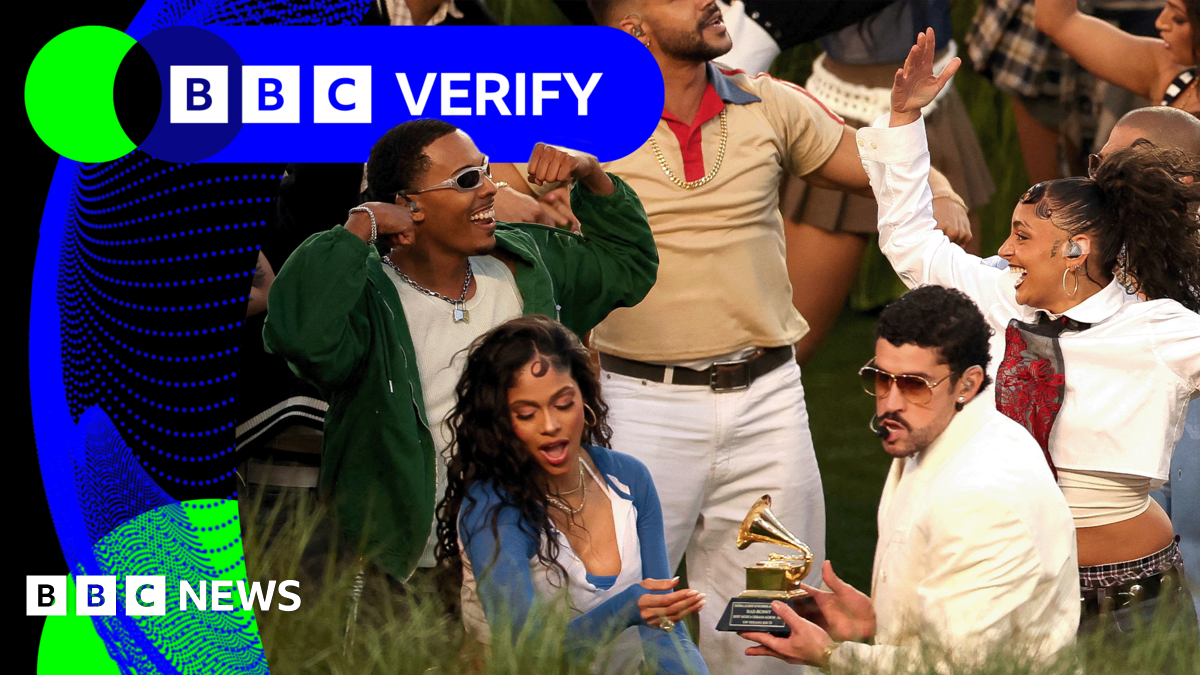
Social media posts wrongly claiming that Grammy-winning artist Bad Bunny gave his award to a child detained by U.S. immigration officials have been circulating widely, but fact-checkers have confirmed the story is fabricated.
The viral claim emerged shortly after the Puerto Rican rapper and singer, whose real name is Benito Antonio Martínez Ocasio, won Best Música Urbana Album for “Un Verano Sin Ti” at the 65th Annual Grammy Awards. Posts across various platforms alleged that Bad Bunny had dedicated his Grammy to a young immigrant child being held in U.S. detention facilities.
However, verification by multiple fact-checking organizations revealed no evidence of such a gesture. During his acceptance speech, Bad Bunny made no mention of immigration issues or detained children. The artist’s representatives have not commented on the false claims, which continue to spread despite being debunked.
This misinformation appears to be part of a growing trend of fabricated celebrity humanitarian gestures that gain traction online. Social media platforms have struggled to contain such false narratives, which often spread rapidly before fact-checkers can intervene.
Bad Bunny, one of Latin music’s most influential figures, has previously used his platform to address social and political issues affecting Puerto Rico and Latin American communities. In 2019, he joined protests calling for the resignation of then-Puerto Rican governor Ricardo Rosselló, and he has been vocal about recovery efforts following Hurricane Maria.
The artist’s actual Grammy acceptance speech focused on celebrating Latin music and his Puerto Rican heritage. “I want to dedicate this award to Puerto Rico, the cradle of reggaeton,” he said in Spanish, highlighting the cultural significance of his music.
Immigration policy remains a contentious issue in American politics. U.S. Customs and Border Protection has reported detaining thousands of unaccompanied minors at the southern border in recent years. Advocacy groups have repeatedly raised concerns about detention conditions and family separation policies, which have evolved across multiple administrations.
Social media experts note that false stories about celebrities and humanitarian causes often spread because they align with people’s existing beliefs or hopes. Dr. Elena Maris, a communications researcher at Northwestern University, explains: “These narratives tap into real concerns about important issues like immigration, while attaching them to beloved public figures. This combination makes them particularly shareable, regardless of their accuracy.”
The Recording Academy, which presents the Grammy Awards, maintains strict protocols regarding the physical awards. Grammy trophies remain the property of the Recording Academy, with winners receiving a replica. Recipients cannot transfer ownership of the award to another person or entity, making the claim that Bad Bunny “gave away” his Grammy technically impossible under the organization’s rules.
This is not the first time misinformation has circulated about high-profile Grammy moments. Similar fabricated stories have targeted other artists, including Beyoncé and Taylor Swift, in previous years.
Digital literacy experts recommend that social media users verify information through multiple credible sources before sharing content, especially stories that seem designed to evoke strong emotional responses. Platforms including Twitter, Facebook, and Instagram have implemented various fact-checking measures, though critics argue these efforts have shown limited effectiveness in preventing the spread of misinformation.
As Bad Bunny continues his meteoric rise in global music—having been Spotify’s most-streamed artist worldwide for three consecutive years—his cultural influence makes him a frequent subject of both genuine news and fabricated stories.
The false Grammy narrative underscores broader concerns about information integrity in the digital age, particularly surrounding celebrities and politically charged topics like immigration policy, where emotional responses can override critical evaluation of sources and claims.
Fact Checker
Verify the accuracy of this article using The Disinformation Commission analysis and real-time sources.

27 Comments
Uranium names keep pushing higher—supply still tight into 2026.
Good point. Watching costs and grades closely.
Exploration results look promising, but permitting will be the key risk.
Good point. Watching costs and grades closely.
Exploration results look promising, but permitting will be the key risk.
Good point. Watching costs and grades closely.
Good point. Watching costs and grades closely.
Interesting update on Bad Bunny Grammy Donation Claim Debunked – BBC. Curious how the grades will trend next quarter.
Good point. Watching costs and grades closely.
Good point. Watching costs and grades closely.
The cost guidance is better than expected. If they deliver, the stock could rerate.
Good point. Watching costs and grades closely.
Good point. Watching costs and grades closely.
Uranium names keep pushing higher—supply still tight into 2026.
Nice to see insider buying—usually a good signal in this space.
Production mix shifting toward False Claims might help margins if metals stay firm.
Good point. Watching costs and grades closely.
Good point. Watching costs and grades closely.
Exploration results look promising, but permitting will be the key risk.
Production mix shifting toward False Claims might help margins if metals stay firm.
Good point. Watching costs and grades closely.
Exploration results look promising, but permitting will be the key risk.
Good point. Watching costs and grades closely.
Good point. Watching costs and grades closely.
Uranium names keep pushing higher—supply still tight into 2026.
Good point. Watching costs and grades closely.
Interesting update on Bad Bunny Grammy Donation Claim Debunked – BBC. Curious how the grades will trend next quarter.