


Listen to the article
South Carolina Laboratory Agrees to Pay Millions in Healthcare Kickback Settlement
A South Carolina medical testing company has agreed to pay over $6.8 million to settle federal allegations of illegal kickbacks to physicians for patient referrals, according to the U.S. Department of Justice.
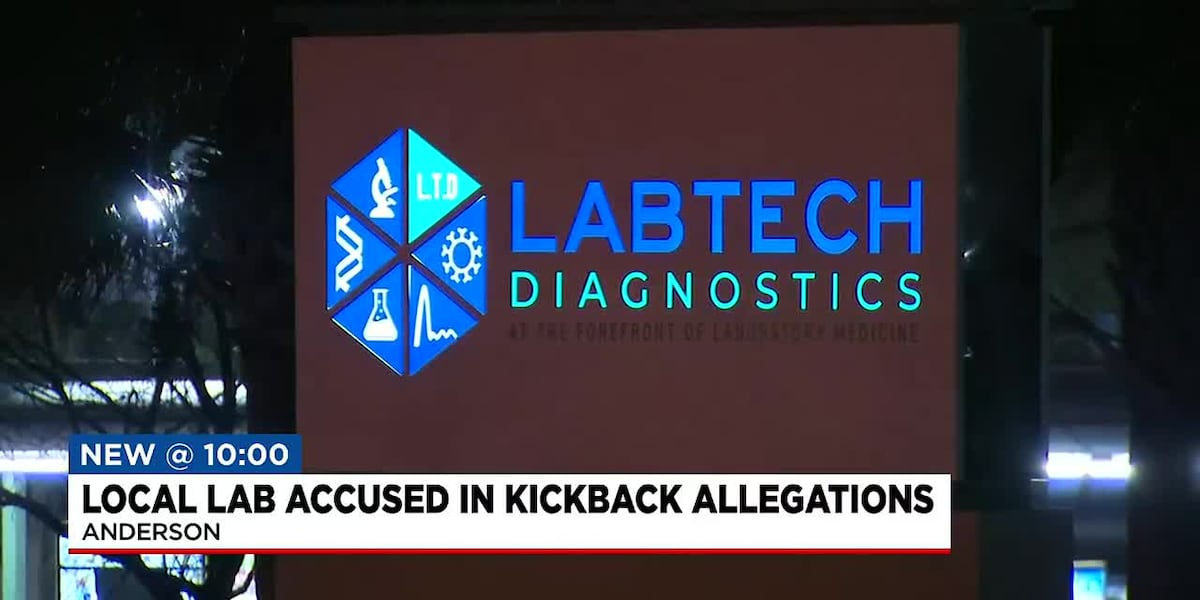
Clinical Laboratory LTD Holding LLC, formerly known as Labtech Diagnostics LLC, based in Anderson, South Carolina, will plead guilty to five counts of violating the Anti-Kickback Statute. The company, along with its CEO Joseph Labash of the United Arab Emirates, was accused of systematically paying doctors to refer patients for laboratory testing.
Federal investigators found that between August 2018 and November 2021, Labtech executed an elaborate kickback scheme using multiple methods to disguise payments. According to court documents, the company created fraudulent contracts that falsely characterized payments as legitimate business expenses for office space rental, phlebotomy, and toxicology services.
“Patients trust doctors to exercise their unbiased medical judgment in ordering clinical testing,” said Assistant Attorney General Brett A. Shumate of the Justice Department’s Civil Division. “Companies and executives who pay illegal kickbacks to referring doctors corrupt those doctors’ independence, leaving patients vulnerable to expensive and unnecessary testing.”
The investigation revealed that Labtech went to considerable lengths to conceal the true nature of these payments. Officials said the company falsified square footage measurements and hours in “fraud and abuse” certification forms. In some instances, representatives hand-delivered money orders to physicians to maintain secrecy around the transactions.
The kickback scheme extended beyond direct payments. Between September and December 2016, Labtech paid inflated prices for used laboratory equipment from a physician practice in Charlotte, North Carolina, as an inducement for test referrals. In another arrangement from March 2018 to November 2021, the company provided free services and supplies to a pain management practice in Landis, North Carolina, in exchange for lucrative drug confirmation testing referrals.
The Anti-Kickback Statute specifically prohibits offering, paying, soliciting, or receiving remuneration to induce referrals for services covered by federally funded healthcare programs like Medicare and Medicaid. These regulations are designed to protect patients from having medical decisions influenced by financial incentives rather than medical necessity.
Healthcare fraud cases involving laboratory testing have increased in recent years as diagnostic testing becomes a more significant revenue stream in the healthcare industry. According to healthcare compliance experts, laboratory services are particularly susceptible to kickback arrangements due to the high profit margins and the ability to generate recurring revenue from patient referrals.
The settlement includes a minimum payment of $6.8 million to resolve False Claims Act allegations, plus an additional $103,551.90 in restitution. The False Claims Act allows the federal government to recover damages from companies that submit fraudulent claims to government programs.
This case highlights the Department of Justice’s ongoing efforts to combat healthcare fraud, which costs American taxpayers billions annually. Federal authorities have intensified scrutiny of laboratory billing practices and referral arrangements in recent years, resulting in several high-profile settlements across the country.
The resolution against Labtech Diagnostics serves as a reminder to healthcare providers that financial relationships between laboratories and referring physicians must comply with federal regulations. Healthcare compliance experts note that transparency in medical referrals is essential for maintaining patient trust and ensuring that clinical decisions are based solely on medical necessity rather than financial gain.
The settlement comes amid increasing federal enforcement actions targeting healthcare fraud nationwide, with particular focus on laboratory services, pharmaceutical companies, and physician referral networks.
Fact Checker
Verify the accuracy of this article using The Disinformation Commission analysis and real-time sources.

14 Comments
This is a clear violation of the public trust. Doctors should be providing care based on medical needs, not financial incentives. I hope this settlement sends a strong message to the industry.
Absolutely. Patients put their lives in the hands of medical professionals, and they deserve to know those decisions are being made ethically and objectively.
While the financial penalty is substantial, I wonder if the executives involved will also face personal consequences. Deterring this kind of fraud requires holding individuals accountable, not just the company.
That’s a good point. Individual culpability is key to preventing these schemes from recurring. Steep fines alone may not be enough if the decision-makers avoid jail time or other penalties.
It’s concerning to see a medical lab engaging in such unethical behavior. I hope this case prompts the industry to strengthen compliance and implement robust internal controls to prevent similar abuses in the future.
Agreed. The healthcare sector needs to self-police more effectively and weed out any bad actors trying to game the system. Robust oversight and tougher penalties are essential.
Kickbacks undermine the integrity of the healthcare system. While the financial penalty is substantial, I wonder if the DOJ considered pursuing criminal charges against the executives involved. That may have sent an even stronger deterrent message.
Good point. Criminal prosecution of the individuals responsible could have a greater impact in preventing future misconduct. A civil settlement, even a large one, may not be enough on its own.
Clinical labs providing kickbacks to doctors is a troubling trend. It’s good to see the DOJ taking strong action to deter this kind of misconduct and protect patients. Transparency and accountability are crucial in healthcare.
I agree, patients deserve to know their doctors are making treatment decisions objectively, not based on hidden financial incentives. This settlement sends an important message.
This is a serious case of healthcare fraud that undermines patient trust. Kickbacks for referrals are unethical and illegal. I’m glad the DOJ is holding this lab accountable and recovering millions in ill-gotten gains.
Absolutely, these kinds of schemes erode the integrity of the medical system. It’s crucial that regulators stay vigilant and crack down on any attempts to abuse the system for financial gain.
This is a troubling case that highlights the need for robust oversight and enforcement in the medical industry. Patients should be able to trust that their doctors are acting in their best interests, not lining their own pockets.
Exactly. Kickbacks undermine the patient-provider relationship and erode public confidence in the healthcare system. Stricter regulations and harsher penalties are clearly warranted here.