


Listen to the article
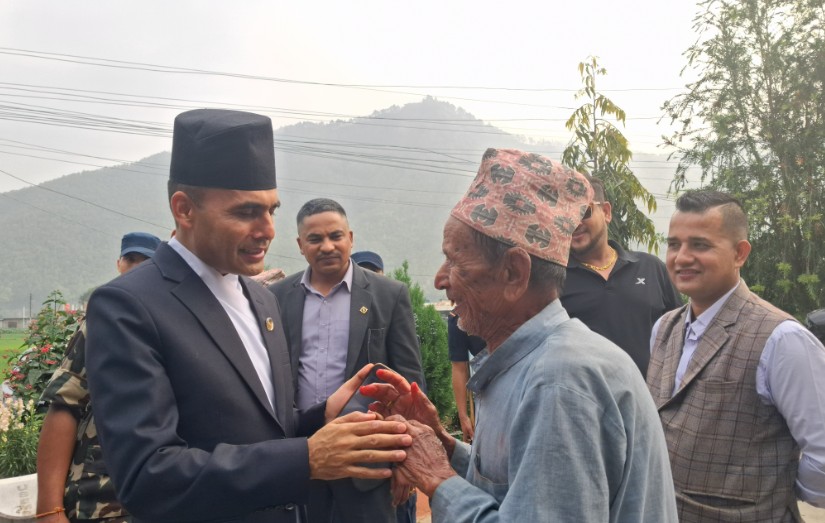
In a firm stance against misinformation, Communications and Information Technology Minister Dr. Bikram Timilsina has called on the public to verify information circulating on social media before accepting it as fact. Speaking to residents in Chhahare bazaar of Likhu rural municipality in Nuwakot district on Thursday, Dr. Timilsina specifically addressed rumors about ministers receiving new mobile phones, dismissing them as “baseless and misleading.”
“The information relating to distribution of new mobile phones to ministers is fake,” Dr. Timilsina stated, suggesting the rumors were deliberately spread to undermine public trust in the government. His comments highlight growing concerns about the proliferation of misinformation in Nepal’s digital landscape, where social media platforms have become primary sources of information for many citizens.
“It is imperative to verify information and find truth before dissemination,” the minister emphasized, underscoring the importance of news credibility and accuracy in today’s media environment. Nepal, like many developing nations, has struggled with the rapid spread of unverified information across digital platforms, creating challenges for governance and public discourse.
Dr. Timilsina assured the public that the government remains committed to responsible stewardship of taxpayer money. “The government is aware that it would not misuse the state resources generated with citizen’s tax,” he stated. However, he also encouraged citizens to remain vigilant and report any potential misuse of public funds they might observe.
The Communications Minister reiterated Prime Minister Balendra Shah’s stated policy of “zero tolerance” toward corruption. “There won’t be any irregularity and misuse of post. Government advances action once the question of irregularities is raised,” he promised, signaling the administration’s commitment to transparency and accountability.
Acknowledging public frustration with the pace of development and bureaucratic inefficiency, Dr. Timilsina indicated a shift in government approach. “At a time when the country witnessed slow development works and plodding bureaucracy, it will forward the activities to ensure result now onwards,” he said. The minister emphasized a focus on action over rhetoric, stating, “We don’t speak much, but show with action because we believe in performance and result.”
Dr. Timilsina cautioned against unrealistic expectations for immediate transformation, noting that “development goes in a gradual pace rather than a magical manner.” He called on citizens to maintain positive attitudes and cooperate with government initiatives.
The minister’s visit to Nuwakot, a district approximately 75 kilometers northwest of Kathmandu, appeared aimed at connecting with rural constituents and addressing local concerns directly. “I am aware of local’s expectations and development needs in Nuwakot district,” Dr. Timilsina assured residents, promising “necessary interventions” to address their needs and aspirations.
In what appears to be an ambitious pledge, the minister claimed the current administration is streamlining development processes significantly. “The government has forwarded a process in a way to complete the tasks in five years, which used to take 20 years for completion,” he stated, suggesting substantial reforms to Nepal’s traditionally slow-moving bureaucratic systems.
Nepal’s government has been working to modernize its communications infrastructure and digital governance frameworks in recent years, with the Ministry of Communications and Information Technology playing a central role in these efforts. Dr. Timilsina’s focus on information verification comes at a time when digital literacy and media education have become increasingly important issues across South Asia.
Fact Checker
Verify the accuracy of this article using The Disinformation Commission analysis and real-time sources.

9 Comments
Interesting to see the government taking a stand against misinformation. Verifying information before sharing is so important these days, especially on social media. I’m glad the minister is emphasizing the need for credibility and accuracy in news reporting.
It’s heartening to see the Nepali government taking proactive steps to combat the spread of misinformation. Building public awareness and digital literacy skills is essential for combating the rapid dissemination of false narratives on social media. I hope these efforts pay dividends in restoring trust and credibility.
Agreed. Addressing misinformation at the source, by empowering citizens to think critically about the information they encounter online, is a wise long-term strategy. It’s an issue that governments worldwide will need to grapple with in the years ahead.
Rumors about new mobile phones for ministers seem like an odd and trivial piece of misinformation. But it’s a good example of how even small falsehoods can undermine public trust in the government. Kudos to the minister for addressing this directly and emphasizing the need for accuracy.
Yes, addressing even seemingly minor instances of misinformation is important. It shows the government is taking the issue seriously and wants to set the record straight. Maintaining transparency and credibility is crucial for public faith in institutions.
The minister’s call for the public to verify information before accepting it as fact is a sensible and responsible stance. In today’s digital landscape, we all need to be more discerning consumers of news and information. Fact-checking should be a reflex, not an afterthought.
The minister’s comments highlight an important issue facing Nepal and other developing nations. Social media has become a double-edged sword, empowering communication but also enabling the proliferation of false narratives. Enhancing digital literacy and critical thinking skills could help combat this problem.
It’s concerning to hear about the spread of unverified information in Nepal. I hope the government’s efforts to combat misinformation are effective in restoring public trust. Fact-checking and source verification are critical skills for citizens in the digital age.
I agree, the rapid spread of misinformation on social media is a serious challenge that many countries are grappling with. Encouraging the public to verify information before sharing is a wise approach.