


Listen to the article
Immigration Officials Not Immune from Legal Consequences, Despite Miller’s Claims
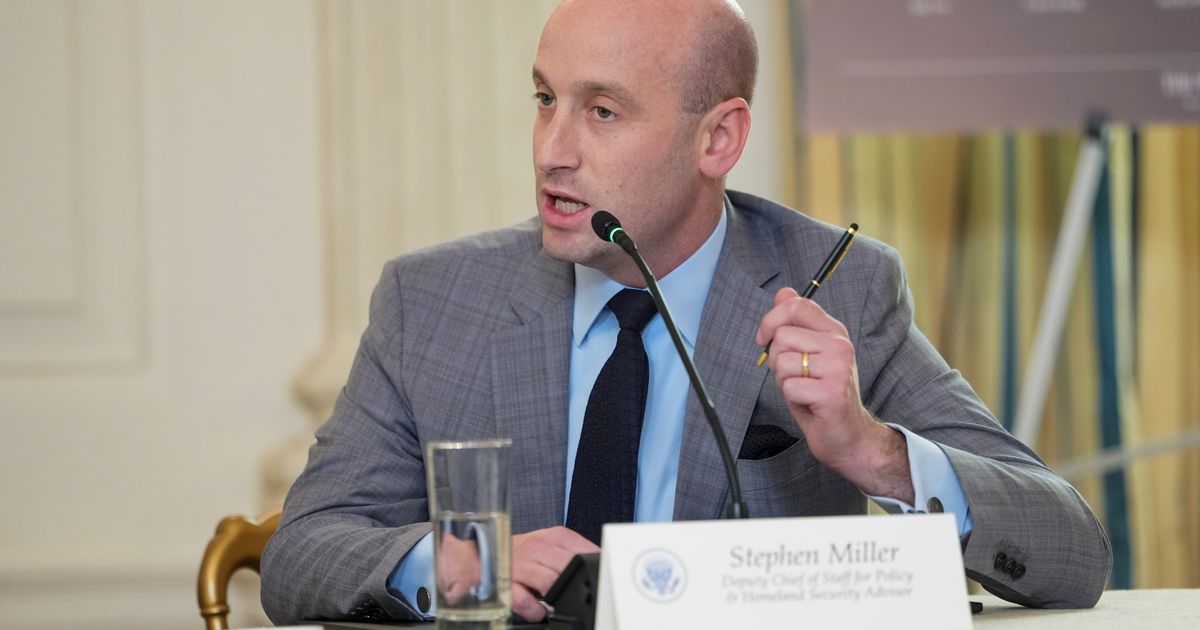
Deputy White House Chief of Staff Stephen Miller recently asserted that Immigration and Customs Enforcement (ICE) agents have blanket immunity from prosecution, a claim that legal experts say significantly overstates federal protections afforded to law enforcement officials.
During an October 24 interview on Fox News, Miller told host Will Cain that “all ICE officers have federal immunity in the conduct of your duties. And anybody who lays a hand on you or tries to stop you or tries to obstruct you is committing a felony.” Miller’s comments came in response to a question about potential arrests of ICE agents by Illinois authorities.
His remarks followed Illinois Governor JB Pritzker’s establishment of the Illinois Accountability Commission, which aims to document federal law enforcement actions and refer possible violations to local and state agencies. This commission was created amid intensified immigration enforcement in Chicago, where federal agents have arrested more than 3,000 individuals.
Legal experts immediately challenged Miller’s characterization of ICE agents’ legal protections. Steve Vladeck, a Georgetown University constitutional law professor, bluntly stated that Miller’s claim is “wrong on its face” in his newsletter.
While federal immigration agents do enjoy certain protections when performing official duties, these protections have clear limits. Both federal and state governments maintain authority to prosecute agents who break the law.
Federal prosecution of immigration agents has precedent. Earlier this year, a federal judge sentenced a U.S. Customs and Border Protection agent to prison for using excessive force against two individuals at the southern border. The case was investigated by Department of Homeland Security watchdog offices, demonstrating the federal government’s authority to hold its own agents accountable.
The Department of Justice has explicitly acknowledged this power in court arguments. In a 2019 Supreme Court brief regarding a Border Patrol agent who killed a 15-year-old Mexican boy at the southern border, the Justice Department affirmed that the federal government investigates allegations of excessive force and “may bring a federal criminal prosecution where appropriate.”
Non-governmental organizations can also take legal action against federal agents. In a recent case, journalists sued the Trump administration, alleging federal agents used “a pattern of extreme brutality” to silence the press and civilians. Federal District Judge Sara Ellis subsequently ordered immigration agents to refrain from using tear gas and riot control tactics unless people pose an immediate threat.
Regarding state prosecution, Miller’s assertion of absolute immunity also falls short. While the U.S. Constitution’s supremacy clause does provide some protection, it does not completely shield federal agents from state prosecution if they violate state laws.
This protection, known as supremacy clause immunity, stems from an 1890 Supreme Court decision involving a deputy U.S. marshal who killed a man while protecting a Supreme Court justice. The Court ruled that California couldn’t prosecute the marshal because he was carrying out official duties.
Generally, federal agents are protected from state prosecution if their actions were authorized by federal law and were “necessary and proper” for fulfilling their duties. However, as Bryna Godar, an attorney at University of Wisconsin’s State Democracy Research Initiative, noted in a July report, “Federal officials are not categorically immune from state criminal prosecution, even while on duty.”
The protection has limitations, as demonstrated by court precedents. While a customs agent gained immunity from state charges for speeding during a drug operation in 1990, a U.S. marine was denied immunity after killing someone in a car accident while driving in a military convoy that same year.
When contacted for comment, the White House directed inquiries to an October 23 letter from U.S. Deputy Attorney General Todd Blanche to California officials, which stated that “the Department of Justice views any arrests of federal agents and officers in the performance of their official duties as both illegal and futile.”
Governor Pritzker has acknowledged that “federal agents typically have federal immunity, but they’re not immune from the federal government holding them accountable and responsible,” a statement more aligned with legal reality than Miller’s broader claim.
As immigration enforcement intensifies in cities like Chicago, the legal boundaries of federal agents’ authority will likely remain a contentious issue, with courts continuing to determine the proper balance between federal law enforcement powers and accountability for potential misconduct.
Fact Checker
Verify the accuracy of this article using The Disinformation Commission analysis and real-time sources.

6 Comments
Interesting development with the Illinois Accountability Commission. Oversight of federal immigration enforcement is important, but the specifics of how this will work in practice remain to be seen. A balanced approach is needed.
The White House’s stance on ICE officer immunity seems overly broad. Reasonable oversight and accountability measures are necessary, even for federal law enforcement. I’ll be following this story closely to see how it unfolds.
Miller’s comments are concerning if they are intended to shield ICE officers from all legal accountability. While federal agents have some protections, they shouldn’t be above the law. I hope this issue is resolved through proper legal channels.
This is a complex legal issue. While ICE officers have some federal protections, they are not immune from all legal consequences. The Illinois Accountability Commission seems like a reasonable effort to provide oversight and accountability for federal immigration enforcement actions.
This is a complex matter of balancing federal authority and local oversight. While ICE officers have some legal protections, the claim of blanket immunity goes too far. The Illinois commission’s efforts seem like a measured response to address concerns.
The White House’s assertion of blanket immunity for ICE officers seems like an overreach. Law enforcement should be subject to appropriate checks and balances, even at the federal level. I’m curious to see how this plays out legally.