


Listen to the article
Amazon Rainforest Highway Sparks Climate Conference Controversy
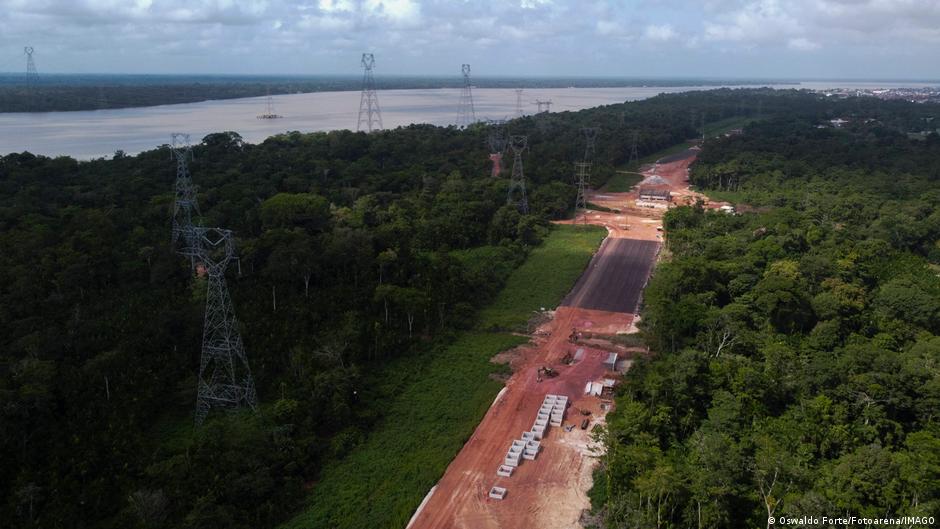
A four-lane highway being constructed through protected Amazon rainforest near Belem, Brazil, has become the center of a heated controversy, with misleading claims about its purpose circulating widely on social media during the COP30 climate conference.
The controversy erupted when numerous social media posts, including one from former US President Donald Trump, claimed that sections of Amazon rainforest had been specifically cleared to build a highway for environmentalists attending the climate summit. “They ripped the hell out of the Rainforest of Brazil to build a four lane highway for Environmentalists to travel. It’s become a big scandal!” Trump wrote on Truth Social.
Conservative commentators quickly amplified the message, framing the situation as evidence of hypocrisy among climate activists. The posts, many garnering over a million views, have fueled criticism of international climate conferences as elitist gatherings that contradict their own environmental messaging.
While it is true that parts of protected forest were cleared for the 13.2-kilometer Avenida Liberdade highway near Belem, the full story reveals a more complex reality. According to local officials, plans for the roadway date back to 2012, long before Belem was selected to host COP30. The project was officially announced in 2020, with construction beginning in June 2024.
The Para state government has consistently maintained that the highway was not built specifically for the climate conference, though statements from officials have sometimes been contradictory. When the BBC reported on the highway construction in March, the state’s infrastructure secretary, Adler Silveira, listed Avenida Liberdade as one of the projects happening in preparation for COP30.
Following media scrutiny, official statements were revised. A government press release that initially mentioned Avenida Liberdade among infrastructure projects for COP30 was later edited to remove that reference, according to archived versions of the website.
The controversy highlights what researchers call an “authenticity gap” around climate summits. A recent investigation by the Eurovision News Spotlight found that climate conferences are structurally vulnerable to criticism because “they require extensive, high-carbon logistics” that can appear contradictory to their environmental goals.
The area being cleared is not pristine rainforest but rather what Brazil designates as a State Environmental Protection Area (APA), which allows for limited, sustainable use and controlled human activity. The highway route largely follows an existing power cable line where vegetation had already been cleared.
State officials describe the project as sustainable, pointing to features like wildlife crossings, bike lanes, and solar-powered lighting designed to minimize environmental impact. The government claims the road will actually reduce carbon emissions by alleviating congestion on BR-316, a key highway into Belem that frequently experiences heavy traffic.
Nevertheless, the project has faced significant local opposition. Construction was temporarily halted in October 2024 and again in July 2025 when community protests demanded proper consultation and compensation for damaged access roads and land appropriation.
Environmental experts have warned that despite mitigation efforts, the nearby Utinga State Park and local wildlife could suffer from increased noise, pollution, and urban expansion facilitated by the new road.
The controversy underscores the complex challenges facing climate action, where even infrastructure projects with potential environmental benefits can become symbols in broader debates about climate policy. As one research team noted, opponents of climate action are “transforming these logistical flaws into intentional symbols of elite corruption,” using infrastructure projects like the Avenida Liberdade to undermine the legitimacy of international climate efforts.
Fact Checker
Verify the accuracy of this article using The Disinformation Commission analysis and real-time sources.

4 Comments
I’m curious to learn more about the full context and motivations behind this highway construction. Was it truly necessary for the COP30 conference, or are there other economic or political factors at play? Transparency and accountability will be crucial here.
This is a tricky situation that highlights the ongoing tensions between development and environmental conservation. While I’m concerned about any rainforest destruction, I’d like to see a balanced analysis of the highway’s necessity and potential mitigation measures.
This is a concerning situation. While some clearing of the rainforest for infrastructure is inevitable, it needs to be done responsibly and with proper environmental safeguards. I hope the COP30 organizers can address this issue transparently and find ways to mitigate the impact.
As an avid supporter of environmental protection, I’m disappointed to hear about this alleged rainforest clearing. However, I’ll reserve judgment until we have a clearer picture of the facts and rationale behind the highway project. Nuance is important in these complex issues.