


Listen to the article
Republican and Democratic leaders are misrepresenting the impact of a House reconciliation bill on the Supplemental Nutrition Assistance Program (SNAP), with each side presenting skewed interpretations of how many Americans could lose food assistance benefits.
The Congressional Budget Office has estimated that due to expanded work requirements in the bill, approximately 3.2 million people would lose all of their SNAP benefits, which currently help about 42 million low-income Americans afford groceries.
House Speaker Mike Johnson claimed during a May 25 interview on CBS’ “Face the Nation” that the bill, known as the One Big Beautiful Bill Act, isn’t cutting SNAP but merely addressing “elements of fraud, waste and abuse” in the program.
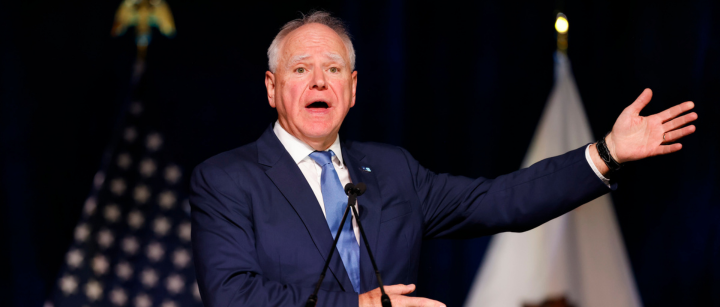
In contrast, Minnesota Governor Tim Walz asserted at a California Democratic convention that 11 million Americans would be “kicked off” SNAP, a significant exaggeration of the bill’s projected impact.
Independent analyses confirm substantial cuts to SNAP under the legislation, contradicting Johnson’s statement. The bill would reduce federal funding for SNAP by approximately $286 billion over ten years and shift significant costs to states, requiring them to cover 5% of benefit costs and 75% of administrative expenses. Currently, the federal government funds all benefit costs, with states handling half the administrative burden.
States would face increased financial responsibility if their payment error rates exceed 6%. Johnson defended this approach, stating: “The states are not properly administering this, because they don’t have enough skin in the game.”
The legislation also expands existing work requirements for SNAP eligibility. Current rules require “able-bodied” adults aged 18-54 without dependent children to work at least 20 hours weekly to continuously receive benefits. The House bill would extend this age range to 64 and include parents of children 7 and older.
The Center on Budget and Policy Priorities (CBPP), a left-leaning think tank, called the proposal “by far the largest cut to SNAP in history.” Their analysis found that 11 million people are “at risk” of losing some or all food assistance under the expanded work requirements, though not all would lose benefits entirely.
Katie Bergh, a senior policy analyst at CBPP, explained that their estimate includes about 6 million adults who would be newly subject to work requirements and thus risk losing benefits, plus approximately 5 million household members who would see their food assistance reduced if the primary recipient becomes ineligible.
The Urban Institute offered a different projection, estimating that 5.4 million people would be affected by the expanded work requirements, with 1.5 million families representing 1.8 million individuals losing benefits completely.
The bill would also cap annual increases to the Thrifty Food Plan, which determines maximum SNAP benefits, and eliminate internet costs as a deductible household expense when calculating benefits. The CBO estimates these changes would reduce average monthly benefits by approximately $15 per recipient by 2034, with about 65% of SNAP households seeing a decline of around $10 monthly beginning in 2026.
When asked for clarification, a spokesperson for Johnson maintained that calling the SNAP reforms a “cut” would be “an incorrect characterization,” pointing to Johnson’s claim that over $11 billion in SNAP payments were erroneous in 2024. The Government Accountability Office did report that in fiscal year 2023, approximately 11.7% of SNAP benefits (about $10.5 billion) were improperly paid.
However, this doesn’t change the CBO’s assessment that the bill would significantly reduce federal SNAP spending over the next decade, affecting millions of current recipients.
Fact Checker
Verify the accuracy of this article using The Disinformation Commission analysis and real-time sources.

16 Comments
It’s troubling to see such a wide discrepancy between the claims made by political leaders on this SNAP legislation. Fact-checking and relying on impartial analysis is crucial to understand the true implications.
Agreed, the lack of consensus on the details is concerning. Independent, non-partisan assessments will be key to navigating this issue effectively.
While I appreciate the intent behind addressing potential fraud and abuse in SNAP, the projected cuts seem disproportionately high. I hope lawmakers can find a balanced approach that maintains essential food assistance for those who need it most.
That’s a thoughtful perspective. Striking the right balance between program integrity and preserving a vital social safety net is a delicate challenge.
This SNAP legislation debate highlights the need for greater transparency and accountability in the policymaking process. Transparent, data-driven discussions are essential for crafting effective, ethical solutions.
Well said. Ensuring all stakeholders have access to accurate, unbiased information should be a top priority for lawmakers on both sides of the aisle.
This debate over SNAP highlights the need for bipartisan cooperation and compromise when it comes to social welfare programs. I hope leaders can set aside political agendas and find a solution that truly serves the best interests of those in need.
That’s a thoughtful point. Putting partisanship aside and focusing on pragmatic, evidence-based solutions would be the most constructive approach for an issue of this magnitude.
It’s concerning to see political leaders making misleading claims about the impacts of this SNAP legislation. I hope they can set aside partisan rhetoric and focus on finding solutions that truly support those in need, based on credible data and analysis.
You make a fair point. Objectivity and transparency should be the priority when it comes to legislation that affects food security for millions of Americans.
As someone who has relied on SNAP benefits in the past, I’m deeply concerned about the potential impacts of this legislation. I hope lawmakers will prioritize the real-world consequences for vulnerable families when evaluating this bill.
Thank you for sharing your personal perspective. Direct insights from those impacted can provide invaluable context to policymakers as they navigate this complex issue.
This debate over SNAP legislation seems to be a complex issue with competing claims. I’d like to see the full analysis from the Congressional Budget Office to better understand the potential impacts on low-income Americans. Objective data is important to separate fact from fiction in these policy discussions.
Agreed, having access to the CBO’s full report would provide important context. Evaluating the potential effects, both positive and negative, is crucial when making decisions that could impact millions of vulnerable people.
The potential cuts to SNAP funding are significant and could have serious consequences for low-income families. I hope lawmakers carefully consider the real-world impacts before moving forward with this bill.
Absolutely, the human impact of these policy decisions should not be overlooked. The welfare of vulnerable populations must be the top priority.