


Listen to the article
The search for truth behind a viral video circulating on social media has revealed yet another instance of artificial intelligence being used to create misleading content designed to inflame religious tensions.
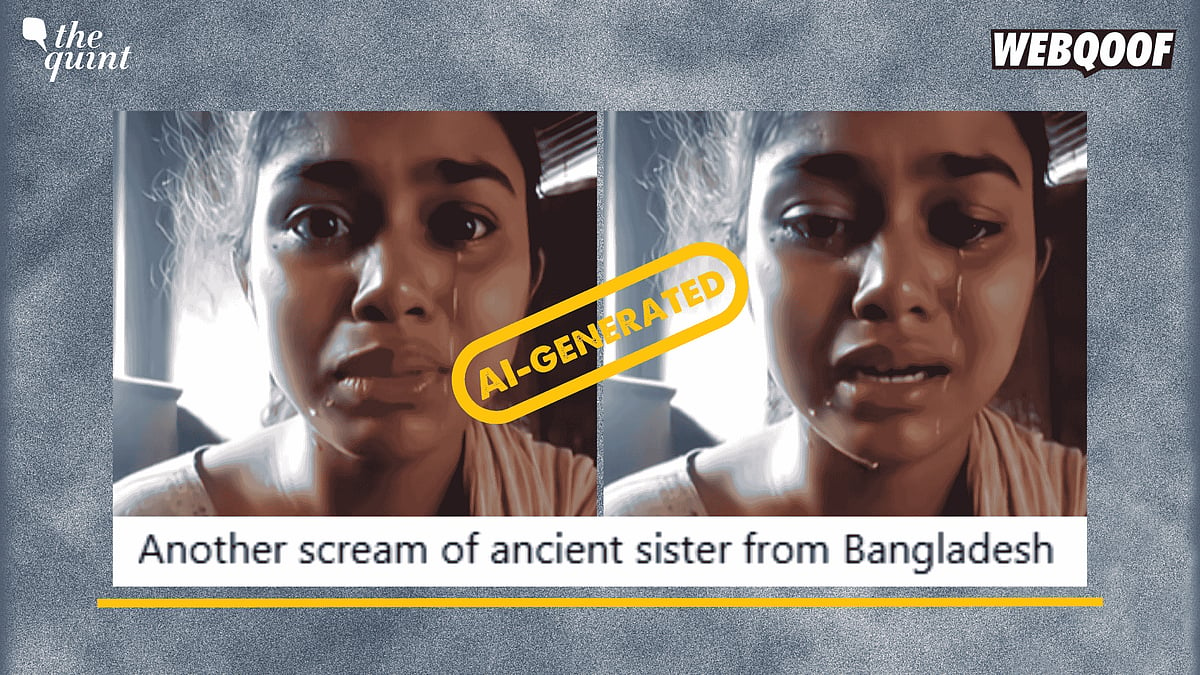
A widely shared video purportedly showing a Hindu girl in Bangladesh pleading for assistance has been confirmed as entirely AI-generated, according to an extensive digital forensic analysis.
Investigators first broke down the suspicious footage into individual frames, then utilized Google’s reverse image search technology to trace the content’s digital footprint. This methodical approach led researchers to a Facebook page named “All Time Happy,” which had previously shared the identical video clip.
Upon closer examination, experts identified multiple telltale signs of AI generation, including unnatural facial movements, inconsistent lighting effects, and subtle distortions in the background that typically appear in synthetic media. These technical indicators are consistent with content created using sophisticated AI video generation tools that have become increasingly accessible to the public.
The circulation of this fabricated footage comes at a particularly sensitive time, as Bangladesh has experienced periods of communal tension between its Muslim majority and Hindu minority populations. False narratives spreading on social media platforms have previously contributed to real-world violence and property destruction in the region.
Digital misinformation experts have noted a troubling increase in AI-generated content specifically designed to exploit religious and ethnic divisions across South Asia. These sophisticated fakes often spread rapidly through messaging apps and social networks before fact-checkers can intervene.
“What makes these AI-generated videos particularly dangerous is their emotional appeal,” explains Dr. Rahul Sharma, a digital forensics specialist at the Center for Media Integrity. “They’re specifically crafted to trigger strong emotional responses, which leads to immediate sharing before viewers can critically assess the content’s authenticity.”
Social media platforms have struggled to effectively moderate such content, particularly when videos spread through encrypted messaging services like WhatsApp, where content monitoring is limited. By the time verification occurs, these fabricated videos may have already reached millions of viewers.
The phenomenon extends beyond South Asia, with similar AI-generated content appearing in conflict zones and politically contested regions worldwide. Technology researchers warn that as AI generation tools become more sophisticated and accessible, distinguishing between authentic and fabricated content will become increasingly challenging for average internet users.
Media literacy experts recommend several steps for viewers to protect themselves from such manipulation: checking multiple credible news sources before sharing emotional content, looking for verification from established fact-checking organizations, and being particularly cautious about videos that appear designed to provoke strong emotional responses along religious or ethnic lines.
“The technology to create convincing fakes is advancing faster than our societal ability to detect them,” notes Samina Ahmed, a regional analyst focusing on digital misinformation. “This creates a particularly dangerous environment in regions with existing communal tensions.”
Authorities in several countries have begun implementing stricter penalties for those who knowingly share inflammatory falsified content, though enforcement remains challenging in the digital landscape.
The case serves as a reminder that in an era of increasingly sophisticated AI generation tools, viewers must approach emotional content with heightened skepticism, especially when it appears designed to intensify existing social divisions.
Fact Checker
Verify the accuracy of this article using The Disinformation Commission analysis and real-time sources.

16 Comments
This is concerning to see AI-generated content being used to spread disinformation and inflame religious tensions. It’s important that we remain vigilant and verify the authenticity of online media, especially during sensitive times.
Agreed, the use of AI to create misleading videos is a worrying trend that can have real-world consequences. Fact-checking and digital forensics are crucial to exposing these fabrications.
This is a prime example of how AI can be misused to create misleading and potentially harmful content. It’s a sobering reminder of the importance of media literacy and the need for robust safeguards to protect against the spread of disinformation.
Absolutely. As AI capabilities continue to advance, we must work to ensure these technologies are not exploited for malicious purposes. Collaboration between policymakers, tech companies, and the public will be essential in addressing this challenge.
This is a troubling example of how AI can be weaponized to spread false narratives and inflame social tensions. It’s a stark reminder of the importance of critical thinking and fact-checking in the digital age.
Absolutely. As AI technology continues to advance, we must remain vigilant and work to ensure it is not exploited for malicious purposes. Robust regulation and public education will be key to mitigating these risks.
While the technology behind AI-generated media is impressive, it’s deeply troubling to see it exploited in this way. We must be proactive in combating the spread of disinformation and promoting media literacy.
Absolutely. As AI capabilities advance, we’ll likely see more sophisticated attempts to deceive the public. Rigorous fact-checking and a critical eye towards online content will be essential going forward.
The use of AI to create this fabricated video is deeply concerning. It highlights the urgent need for greater transparency and accountability around the development and deployment of these powerful technologies.
Agreed. Fact-checking and digital forensics will be crucial tools in the fight against AI-enabled disinformation. Maintaining public trust in online media will be an ongoing challenge that requires a multifaceted approach.
It’s disheartening to see how easily AI can be used to create convincing yet completely fabricated content. This highlights the urgent need for greater transparency and accountability around the development and deployment of these technologies.
Agreed. Policymakers and tech companies must work together to establish robust safeguards and regulations to mitigate the risks of AI-generated disinformation. Public education will also be key.
This is a concerning example of how AI can be weaponized to sow discord and manipulate people’s emotions. We must remain vigilant and continue to call out these deceptive practices wherever they arise.
Absolutely. Fact-checking and digital forensics will be critical tools in the fight against AI-enabled disinformation. Maintaining public trust in online media will be an ongoing challenge.
The use of AI to create this kind of misleading content is both technologically impressive and morally reprehensible. We must redouble our efforts to educate the public and develop robust safeguards against these emerging threats.
Agreed. Policymakers, tech companies, and the public all have a role to play in addressing the risks posed by AI-generated disinformation. Collaboration and a steadfast commitment to the truth will be essential.