


Listen to the article
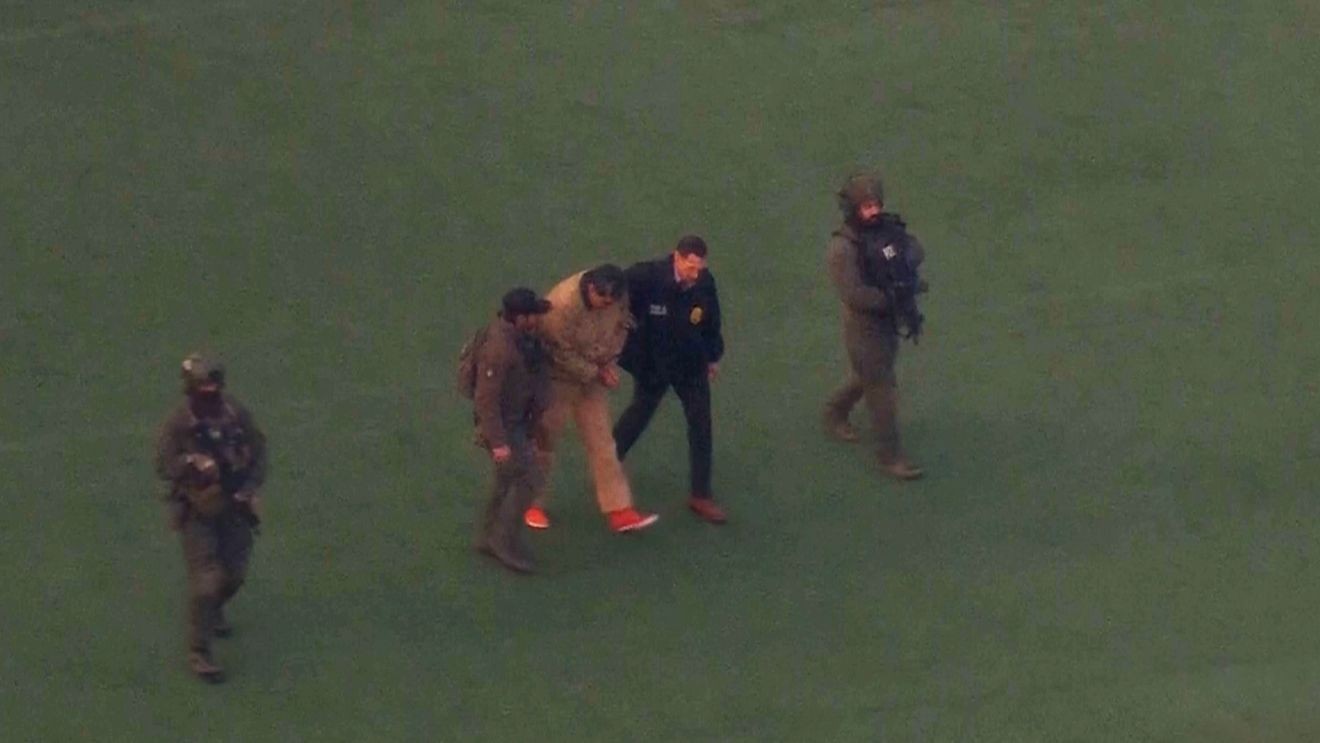
The U.S. capture of Nicolás Maduro has triggered sharp criticism from foreign governments and Democrats at home, with one central question driving the debate: Did President Donald Trump need congressional approval to carry out this operation?
The Trump administration firmly says no, arguing the operation to seize Maduro was a brief, targeted mission rather than a war, invasion, or prolonged military deployment, therefore not requiring advance authorization from Congress.
Secretary of State Marco Rubio has been particularly vocal in articulating the administration’s position, rejecting the notion that Maduro deserved protections typically accorded to foreign heads of state. In a series of interviews documented in a White House press release, Rubio emphasized that Maduro was “not the head of state,” describing him instead as an illegitimate leader and an indicted drug trafficker—language central to the legal justification for the operation.
The administration’s legal argument rests primarily on Article II of the U.S. Constitution, which designates the president as commander-in-chief of U.S. armed forces. Under this interpretation, the president has authority to conduct limited military or law enforcement operations without formal congressional approval, though Congress must be notified afterward.
This approach follows a pattern established by previous administrations. In 1989, President George H.W. Bush ordered U.S. forces into Panama to capture indicted drug trafficker Manuel Noriega without prior congressional approval. Similarly, President Ronald Reagan deployed troops to Grenada in 1983, President Bill Clinton launched airstrikes in Kosovo in 1999, and President Barack Obama ordered airstrikes in Libya during the 2011 Arab Spring—all without formal advance authorization from Congress.
The common thread in these precedents is that when operations are limited in scope, fast-moving, and not characterized as war, presidents have historically claimed constitutional authority to act first and brief Congress afterward.
Administration officials have carefully framed the Maduro mission as a law-enforcement operation rather than a military invasion. This distinction is crucial to their legal reasoning, as it allows them to invoke arrest authority rather than traditional wartime rules. The key to this argument is the administration’s position that Maduro was not a legitimate head of state, thus not entitled to diplomatic immunity or other protections.
The Noriega case provides the historical precedent most frequently cited by the administration. Similar to the current situation with Maduro, Noriega was indicted in U.S. federal court on drug trafficking and money-laundering charges before U.S. forces entered Panama in 1989 to capture him. After his arrest, Noriega argued unsuccessfully that the capture was illegal and that he was protected by head-of-state immunity.
U.S. courts rejected those arguments, allowing the case to proceed to conviction. The courts declined to dismiss the charges despite the controversial method of capture, establishing a precedent that U.S. courts can try foreign leaders even when the circumstances of their capture are disputed.
The Trump administration is leveraging this legal precedent, contending that Maduro’s indictment, combined with alleged ties to drug trafficking and foreign adversaries, places him in a similar legal category to Noriega.
However, legal experts point to a more troubling aspect of the situation: President Trump’s statement that the United States will temporarily “govern” Venezuela until a new leader is elected. This claim has drawn significant concern from legal scholars, who note there is no clear authority under U.S. or international law permitting the United States to directly govern another sovereign nation.
Experts quoted by The New York Times warn that without a rapid transfer of power to Venezuelan authorities, such control could constitute an illegal occupation under international law—potentially crossing a line that even the contentious Noriega precedent doesn’t address.
As the situation unfolds, the debate continues over whether the administration’s actions fall within presidential authority or represent an overreach requiring congressional approval, highlighting once again the tension between executive power and legislative oversight in matters of national security and foreign intervention.
Fact Checker
Verify the accuracy of this article using The Disinformation Commission analysis and real-time sources.

16 Comments
The legal debate around the Maduro capture really highlights the tension between national security priorities and respect for international law. There are valid arguments on both sides of this complex issue.
Exactly. It’s a delicate balance that the administration will need to navigate carefully.
From an investment perspective, the Maduro situation adds further uncertainty to the outlook for Venezuelan mining and energy assets. Political risk is a major consideration for commodity investors.
Agreed. Navigating the volatility in this region requires a keen understanding of the legal and geopolitical landscape.
While I can understand the administration’s rationale, I’m skeptical that the Maduro operation truly falls under the president’s Article II powers. Congressional approval seems prudent for this type of military action.
That’s a fair critique. The limits of the president’s authority in this case warrant careful scrutiny.
The legal debate around the Maduro capture seems to hinge on the question of his legitimacy as head of state. This is a complex issue with geopolitical ramifications beyond just the U.S. involvement.
Agreed, the question of Maduro’s status is central to the legal justification. It’s a thorny issue without a clear-cut answer.
As an investor in mining and commodities, I’m curious to see how the Maduro situation impacts Venezuela’s mineral resources and the global supply chain. Political instability is always a risk factor to monitor.
Good observation. Venezuelan mining and energy assets are a key consideration for investors in this sector.
The U.S. capture of Maduro is certainly a bold move, but I have concerns about the precedent it could set for future interventions. Respect for international law and state sovereignty is crucial.
That’s a fair point. The long-term implications of this action are important to consider.
Fascinating legal analysis on the Maduro capture efforts. I’m curious to see how the administration’s Article II argument holds up under scrutiny. Seems like a complex geopolitical situation without easy answers.
I agree, the legality of the operation is a contentious issue. It will be interesting to see how the courts rule on this.
As an energy industry analyst, I’m watching the Venezuela situation closely. Maduro’s control of oil and mineral resources is a key factor in the global supply and demand dynamics. Geopolitical risk is a constant concern.
Good point. Venezuela’s energy and mining sectors are critical to global markets, so the fallout from this operation will be important to monitor.