


Listen to the article
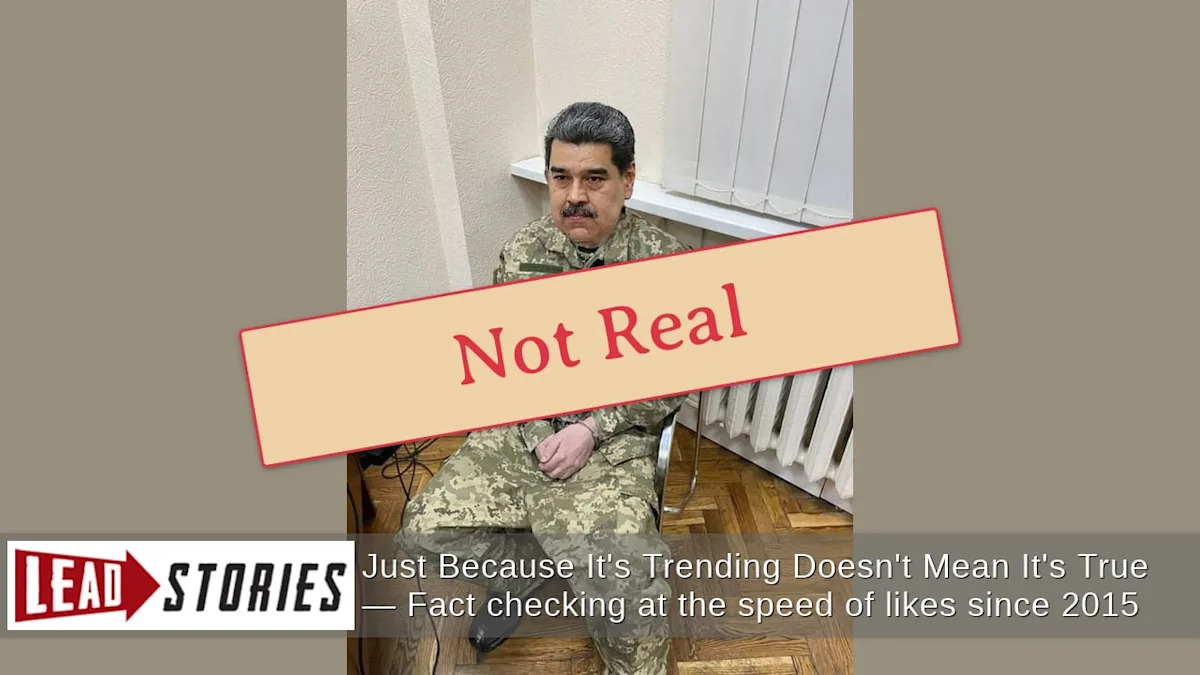
In a digital era where manipulated images can spread quickly on social media, a viral photo allegedly showing Venezuelan President Nicolás Maduro in custody has been revealed as a sophisticated fake.
The manipulated image began circulating on social media platform X on January 3, 2026, with a caption claiming, “The White House has published the first photo of the captured Maduro.” The post quickly gained traction following President-elect Donald Trump’s announcement on Truth Social the same day regarding the Venezuelan leader’s capture.
However, digital forensic analysis confirms the image is a digitally altered composite. The original photograph actually shows Ukrainian-born pro-Russian businessman and politician Victor Medvedchuk, not the Venezuelan president. Unknown actors digitally replaced Medvedchuk’s head with Maduro’s face while keeping the rest of the original image intact.
The authentic photograph of Medvedchuk was first published on Ukrainian President Volodymyr Zelenskyy’s official Telegram channel on April 12, 2022. At that time, Medvedchuk had been apprehended by Ukrainian authorities while facing treason charges. The timing of the photo’s release coincided with a particularly tense period in the ongoing conflict between Ukraine and Russia.
Medvedchuk’s case ultimately concluded when he was transferred to Russia in the fall of 2022 as part of a larger prisoner exchange between the two nations. The wealthy businessman had long maintained close ties with the Kremlin and was widely considered one of Russian President Vladimir Putin’s most important allies in Ukraine before the full-scale invasion began in February 2022.
This digital manipulation represents a concerning example of misinformation surrounding major geopolitical events. The timing of the fake image’s circulation—immediately following Trump’s announcement about Maduro—appears calculated to capitalize on breaking news when public interest is high and verification standards sometimes slip in the rush to share information.
The deceptive image spread particularly quickly across social media platforms where users often encounter content without context or verification. While some sharing the image may have done so without malicious intent, the creation of such manipulated media represents a deliberate attempt to spread false information during a significant international incident.
Venezuela has long been a focal point of U.S. foreign policy in Latin America. The Maduro regime has faced numerous sanctions and diplomatic pressures from Washington over allegations of human rights abuses, corruption, and undermining democratic processes. The relationship reached new lows during Trump’s first administration, and his campaign rhetoric suggested renewed tension could be expected in his upcoming term.
Media literacy experts point to this incident as a textbook example of why critical evaluation of images is essential in today’s information environment. Visual verification techniques include examining image metadata, conducting reverse image searches, and checking trusted news sources before sharing provocative content.
As international attention remains focused on Venezuela and the unfolding situation with President Maduro, this manipulated image serves as a reminder of how easily visual misinformation can spread during moments of geopolitical significance. The incident underscores the ongoing challenges faced by social media platforms, journalists, and everyday users in combating sophisticated forms of digital deception.
While the specific motivation behind creating and sharing this manipulated image remains unclear, the case highlights the broader problem of misinformation surrounding high-profile international events and the continued need for vigilance when consuming breaking news.
Fact Checker
Verify the accuracy of this article using The Disinformation Commission analysis and real-time sources.

10 Comments
Maduro has certainly been a controversial figure, but this manipulated image seems like a clear attempt to further demonize him. I wonder if there are any geopolitical implications behind the creation and dissemination of this fake photo.
This is a good cautionary tale about the dangers of deepfakes and other advanced image manipulation techniques. As technology continues to evolve, we’ll need increasingly sophisticated tools and media literacy efforts to combat these kinds of threats.
Interesting that this manipulated image of Maduro was so widely shared. It’s a good reminder to always verify information, especially when it seems too sensational. I wonder what the motivation was behind this particular piece of disinformation.
It’s disheartening to see how easily misinformation can spread, even when it’s so clearly fabricated. I hope this incident serves as a wake-up call for social media platforms and users alike to be more vigilant about verifying information before sharing it.
Ugh, another example of how social media can become a breeding ground for misinformation. I’m glad the Disinformation Commission was able to get to the bottom of this and expose the manipulation. We need more efforts like this to combat the spread of fake news.
This is a prime example of why we need robust fact-checking and media literacy efforts. The proliferation of digitally altered images is a serious threat to informed discourse and democratic processes. We must remain vigilant.
It’s concerning to see how easily images can be digitally altered these days. This case highlights the need for greater media literacy and critical thinking when consuming online content. We must be vigilant against the spread of misinformation.
This is a classic example of how misinformation can spread like wildfire on social media. I’m glad the Disinformation Commission was able to quickly debunk this fake image. Fact-checking is so important in the digital age.
While I’m no fan of Maduro, I’m troubled by the use of doctored images to spread disinformation. This kind of tactic undermines trust in media and makes it harder to have constructive discussions about important issues.
While I’m no fan of Maduro, I’m troubled by the use of doctored images to spread disinformation. This kind of tactic undermines trust in media and makes it harder to have constructive discussions about important issues.