


Listen to the article
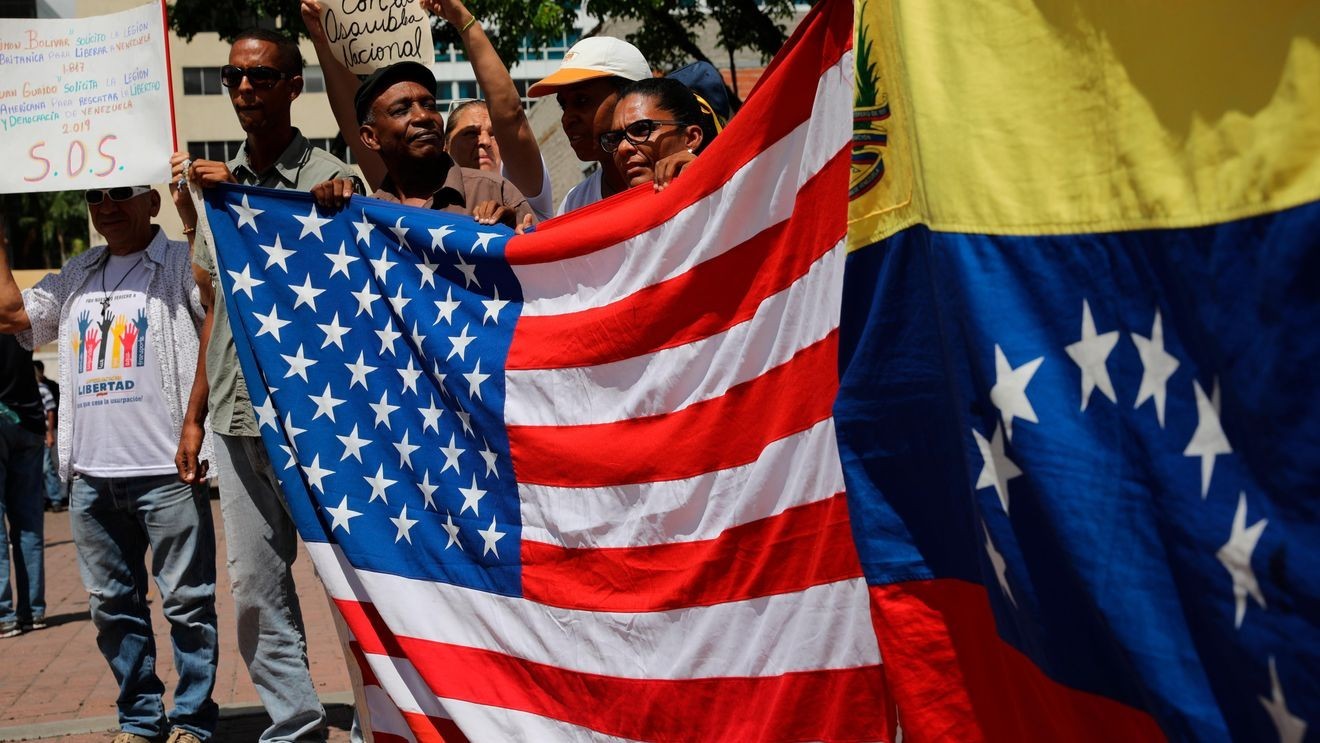
Tensions between the United States and Venezuela are once again climbing. While recent headlines focus on drug smuggling and U.S. strikes tied to trafficking routes, this standoff has been building for decades.
The breakdown in U.S.–Venezuela relations began accelerating in the mid-2000s, according to the Congressional Research Service. Since 2005, the U.S. has imposed targeted sanctions on Venezuelan individuals and entities accused of corruption, democratic backsliding, human rights abuses, and criminal activity. These actions have spanned multiple administrations and originated from both Congress and the White House.
U.S. officials have consistently pointed to disputed elections and crackdowns on opposition groups under former President Hugo Chávez and current President Nicolás Maduro as critical turning points. What once was a diplomatic relationship gradually transformed into one characterized by sanctions and pressure tactics as Venezuela’s internal political crisis deepened.
The friction intensified significantly during the Trump administration. According to the Council on Foreign Relations, President Trump implemented a “maximum pressure” strategy, directly accusing Venezuela of playing a major role in cocaine trafficking into the United States. His administration expanded sanctions, designated Venezuela-linked criminal groups such as Tren de Aragua as terrorist organizations, and increased military and economic actions tied to narcotics interdiction and regional security.
Trump administration officials made it clear that their fundamental issue wasn’t merely policy disagreements but with Nicolás Maduro himself. The administration portrayed his government as illegitimate, corrupt, and destabilizing, effectively reframing Venezuela from a normal diplomatic partner into a regional security threat connected to organized crime networks.
However, understanding Venezuela’s current predicament requires examining its historical relationship with oil, which has shaped the country’s economic and political landscape for over a century.
Venezuela’s modern political system began taking shape in the early 1900s after the discovery of massive oil reserves transformed the country virtually overnight. Oil quickly became the economic backbone and the primary source of government power, centralizing wealth and decision-making within the state apparatus. This dynamic has defined Venezuelan politics for generations—whoever controlled the government controlled the oil.
A significant turning point came in 1976 when Venezuela formally nationalized its oil industry, as documented by The New York Times. This decision initially fueled expanded social spending and government power but also locked the country into near-total dependence on oil revenues, creating a precarious economic foundation.
This dependence intensified dramatically under Hugo Chávez’s leadership. Data from the Council on Foreign Relations shows oil exports rose from approximately 71 percent of Venezuela’s total exports in 1998 to nearly 98 percent by 2013. When global oil prices collapsed in 2014, the Venezuelan economy crashed with them, triggering widespread shortages, mounting debt, and social unrest that continues to shape life in Venezuela today.
Economic analysts point out that this boom-and-bust cycle left Venezuela particularly vulnerable. According to the Economics Observatory, decades of oil dependence, weak institutions, and entrenched corruption effectively hollowed out the broader economy. As state revenues dried up, criminal networks gained power and influence while the government’s ability to function steadily eroded.
The oil dependency created a perfect storm. When petroleum prices were high, the government could fund ambitious social programs and maintain political stability. When prices fell, there was no economic diversification to cushion the impact, leading to inflation, shortages, and political instability.
This economic context provides essential background for understanding current U.S.–Venezuela tensions. Today’s confrontations aren’t merely about isolated incidents or single policy decisions—they represent the culmination of years of political decay, economic mismanagement, and a long-running confrontation between Washington and a government it views as illegitimate and destabilizing to the region.
The ongoing tensions illustrate how resource dependency, institutional weakness, and geopolitical positioning can create complex, long-lasting international conflicts that resist simple solutions or quick diplomatic fixes.
Fact Checker
Verify the accuracy of this article using The Disinformation Commission analysis and real-time sources.

6 Comments
It’s interesting to see how the US-Venezuela relationship has evolved over the decades, from diplomatic to adversarial. The political dynamics in Venezuela certainly seem to have played a major role in this deterioration. Hopefully future leaders can find a way to rebuild trust.
The historical roots of this conflict run deep, and resolving it will likely require compromise and concessions on both sides. It’s a complex geopolitical issue without any easy solutions. Maintaining open lines of communication will be crucial going forward.
The continued conflict between the US and Venezuela is concerning, especially given the potential implications for regional stability and economic ties. I’m curious to see if the new US administration will take a different approach compared to the Trump era.
The sanctions and pressure tactics used by the US against Venezuela are certainly controversial. While some may argue they are justified, others see them as counterproductive. Achieving a stable and productive relationship will require finding common ground.
You raise a fair point. Sanctions are a blunt instrument that can often backfire. A more nuanced, diplomatic approach may be needed to address the underlying issues.
This history of tensions between the US and Venezuela is long and complex. It seems there have been many contributing factors, from disputed elections to human rights concerns. Resolving these issues will likely require patience and diplomacy on both sides.