


Listen to the article
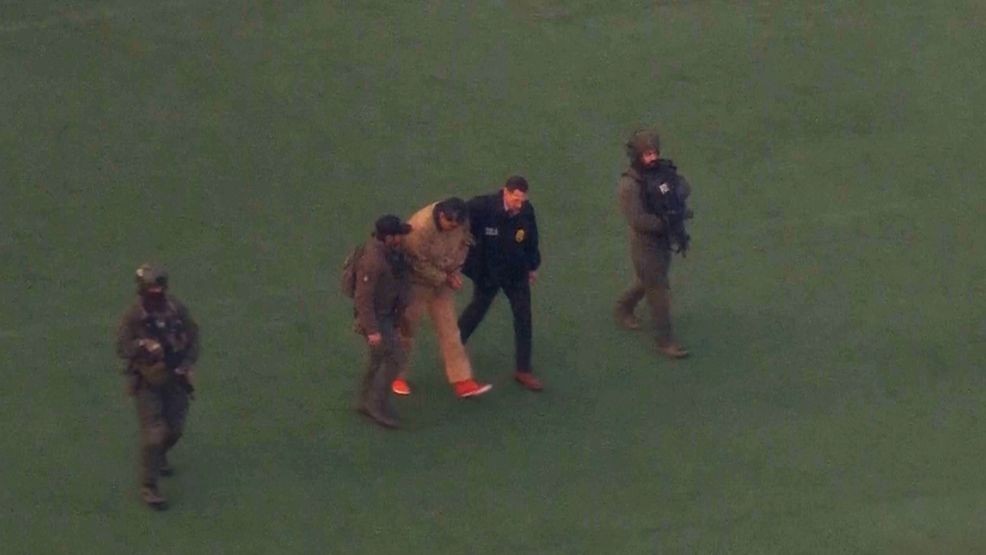
The U.S. capture of Nicolás Maduro has triggered sharp criticism from foreign governments and Democrats at home, with one central question driving the debate: Did President Donald Trump need congressional approval to do this?
The Trump administration maintains that congressional authorization was not required, characterizing the operation as a brief, targeted mission rather than a war, invasion, or prolonged military deployment.
Secretary of State Marco Rubio has been particularly vocal about the administration’s position. In a series of statements documented in a White House press release, Rubio rejected the notion that Maduro was entitled to protections normally afforded to foreign heads of state, describing him instead as “not the head of state” but rather an illegitimate leader and an indicted drug trafficker.
This distinction forms a crucial part of the administration’s legal justification for the operation, which primarily rests on Article II of the U.S. Constitution, designating the president as commander-in-chief of the armed forces. The White House argues that because the Maduro operation was limited in scope and duration, Congress only needed to be notified, not consulted for permission.
Such interpretation of presidential powers is not without precedent. Administrations from both parties have previously conducted military or law enforcement operations without formal congressional approval.
In 1989, President George H.W. Bush ordered U.S. forces into Panama to capture Manuel Noriega, an indicted drug trafficker. President Ronald Reagan deployed troops to Grenada in 1983 without prior congressional authorization. President Bill Clinton launched airstrikes in Kosovo in 1999, and President Barack Obama ordered airstrikes in Libya during the Arab Spring in 2011, both acting without formal authorization for use of military force.
The common thread in these cases is that when operations are limited, fast-moving, and not framed as wars, presidents have historically claimed constitutional authority to act first and inform Congress afterward.
The administration has classified the Maduro mission as a law enforcement operation rather than a military invasion, specifically because Maduro was not recognized as a legitimate head of state. This classification, officials argue, provides arrest authority under different rules than would apply in traditional warfare.
The Noriega case serves as the administration’s primary historical parallel. According to the Department of Justice, Noriega was indicted in U.S. federal court on drug trafficking and money laundering charges before U.S. forces entered Panama in 1989 to capture him—an operation also conducted without prior congressional approval.
After his capture, Noriega claimed illegal detention and head-of-state immunity, arguments that U.S. courts rejected. He was ultimately convicted, with courts declining to dismiss charges despite the controversial capture method. This case has since established a precedent that U.S. courts can try foreign leaders even when their capture circumstances are disputed.
The Trump administration draws heavily on this precedent, arguing that Maduro’s indictment, combined with alleged ties to drug trafficking and foreign adversaries, places him in a similar legal category to Noriega.
However, while the administration expresses confidence in the legality of the capture itself, a separate issue has emerged that raises additional concerns: President Trump’s statement that the United States will temporarily “govern” Venezuela until a new leader is elected.
Legal experts cited by The New York Times have questioned this assertion, noting that there appears to be no clear authority under either U.S. or international law that permits the United States to directly govern another sovereign nation. These experts warn that without a rapid transfer of power to Venezuelan authorities, such control could potentially constitute an illegal occupation under international law.
As the situation continues to develop, the legal and diplomatic implications of both the capture and the proposed governance arrangement remain subjects of intense scrutiny from international observers and domestic critics alike.
Fact Checker
Verify the accuracy of this article using The Disinformation Commission analysis and real-time sources.

10 Comments
From a factual standpoint, the White House’s argument that congressional approval was not required seems tenuous. The operation against Maduro, even if limited in scope, still appears to be a significant military action that would typically require legislative oversight.
That’s a fair assessment. The administration will likely face scrutiny from Congress and legal challenges over the extent of their authority to carry out this type of operation unilaterally.
As an investor in mining and commodities, I’m curious to see how this situation affects Venezuela’s oil and mineral exports. Political instability there could disrupt global supply chains for key resources.
That’s a good point. Any disruption to Venezuelan production would likely impact global prices and availability of commodities like gold, copper, and lithium. Something to keep an eye on for sure.
As an energy and mining analyst, I’m curious to see how this situation impacts Venezuela’s oil and mineral production and exports. Any disruptions could have ripple effects across global commodities markets.
Absolutely, that’s an important consideration. Venezuela is a significant producer of oil, gold, and other key resources. Instability there could lead to supply chain issues and price volatility that investors need to watch closely.
I have mixed feelings about this. While Maduro’s regime has been accused of corruption and human rights abuses, I’m not sure the US has the legal standing to unilaterally arrest a foreign head of state. This could set a concerning precedent.
I agree, the legal justification here seems questionable. The administration will need to make a very compelling case to avoid widespread condemnation from the international community.
This is a complex and controversial issue. I can see valid arguments on both sides regarding the legal justification for this operation against Maduro. It will be interesting to see how this plays out diplomatically and legally.
You’re right, the administration is walking a fine line here. They’ll need to tread carefully to avoid further escalating tensions with Venezuela and its allies.