


Listen to the article
Trump’s Claims About US-European Aid to Ukraine: A Fact Check
President Donald Trump has repeatedly overstated the amount of US aid to Ukraine and mischaracterized how European assistance differs from American support. These claims have emerged as the president seeks Ukrainian mineral rights as compensation for American military assistance.
During a February 22 speech at the Conservative Political Action Conference, Trump asserted: “Europe has given $100 billion. The United States has given $350 billion. But here’s worse — Europe gave it in the form of a loan, they get their money back. We gave it in the form of nothing.”
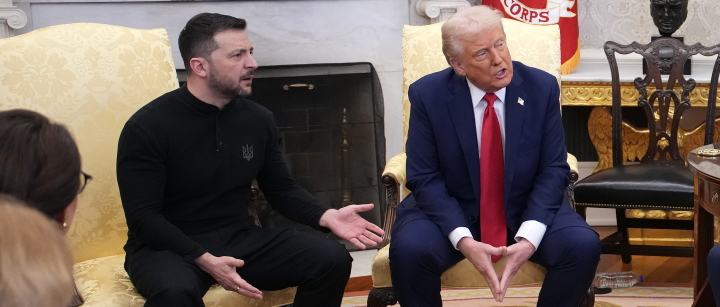
This narrative featured prominently in a tense February 28 Oval Office meeting with Ukrainian President Volodymyr Zelenskyy. The Ukrainian leader had traveled to Washington expecting to sign a minerals deal but left without an agreement after Trump repeated similar claims about the disparity in aid. Days later, on March 3, the Trump administration suspended all military assistance to Ukraine.
However, a closer examination reveals significant inaccuracies in the president’s statements.
According to Mark Cancian, senior adviser at the Center for Strategic & International Studies, “Trump’s citation of $350 billion is double what Congress has appropriated.” Since Russia’s 2022 invasion, Congress has passed five spending bills providing approximately $174.2 billion in support for Ukraine. The special inspector general overseeing Ukraine assistance reports that $182.75 billion has been made available for the broader response.
Importantly, not all these funds have reached Ukraine directly. Marianna Fakhurdinova, a fellow at the Center for European Policy Analysis, notes that about $66 billion in military aid “remain in the U.S. and are invested in U.S. military production.” Roughly half replenishes American weapons sent to Ukraine, while the other half pays US companies manufacturing new equipment for the Ukrainian forces.
Contrary to Trump’s assertions, Europe has actually contributed more aid than the United States. The Kiel Institute for the World Economy, which tracks Ukraine funding, reports that the US has allocated approximately $121 billion compared to about $140 billion from Europe. These figures represent direct bilateral aid that has been allocated, not just committed.
The European Union’s February fact sheet stated that the EU and member states had provided around $145 billion since the war began. In February, the EU committed an additional $54 billion for recovery and reconstruction efforts.
Trump’s claim that European aid comes entirely in the form of loans is also misleading. While the US has primarily provided grants, only about 35% of EU assistance has been structured as “highly concessional loans,” according to European Union documentation. These loans feature favorable terms, including 10-year grace periods and 35-year repayment schedules.
The most recent US aid package did include approximately $9 billion in loan assistance, with half of that amount ($4.7 billion) already forgiven by President Biden in November. Trump would retain authority over the remaining portion.
A separate G7 agreement in 2024 established $50 billion in loans to support Ukraine, with repayment to come from profits generated by frozen Russian assets. The United States’ portion of this international loan arrangement is $20 billion, which was disbursed in December.
While a higher percentage of European aid has been structured as loans compared to US assistance, Trump’s characterization significantly distorts the reality of international support for Ukraine. The Vienna Institute for International Economic Studies has noted that Ukraine’s debt will likely prove unsustainable, meaning “significant debt relief will have to be negotiated” regardless of how the aid was initially structured.
The controversy surrounding these claims highlights the complex geopolitical calculations involved in supporting Ukraine, as well as the potential implications for future US-Ukrainian relations under the current administration.
Fact Checker
Verify the accuracy of this article using The Disinformation Commission analysis and real-time sources.

9 Comments
This fact check highlights the importance of verifying claims, especially when they involve sensitive diplomatic and economic matters. Maintaining an objective, evidence-based understanding is crucial.
This fact check highlights the need for nuance and accuracy when discussing international aid and assistance. The details around loan structures and grant-based support seem to have been oversimplified in the president’s public statements.
Interesting take on the disparity in aid between the US and Europe. It’s important to get the facts straight when dealing with such complex issues. I wonder how the mineral rights negotiations factored into Trump’s rhetoric on this.
The article raises some interesting questions about the role of mineral rights and resource negotiations in shaping the US government’s approach to aid and assistance for Ukraine. It’s a complex issue worth further examination.
The article raises some valid points about the inaccuracies in Trump’s claims regarding US and European aid to Ukraine. It’s crucial to have a clear, factual understanding of these issues, especially when they involve geopolitical negotiations over resources.
The article does a thorough job of unpacking the complexities around US and European assistance to Ukraine. It’s a nuanced issue that deserves careful analysis, not oversimplified rhetoric.
It’s concerning to see the administration suspending military aid to Ukraine amidst these disputes over aid amounts and mechanisms. I wonder how this will impact the broader geopolitical dynamics in the region.
This fact check underscores the importance of maintaining a clear, factual understanding of international aid and assistance programs. Oversimplification or politicization of these issues can undermine their effectiveness and impact.
The discrepancies highlighted in this article raise concerns about the reliability of the president’s claims regarding US and European support for Ukraine. Fact-checking is crucial to ensure informed decision-making on these matters.