


Listen to the article
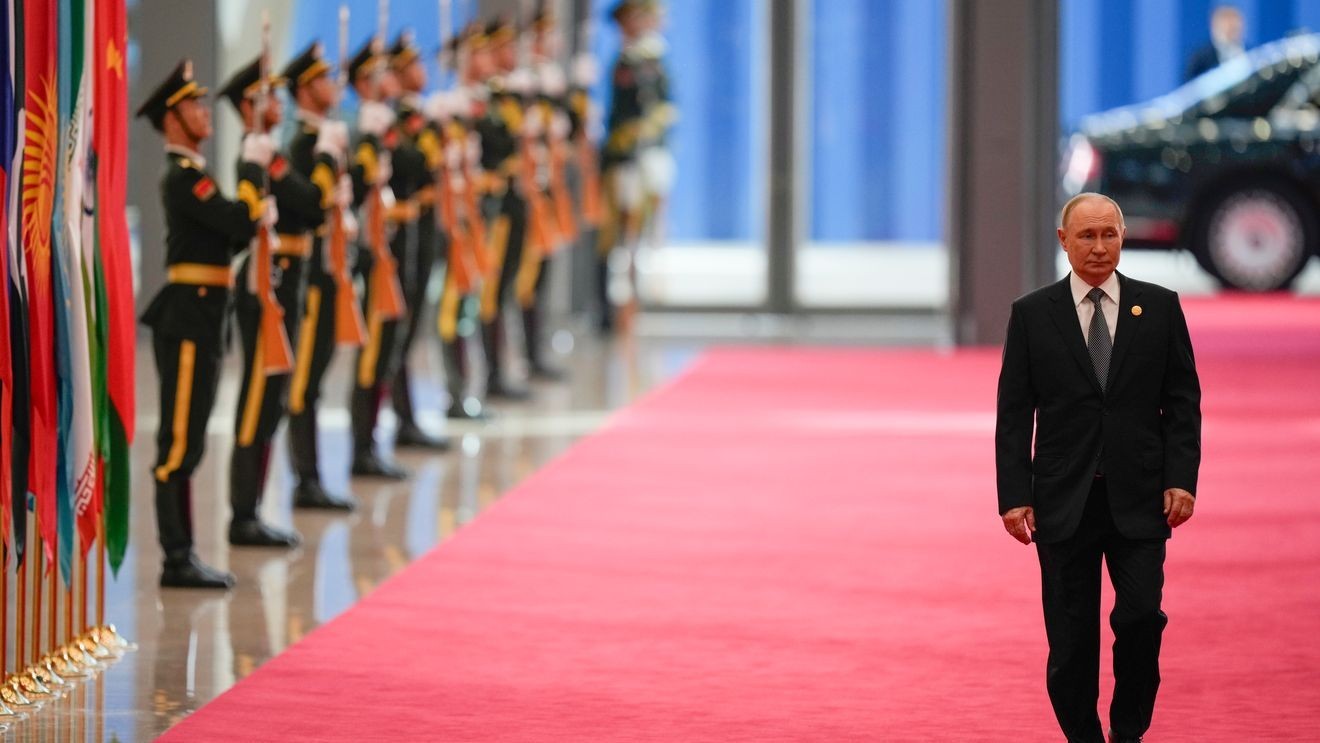
In a dramatic diplomatic effort, Trump administration officials are actively engaged in talks to persuade Russian President Vladimir Putin to accept a framework for ending the war in Ukraine, even as controversy surrounds the initial leaked peace plan draft.
The leaked document, which prompted immediate backlash from Ukrainian officials and Western allies, was described by Secretary of State Marco Rubio as a “living, breathing” framework rather than a finalized agreement. Nevertheless, the draft’s core provisions have sparked intense debate across diplomatic circles in Washington and European capitals.
According to analysis by the Center for Strategic and International Studies (CSIS), the leaked plan would require Ukraine to make significant territorial concessions. These include acknowledging Russian control over Crimea, Luhansk, and all of Donetsk, while freezing current front lines in southern Ukraine.
The draft also contains strict limitations on Ukraine’s sovereignty, including capping its armed forces at 600,000 troops and requiring a constitutional amendment prohibiting NATO membership. While the U.S. would offer “reliable” security guarantees to Ukraine, these commitments could potentially be nullified if Ukraine is accused of “attacking” Russia—language that analysts have flagged as dangerously ambiguous.
Additional controversial provisions include requirements for Ukraine to hold national elections within 100 days and grant amnesty for wartime actions on both sides of the conflict, raising questions about accountability for war crimes.
Perhaps most contentious is a financial arrangement outlined in Provision 14 of the draft plan. This section proposes that “$100 billion in frozen Russian assets will be invested in US-led efforts to rebuild and invest in Ukraine; the US will receive 50% of the profits from this venture.” The remainder of the frozen funds would reportedly be directed into a joint U.S.–Russia investment vehicle.
CSIS researchers have suggested these financial terms are so heavily skewed in Washington’s favor, while simultaneously being politically toxic for both Moscow and European partners, that this aspect alone could render the entire framework a “non-starter” in practical negotiations.
Complicating matters further, Ukraine is currently embroiled in a major corruption scandal that threatens to undermine its position at any negotiating table. Ukrainian authorities have charged or named several high-ranking officials, including a former deputy prime minister, in an alleged $100 million embezzlement scheme connected to the country’s energy sector.
The scandal has reached the highest levels of President Volodymyr Zelenskyy’s administration, implicating his former business partner and, most significantly, his chief of staff—widely regarded as the second most powerful figure in the Ukrainian government. The chief of staff resigned following the allegations.
Zelenskyy responded to the corruption revelations with a statement emphasizing that “internal strength is the foundation of our external unity and of our relations with the world,” acknowledging the crucial importance of maintaining credibility during this critical diplomatic juncture.
For Ukraine, which has struggled with perceptions of corruption even as it has received billions in U.S. military and humanitarian assistance since Russia’s 2022 invasion, the timing of this scandal could not be worse. The country now faces renewed international scrutiny just as peace negotiations appear to be gaining momentum.
The corruption allegations provide the Kremlin with fresh ammunition to question Ukraine’s ability to manage Western aid or implement the terms of any potential peace agreement. Analysts suggest this could significantly weaken Kyiv’s negotiating position in talks that already involve difficult questions about territorial integrity and security arrangements.
As President Trump’s advisers continue their diplomatic push, these developments underscore the extraordinary complexity of finding a viable path toward ending the devastating conflict in Ukraine, with high stakes for regional stability and the international order.
Fact Checker
Verify the accuracy of this article using The Disinformation Commission analysis and real-time sources.

9 Comments
This leaked peace plan draft seems like a controversial compromise. It would require major territorial concessions from Ukraine while limiting their sovereignty. I’m curious to hear more details on the security guarantees the US would provide.
Agreed, the territorial and sovereignty constraints are quite significant. It will be interesting to see if Ukraine is willing to accept such terms, even with security assurances.
The details around this leaked peace plan are quite concerning. Giving up Crimea and the Donbas regions would be a huge blow for Ukraine. I hope they can negotiate better terms that preserve their territorial integrity.
Absolutely, Ukraine should not have to make such significant territorial concessions. This plan seems very tilted in Russia’s favor and would be a tough sell for the Ukrainian government.
Interesting to see the details of this leaked peace plan draft. While a diplomatic solution is needed, the territorial and sovereignty constraints seem quite onerous for Ukraine. I’m curious to hear Kyiv’s reaction and if they see any room for negotiation.
This leaked peace plan seems like a non-starter given the significant concessions it would require from Ukraine. Acknowledging Russian control over Crimea and parts of Donbas is a major ask. I hope the US and allies can negotiate better terms.
The leaked peace plan draft is certainly controversial, with its demands for major Ukrainian territorial concessions and restrictions on their military and foreign policy. I wonder how this will play out in the ongoing negotiations to end the war.
While a diplomatic solution to end the war is desirable, this leaked peace plan draft appears to be quite one-sided. Limiting Ukraine’s military and prohibiting NATO membership are major red lines. I’m skeptical this will gain traction with Kyiv.
Agreed, the restrictions on Ukraine’s sovereignty are concerning. Any peace deal needs to preserve Ukraine’s independence and allow them to make their own security decisions without undue Russian influence.