


Listen to the article
In a series of social media posts that have drawn scrutiny, President Donald Trump shared misleading images claiming to show American eagles killed by wind turbines, part of his ongoing criticism of renewable energy infrastructure.
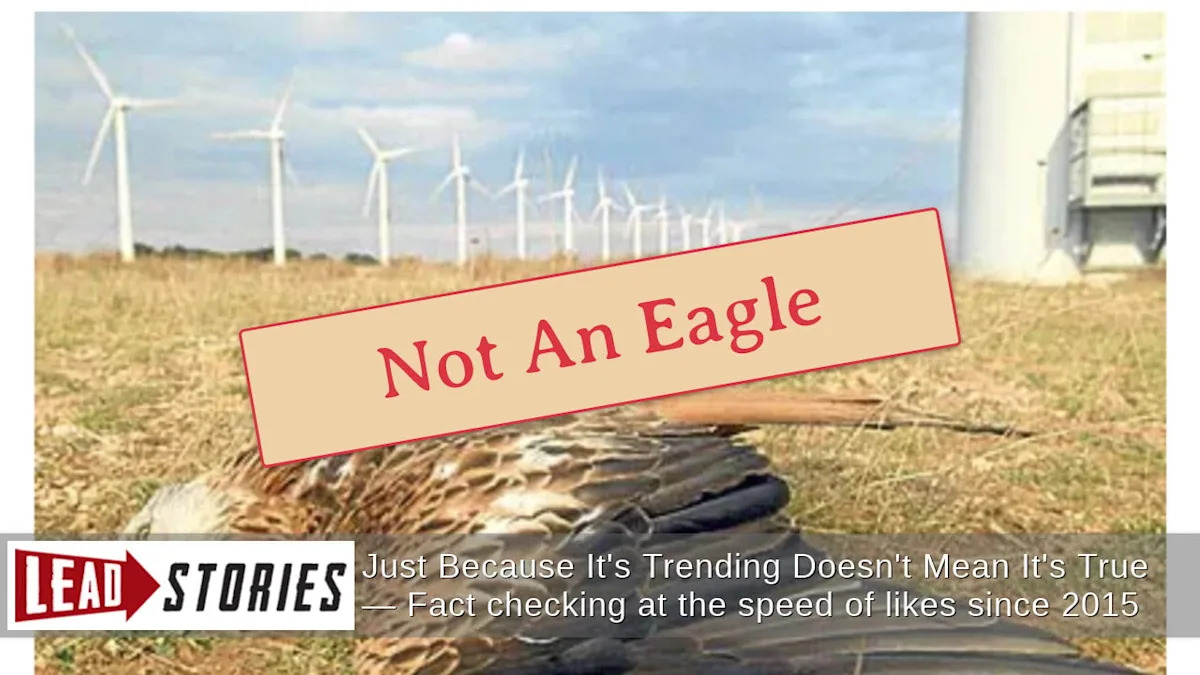
The most recent incident occurred on January 2, 2026, when Trump posted an image on Truth Social with the caption “Eagles going down!” The post implied that the dead bird pictured was an American eagle killed by a wind turbine. However, fact-checkers have determined the image actually shows a European red kite killed in Spain at least 15 years ago.
A reverse image search revealed the photograph first appeared in a March 2011 Telegraph article titled “Why birds crash into wind turbines.” The caption clearly identified the bird as “a red kite killed by colliding with a turbine in Spain.” The same image was later used in a May 2020 blog post about red kite deaths in Germany related to wind energy development.
This marks the second time in two days that the president has misidentified foreign bird species in his criticism of wind energy. On December 31, 2025, Trump shared another image purporting to show an eagle killed by a wind turbine, but the bird was actually a falcon photographed in Israel.
The president’s posts form part of a broader pattern of claims suggesting wind turbines are decimating America’s bald eagle population. However, wildlife studies tell a different story. While wind turbines do cause some bird fatalities, research estimates that only hundreds of eagles – including both bald and golden eagles – were killed by turbines across the contiguous 48 states in 2024.
Conservation experts point to a much more positive trend for America’s national bird. According to the most recent comprehensive population assessment in 2019, bald eagles numbered over 300,000 nationwide and their population continues to grow. This represents a remarkable conservation success story, as bald eagles were once endangered due to habitat loss and the pesticide DDT.
“These posts perpetuate misconceptions about both wind energy and eagle conservation,” said Dr. Ellen Michaels, wildlife biologist with the National Raptor Research Center. “While any eagle death is concerning, wind energy is not driving population declines. In fact, bald eagles have made an incredible recovery in recent decades.”
The wind energy industry has acknowledged bird mortality as a legitimate concern and implemented various mitigation strategies. These include careful siting of new projects away from major migration routes, installing deterrent technologies, and supporting conservation efforts for affected species.
The misleading posts come at a time of intense debate over America’s energy future. The Biden administration has set ambitious clean energy goals, including major expansion of wind power capacity, while Trump has consistently criticized renewable energy sources throughout his political career.
Energy policy experts note that all power generation methods have environmental impacts. Coal and natural gas extraction and burning create air and water pollution, while hydroelectric dams disrupt river ecosystems. Nuclear power produces minimal emissions but generates radioactive waste.
“The energy debate deserves nuanced discussion based on accurate information,” said energy policy analyst Thomas Rivera. “Simplified or misleading claims about any energy source ultimately don’t serve the public interest.”
The White House has not responded to requests for comment on the president’s social media posts.
Fact Checker
Verify the accuracy of this article using The Disinformation Commission analysis and real-time sources.

12 Comments
This incident highlights the need for greater media literacy and critical thinking when it comes to online content, especially from political figures. We should always verify claims before spreading them further.
Absolutely. It’s troubling to see the president sharing misleading information, even if unintentional. Fact-checking is crucial to maintain an informed and engaged citizenry.
While I’m skeptical of wind power, I believe we should focus on facts and evidence, not misleading claims. This incident undermines the credibility of the president’s criticisms and makes it harder to have a constructive dialogue.
Well said. Fact-checking and intellectual honesty are essential, even when we have strong opinions on an issue. Spreading misinformation, even inadvertently, is counterproductive.
It’s disappointing to see the president sharing images that are clearly not what he claims. Fact-checking is an important safeguard against the spread of false narratives, especially on politically charged issues.
Absolutely. Even if unintentional, this kind of misinformation can have real consequences. We need our leaders to be more careful and accountable when it comes to the information they share.
It’s concerning that the president is spreading misinformation about renewable energy. Fact-checking is crucial to ensure the public has accurate information, especially on important issues like energy policy.
Agreed. Misrepresenting the facts, even inadvertently, can undermine public trust and make it harder to have a constructive dialogue on complex topics like this.
While I’m no fan of wind energy, it’s important to be accurate about the impacts. Misrepresenting evidence undermines legitimate criticism and makes it harder to have a productive discussion.
I can understand skepticism about wind power, but spreading false information is counterproductive. We should focus on facts and thoughtful analysis, not sensationalism.
This episode highlights the need for greater transparency and accountability when it comes to how our leaders communicate with the public. Fact-checking and media literacy are crucial skills.
Agreed. Elected officials have a responsibility to provide accurate information, not spread misinformation. This undermines public trust and the democratic process.