


Listen to the article
President Donald Trump has proposed a novel approach to America’s escalating tariff policies, suggesting that revenue collected from import duties could be redistributed directly to American citizens as cash payments.
Trump outlined his vision on Truth Social, describing a plan where every American citizen, with the exception of high-income earners, would receive a $2,000 payment drawn from tariff revenue. The former president framed the concept as a “dividend,” positioning Americans as “shareholders” entitled to profits from the country’s trade policies.
“The rest of the tariff revenue would be used to pay down the National Debt,” Trump added in a separate post, suggesting a two-pronged approach to the windfall from his administration’s trade policies.
Treasury Secretary Scott Bessent appeared to endorse the concept during an interview with ABC News, stating the dividend “could come in lots of forms, in lots of ways.” However, critical details remain unclear, including how the payments would be structured and what income threshold would determine eligibility.
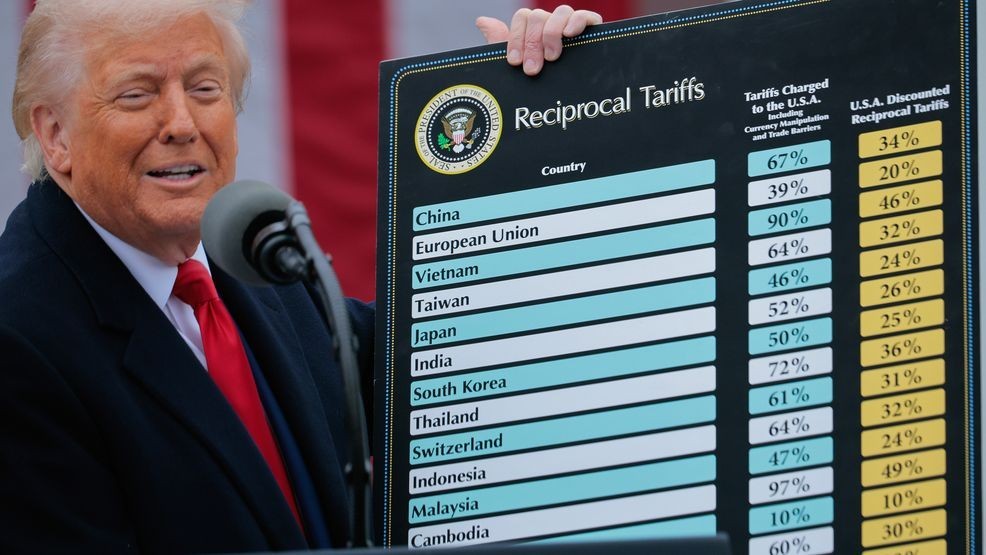
Financial analysts have begun examining whether such a program could be funded by existing or projected tariff collections. According to the Tax Foundation, Trump’s tariffs are expected to generate approximately $2.4 trillion over the next decade on a conventional basis. That figure drops to roughly $1.8 trillion when accounting for reduced economic growth resulting from trade disruptions.
More immediately, the Committee for a Responsible Federal Budget reports that tariff collections have already jumped significantly, reaching $195 billion in fiscal year 2025—a marked increase from previous years.
The scale of the proposed payments would be substantial. U.S. Census Bureau data indicates approximately 173 million Americans earned less than $100,000 in 2023. If each received the proposed $2,000 payment, the total cost would approach $346 billion. This suggests that while current tariff revenue wouldn’t cover the full cost of these payments, projected collections over time might eventually fund such a program.
Implementation would face significant hurdles. Tariff revenue currently flows into the U.S. Treasury’s general fund, where it’s treated like other tax income without specific earmarks for programs. The U.S. Treasury Department confirms that even increased tariff collections aren’t automatically designated for particular uses.
Congressional approval would be essential. The Constitution grants Congress the “power of the purse,” meaning lawmakers would need to pass legislation authorizing any direct payments to citizens. This process mirrors the one used for pandemic stimulus checks in 2020 and earlier tax rebates in 2001 and 2008.
While novel at the federal level, the concept bears some resemblance to Alaska’s Permanent Fund Dividend, where residents receive annual payments funded by oil revenue. Between 1982 and 2015, Alaska distributed approximately $22.4 billion to eligible citizens, with the fund’s market value exceeding $64 billion by early 2018, according to the Brookings Institution.
The federal government, however, has historically limited direct payments to citizens to extraordinary circumstances, such as economic crises or the COVID-19 pandemic.
Economic experts have raised questions about the long-term implications of such a program, including its impact on inflation, federal budgeting, and international trade relationships. Some economists worry that redirecting tariff revenue to direct payments could exacerbate budget deficits if the funds would otherwise offset federal spending.
For Trump’s “tariff dividend” to transition from campaign promise to implemented policy, his administration would need to secure congressional support, establish clear eligibility criteria, and create a legal framework to redirect tariff revenue from the general fund to individual Americans.
The proposal represents a significant shift in how tariff policies are presented to the American public—moving from discussions of trade balances and industry protection to a more direct consumer benefit approach that could resonate with voters concerned about personal finances.
Fact Checker
Verify the accuracy of this article using The Disinformation Commission analysis and real-time sources.

14 Comments
While the dividend concept has populist appeal, I’m skeptical it could be properly funded and administered given the challenges of tariff collections and income thresholds.
Fair point. The devil would be in the details on making such a program workable and equitable.
While the dividend concept has some populist appeal, I’m not convinced it’s a sustainable or well-designed solution to address economic challenges.
Agreed. This feels more like political theater than a substantive policy proposal at this stage.
Interesting proposal from Trump to use tariff revenue for direct payments to citizens. Curious to see the details on eligibility and implementation if this were to move forward.
Agreed, the logistics would be complex but the core idea of redistributing trade policy gains to the public is intriguing.
As an investor in mining/commodities, I’m curious how this could impact trade, tariffs and the broader economic landscape if implemented.
Good point. Any major shifts in trade policy and tariff collections could have ripple effects across industries and markets.
This seems like Trump trying to score political points by dangling direct cash payments, rather than a serious policy proposal. The logistics would be highly complex.
Agree, the optics may be more important than the substance here. Concrete plans and budgeting would be needed to make this viable.
I’ll be watching closely to see if this gains any traction or if it remains more rhetoric than reality. The details would be critical.
Absolutely. Without clear plans for funding, eligibility and implementation, this is likely more political posturing than actionable policy.
As an investor in mining and commodities, I’m curious to understand how this could impact trade, tariffs and the broader economic landscape.
Yes, any major shifts in trade policy and tariff collections could have significant ripple effects across various industries and markets.