


Listen to the article
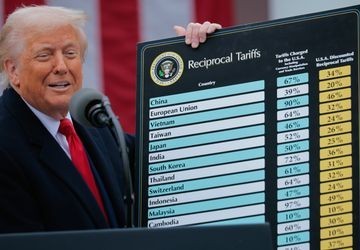
Former President Donald Trump has unveiled an ambitious economic proposal that would distribute $2,000 dividend payments to American citizens, funded entirely by tariff revenue. The plan, announced during a “Make America Wealthy Again” event at the White House Rose Garden, represents a significant shift in how tariff proceeds would be utilized within the federal budget system.
The proposal draws inspiration from the Alaska Permanent Fund, which has distributed annual dividends to state residents since 1982 based on oil revenue. Trump’s national version would create what he described as a “shareholder” relationship between American citizens and the federal government, with tariff collections directly benefiting individuals rather than disappearing into general treasury funds.
“Americans deserve to be treated as shareholders in their country,” Trump stated during the announcement. “When foreign countries want access to our markets, the American people should directly benefit from those transactions.”
Economic analysts have offered mixed reactions to the proposal. Proponents suggest the plan could create a new paradigm for how Americans view international trade, potentially building broader support for tariff policies that have often been politically divisive. Critics, however, question the fiscal viability and potential economic repercussions.
David Weinstein, economist at Columbia University, expressed concerns about the plan’s implementation. “While direct payments are politically appealing, redirecting tariff revenue away from general government funding would require significant budget adjustments elsewhere. There’s also the question of whether tariffs can generate sufficient revenue to fund meaningful dividend payments consistently.”
The proposal would require congressional approval, facing potential hurdles in both chambers. Early reactions from lawmakers have fallen along partisan lines, with some Republican representatives voicing support while Democratic leaders have expressed skepticism about both the funding mechanism and economic impact.
The Congressional Budget Office would need to score the proposal before serious legislative consideration, evaluating how much revenue Trump’s proposed tariff structure could realistically generate and whether it would sustain the dividend program over time.
Trade experts note that tariff revenues can be volatile, fluctuating based on import volumes and international responses. Higher tariffs typically reduce imports over time as businesses adjust supply chains, potentially leading to diminishing returns. This creates uncertainty about whether the program could maintain consistent dividend amounts year after year.
The Peterson Institute for International Economics estimates that current U.S. tariff revenue generates approximately $80-85 billion annually. To fund $2,000 payments to each adult American, the tariff structure would need to generate over $400 billion yearly, representing a dramatic increase from current levels.
International reaction has been swift, with several major trading partners expressing concern that significantly higher tariffs would violate World Trade Organization agreements and trigger retaliatory measures. The Chinese Ministry of Commerce released a statement warning that such policies could “further destabilize global trade at a precarious time.”
Consumer advocacy groups have also weighed in on the proposal’s potential impact on prices. “While direct payments sound appealing, consumers would likely face higher prices for imported goods, potentially offsetting the benefit of any dividend payment,” said Rachel Johnson of the Consumer Federation of America.
Business organizations have expressed concern about supply chain disruptions. The U.S. Chamber of Commerce cautioned that “dramatic tariff increases would create significant challenges for American manufacturers who rely on imported components and could ultimately harm U.S. competitiveness.”
The Treasury Department has been tasked with developing implementation details, including eligibility requirements and distribution mechanisms, should the proposal advance through Congress.
As debate over the proposal continues, economists and policy analysts will be closely examining both the potential benefits and drawbacks of what represents one of the most significant proposed changes to U.S. trade and fiscal policy in decades.
Fact Checker
Verify the accuracy of this article using The Disinformation Commission analysis and real-time sources.

8 Comments
Interesting proposal to distribute tariff revenue directly to citizens. This could make Americans more aware of trade policy impacts and create incentives to support fair trade. However, the details around implementation and long-term effects would need careful evaluation.
A $2,000 per person dividend funded by tariffs is a significant and unconventional idea. While it could give citizens a more direct stake in trade policy, there are sure to be complexities around implementation, economic impacts, and political feasibility that would require thorough analysis.
A $2,000 dividend plan funded by tariffs is a bold idea. It could help offset the costs of trade disputes for American households, but the economic and political implications would require thorough analysis. I’m curious to see how this proposal develops.
I agree, the details around funding sources, distribution mechanisms, and potential distortions would need to be examined closely. Any plan that directly ties trade policy to individual payouts could have unintended consequences.
This proposal has the potential to reshape how Americans view trade, making them more attuned to its effects on their personal finances. However, the devil will be in the details – things like which tariffs would be included, how the funds would be distributed, and potential unintended consequences all need careful consideration.
Tying trade policy to individual payouts is an innovative concept, but the practical realities of such a program would need to be rigorously examined. Questions around funding sources, distribution mechanisms, and potential distortions to trade and the economy would all require in-depth study.
This proposal represents a notable shift in how tariff revenue could be utilized. While the ‘shareholder’ framing is interesting, the logistical challenges of implementing a broad dividend program of this scale should not be underestimated. I’m curious to see how this idea evolves with further analysis.
The concept of treating citizens like ‘shareholders’ in the country is an intriguing one, but the logistics of implementing such a broad dividend program seem quite complex. I’d want to see a comprehensive assessment of the potential impacts on government budgets, trade, and the broader economy.