


Listen to the article
Trump Pardons Former Honduran President Convicted in Major Drug Trafficking Case
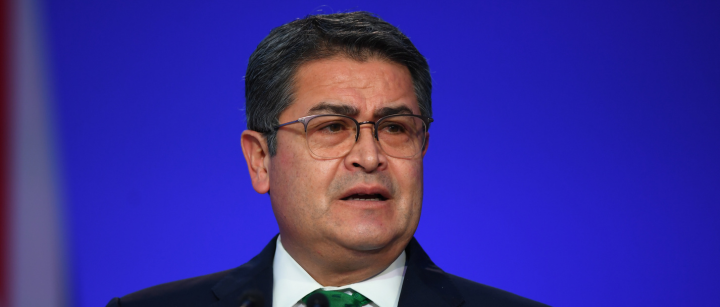
President Donald Trump granted a full pardon to former Honduran President Juan Orlando Hernández on December 1, releasing him from a 45-year prison sentence for drug trafficking convictions. Trump claimed without evidence that Hernández’s prosecution had been a “setup” by the Biden administration.
“If somebody sells drugs in that country, that doesn’t mean you arrest the president and put him in jail for the rest of his life,” Trump said when explaining his decision to reporters.
Hernández, who served as Honduras’ president from 2014 to 2022, was convicted by a federal jury in March 2024 after a three-week trial. According to court documents, he was found guilty of participating in a massive cocaine trafficking operation that helped import approximately 400 tons of cocaine into the United States.
White House Press Secretary Karoline Leavitt defended Trump’s action, characterizing it as a reversal of “over-prosecution” by the Biden administration. She claimed Hernández had been targeted because he was “opposed to the values of the previous administration.”
The conviction of Hernández stemmed from an investigation that began in 2015, during the Obama administration, according to The New York Times. Court documents detailed how Hernández received millions of dollars from drug trafficking organizations, including from Joaquin “El Chapo” Guzmán’s Sinaloa Cartel.
Prosecutors successfully argued that Hernández used drug money to fund political campaigns and commit voter fraud. In exchange, he protected drug traffickers from investigation and prosecution, shared sensitive law enforcement information, and employed Honduran police and military to safeguard drug shipments.
At his sentencing in June 2024, U.S. District Judge P. Kevin Castel, a George W. Bush appointee, called Hernández “a two-faced politician hungry for power” who pretended to fight against drug traffickers while collaborating with them.
U.S. Attorney Damian Williams stated at the time: “Hernández helped to facilitate the importation of an almost unfathomable 400 tons of cocaine to this country: billions of individual doses sent to the United States with the protection and support of the former president of Honduras.”
The pardon has drawn bipartisan criticism from U.S. lawmakers. Republican Senator Bill Cassidy of Louisiana questioned the decision on social media, asking, “Why would we pardon this guy and then go after Maduro for running drugs into the United States? Lock up every drug runner! Don’t understand why he is being pardoned.”
Republican Senator Thom Tillis of North Carolina was equally critical, telling reporters, “I hate it. It’s a horrible message. … It’s confusing to say on the one hand we should potentially even consider invading Venezuela for drug traffick[ing], and on the other hand let somebody go.”
Democratic Representative Norma J. Torres of California had urged Trump not to grant the pardon in a November 29 letter, writing: “The victims of Hernández’s crimes, including tens of thousands of American families who lost loved ones to cocaine overdoses, deserve justice.”
Hernández had maintained his innocence throughout the trial, claiming he was the victim of “political persecution” and that witnesses against him—including former drug traffickers—were “professional liars.” In October, he sent a letter to Trump seeking clemency, comparing himself to Trump as someone “recklessly attacked by radical leftist forces.”
Trump ally Roger Stone reportedly delivered the letter to Trump, though a White House official told The New York Times that Trump had not read it before announcing the pardon.
Hernández could still face charges in Honduras. Following Trump’s pardon announcement, Honduras Attorney General Johel Zelaya indicated prosecutors there would be “obligated to take action… so that justice may prevail and impunity may be brought to an end,” though he did not specify what charges might be filed.
The pardon comes as the Trump administration has been increasing U.S. military presence in the Caribbean to combat drug trafficking from Colombia and Venezuela in recent months.
Fact Checker
Verify the accuracy of this article using The Disinformation Commission analysis and real-time sources.

11 Comments
If AISC keeps dropping, this becomes investable for me.
Production mix shifting toward Fact Check might help margins if metals stay firm.
Good point. Watching costs and grades closely.
Good point. Watching costs and grades closely.
The cost guidance is better than expected. If they deliver, the stock could rerate.
Good point. Watching costs and grades closely.
Silver leverage is strong here; beta cuts both ways though.
Silver leverage is strong here; beta cuts both ways though.
Good point. Watching costs and grades closely.
Exploration results look promising, but permitting will be the key risk.
Good point. Watching costs and grades closely.