


Listen to the article
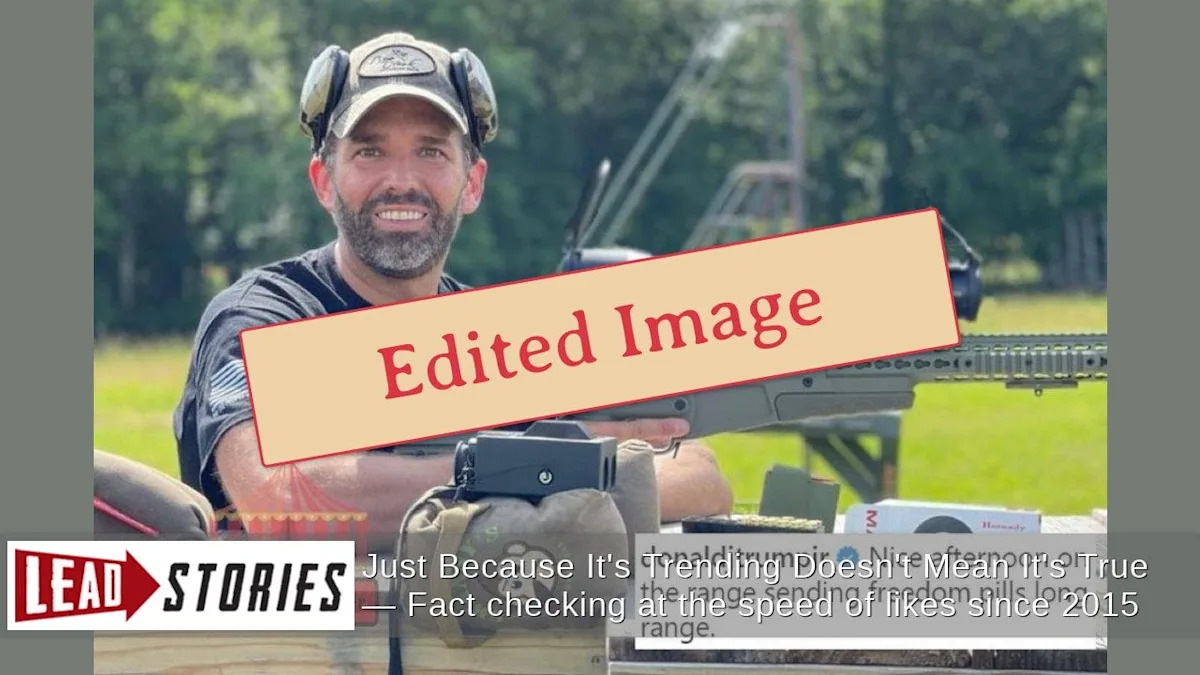
In a case of digital manipulation making rounds on social media, an altered image purporting to show Donald Trump Jr. with a rifle scope mounted backwards has been debunked as fake.
The doctored photo appeared on Bluesky, a social media platform, posted by user @mrsbettybowers on February 5, 2026. The post mockingly captioned the image: “When you’re so coked up and stupid you put the scope on backwards.” The altered image shows what appears to be Donald Trump Jr. at a shooting range with a rifle whose scope is visibly mounted in reverse.
However, a reverse image search conducted using Google Lens revealed that the original, unaltered photograph was published on December 10, 2024, in an article by Must Read Alaska. The authentic image shows Trump Jr. at the same shooting bench with the scope correctly mounted on his rifle.
The key differences between the two images are immediately apparent when compared side by side. The manipulated version includes a watermark from “@TheClearCider” and features the digitally flipped scope, while the original image shows standard, proper equipment setup.
This type of digital manipulation is increasingly common in political discourse, where edited images are used to mock or discredit public figures. The Bluesky account for @TheClearCider, which watermarked the altered image, explicitly identifies itself as a satire and parody account. Its profile description reads: “Oh, stop it! Laugh. Parody, satire, & truth as needed. Prevent truth decay, brush with Clear Cider. Caution, I still run with scissors. Dog lover.”
Further investigation into the supposed Instagram post from Donald Trump Jr. revealed additional signs of fabrication. The screenshot purports to show a post with the caption “Nice afternoon on the range sending freedom pills long range,” but a Google search for this specific wording returned no results linked to Trump Jr.’s social media accounts or any credible reporting about such a post.
This incident highlights the ease with which images can be manipulated and spread across social platforms. Doctored photos and videos, sometimes referred to as “cheapfakes” when they involve simple edits rather than sophisticated AI technology, have become increasingly prevalent in political discourse.
Media literacy experts recommend that social media users verify images before sharing them, especially those that seem designed to portray public figures in an unflattering light. Simple verification techniques include reverse image searches, checking the posting history of the account sharing the content, and looking for inconsistencies within the image itself.
The proliferation of such altered content presents growing challenges for voters trying to navigate an information landscape where factual and fabricated content often appear side by side. As the 2026 election cycle approaches, the ability to distinguish between authentic and manipulated media will likely become an increasingly valuable skill for the American electorate.
This case serves as a reminder that even simple image alterations can spread rapidly across social networks, underscoring the importance of verification before sharing content, particularly in politically charged contexts.
Fact Checker
Verify the accuracy of this article using The Disinformation Commission analysis and real-time sources.

5 Comments
While political discourse can get heated, it’s concerning to see blatantly doctored images being used to attack public figures. This kind of deception only serves to erode trust and polarize further.
Absolutely. Manipulated imagery has no place in honest, fact-based dialogue. It’s a worrying trend that undermines democratic discourse.
This is a good example of the importance of verifying the authenticity of online images. Digital manipulation is a real issue that can spread misinformation. It’s crucial to fact-check before jumping to conclusions, even about public figures.
Agreed. Side-by-side comparisons really highlight the differences between the original and altered images. Fact-checking is essential to combat the spread of digitally manipulated content.
It’s good to see this case of digital alteration being debunked. However, the prevalence of such tactics is troubling. We need to be vigilant about verifying information, especially when it comes to sensitive political topics.