


Listen to the article
US vs. Europe: Trump’s Misleading Claims About Ukraine Aid
President Donald Trump has repeatedly misrepresented the scale of US financial support for Ukraine, claiming the United States has contributed significantly more than European nations. However, official data reveals a different picture of the transatlantic aid distribution.
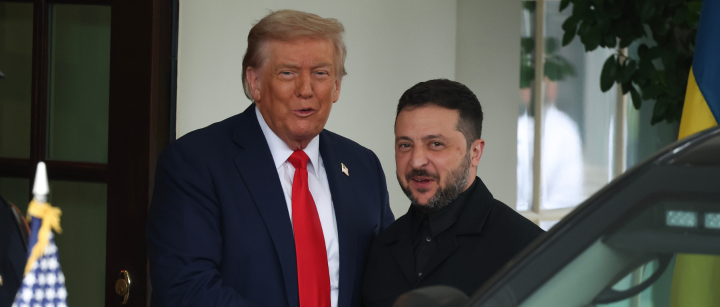
During an August 15 Fox News interview with Sean Hannity following his meeting with Russian President Vladimir Putin, Trump stated, “We gave them $350 billion. Europe gave them much less, but still a lot. A hundred billion dollars.” He reiterated these figures days later during a “Fox & Friends” appearance after meeting with Ukrainian President Volodymyr Zelenskyy.
According to the Kiel Institute for the World Economy, a respected German research organization that maintains the Ukraine Support Tracker, Europe had allocated 167.4 billion euros (approximately $195 billion) in direct bilateral aid to Ukraine as of June 30. This exceeds the 114.6 billion euros (about $133 billion) allocated by the United States during the same period.
The Kiel Institute’s figures focus specifically on direct government-to-government military, financial, and humanitarian aid allocations. This methodology explains why their US total appears lower than congressional appropriations, as some American funding was spent domestically rather than directly in Ukraine.
The August report from the special inspector general overseeing US support indicated that approximately $187 billion was made available through June for military operations and broader response efforts to Russia’s invasion, which began in February 2022. About $174.2 billion of this sum was approved through five bipartisan appropriation bills, according to the Congressional Research Service. Additionally, the US provided Ukraine a $20 billion loan to be repaid with proceeds from frozen Russian assets.
Europe has also committed an additional 90 billion euros in future aid not yet allocated, compared to the US commitment of another 4.4 billion euros, further widening the gap between European and American support.
When pressed on his $350 billion figure during an Oval Office meeting with Zelenskyy on August 18, the White House later clarified that Trump’s calculation included not just direct spending but also indirect economic costs. These indirect costs encompassed over $93 billion attributed to inflation caused by the war, more than $16 billion in lost trade revenue due to sanctions on Russia, and approximately $7 billion from higher fertilizer prices.
Mark F. Cancian, senior adviser at the Center for Strategic & International Studies, criticized this methodology, calling it “laughable” and saying it “looks like it was thrown together.” He particularly questioned attributing all inflation from 2021 to 2023 to Russia’s war while ignoring domestic US policies.
This position marks a notable shift in Trump’s rhetoric. During his campaign, he consistently blamed the Biden administration’s energy policies for inflation, rather than Russia’s war. In his inaugural address, he specifically cited “massive overspending and escalating energy prices” as inflation drivers.
Experts like Cancian recommend relying on the Kiel Institute’s figures for comparing national contributions, as they employ a consistent global methodology. By this measure, European nations have collectively provided more direct aid to Ukraine than the United States since Russia’s full-scale invasion began.
The disparity between Trump’s statements and verified data highlights the importance of accurate information when discussing international aid commitments, particularly during a conflict with global security implications.
Fact Checker
Verify the accuracy of this article using The Disinformation Commission analysis and real-time sources.

22 Comments
Interesting to see the data on the transatlantic aid distribution to Ukraine. It’s important to rely on factual information rather than unfounded claims, especially when it comes to such a critical geopolitical issue.
Agreed, transparency and accountability around foreign aid are crucial. The numbers seem to tell a different story than Trump’s statements.
This reporting underscores the need for rigorous fact-checking, especially when it comes to high-stakes geopolitical issues. Reliable data is crucial for understanding the true nature of foreign aid distributions.
Agreed. It’s important to scrutinize claims made by public figures and ensure they align with verifiable facts and figures.
The discrepancy between Trump’s statements and the Kiel Institute’s data raises important questions about the transparency and accuracy of information surrounding Ukraine aid. Fact-checking is crucial for maintaining trust in our institutions.
You’re right. Reliable, impartial information is essential for citizens to form well-informed opinions on complex policy issues like this.
This reporting highlights the importance of robust fact-checking, even for high-profile claims made by political leaders. Maintaining public trust requires accountability and transparency around the facts.
Absolutely. Fact-based reporting is a vital part of a healthy democracy, allowing citizens to make informed decisions about their representatives and the policies they support.
This highlights the importance of verifying information, even from high-profile sources. Fact-checking can help us understand the nuances of complex issues like foreign aid.
Absolutely. Relying on authoritative data sources is key to cutting through the noise and misinformation around topics like this.
This reporting emphasizes the importance of verifying information, even from prominent sources. Fact-checking and relying on authoritative data are crucial for ensuring that public discourse is grounded in truth, not unfounded assertions.
Exactly. Maintaining trust in our institutions and decision-making processes requires a commitment to transparency and accountability around the facts, no matter the source of the claims.
This report highlights the importance of scrutinizing claims made by public figures, even high-profile ones. Fact-checking and relying on authoritative data sources are crucial for maintaining trust in our institutions and decision-making processes.
Agreed. Transparency and accountability around information, especially on critical issues, are essential for a well-informed citizenry and effective governance.
The discrepancy between Trump’s claims and the actual data on Ukraine aid distribution is concerning. Fact-checking is crucial for ensuring that public discourse is grounded in verifiable information, not unfounded assertions.
Well said. Reliable, impartial data is essential for understanding the nuances of complex geopolitical issues like this one.
It’s concerning to see such a significant discrepancy between Trump’s claims and the actual data on Ukraine aid. Maintaining trust in public institutions requires leaders to be accountable for their statements.
You make a good point. Fact-based reporting is essential for citizens to make informed decisions about their leaders and policies.
The discrepancy between Trump’s statements and the actual data on Ukraine aid distribution is concerning. This highlights the importance of fact-checking and relying on authoritative sources, especially when it comes to high-stakes geopolitical issues.
Well said. Fact-based journalism is essential for citizens to make informed decisions about the policies and leaders they support.
The discrepancy between Trump’s statements and the Kiel Institute’s data underscores the need for rigorous fact-checking in journalism. Maintaining trust in our institutions requires leaders to be held accountable for the accuracy of their claims.
You make a good point. Fact-based reporting is a vital safeguard against the spread of misinformation, which can have serious consequences for public discourse and decision-making.