


Listen to the article
Trump Sparks Conservative Debate Over H-1B Visa Expansion
President Donald Trump has ignited controversy among his conservative base after stating in a Fox News interview that the United States needs to expand the H-1B visa program because American workers lack “certain talents.”
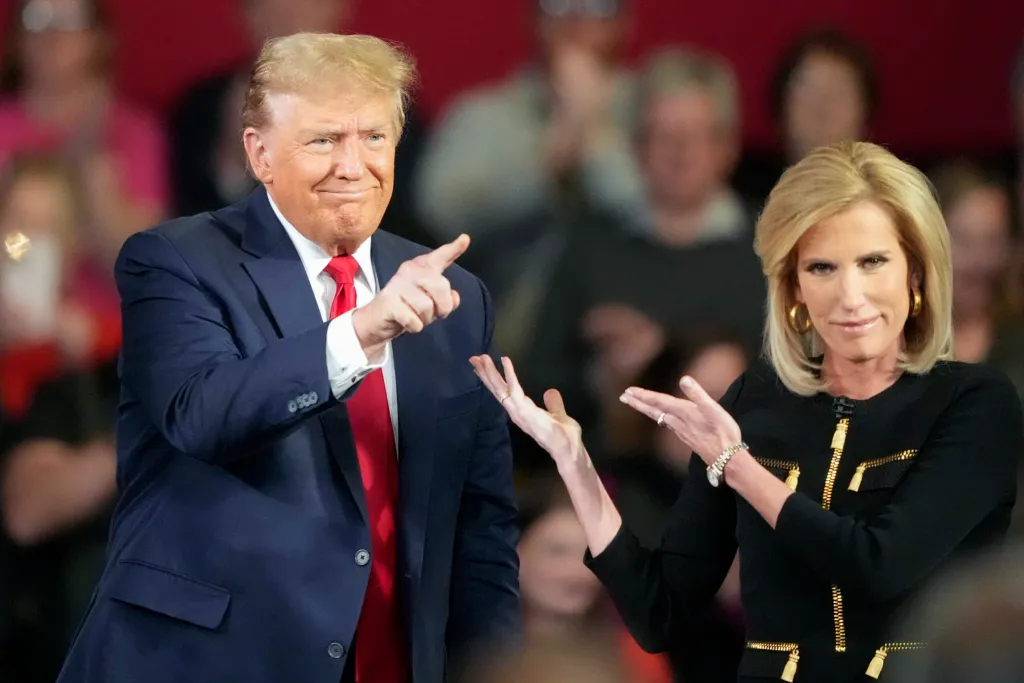
During a conversation with host Laura Ingraham that aired Tuesday evening, Trump pushed back when Ingraham suggested that bringing in more foreign workers could harm American job seekers.
“Well, I agree, but you also do have to bring in talent,” Trump said.
When Ingraham countered that “we have plenty of talented people here,” Trump disagreed firmly.
“No, you don’t,” he responded. “No, you don’t have certain talents and people have to learn.”
The exchange has exposed a growing rift among conservatives on immigration policy, particularly regarding skilled foreign workers at a time when many Americans face job insecurity.
The H-1B visa program, established in 1990, allows U.S. companies to hire up to 85,000 foreign workers annually for specialized occupations. Currently, approximately 700,000 foreigners hold these visas, which permit three-year work periods with the possibility of a three-year extension.
Historically, the program has primarily benefited tech giants like Amazon, Google, Meta, Apple, and IBM, which consistently rank among the top employers of H-1B visa recipients. The program primarily targets workers in information technology, computer sciences, engineering, academia, and healthcare.
H-1B visa holders must receive a minimum salary of $60,000—notably below the 2023 median U.S. household income of $80,600, according to Census Bureau data. The program reserves 20,000 visas for recent U.S. master’s or doctorate graduates, with an additional 65,000 available to overseas workers.
Trump’s position on H-1B visas has evolved dramatically since his first presidential campaign. In 2016, he criticized the program for “substituting” Americans with “cheap labor,” but later expressed support for it, noting that his businesses employed many such visa holders.
Last month, Trump issued a proclamation raising the H-1B visa fee for companies to $100,000 per worker, a move that prompted a lawsuit from the U.S. Chamber of Commerce. Some observers believe that Elon Musk, himself a former H-1B visa recipient who now chairs Trump’s Department of Government Efficiency, has influenced the president’s shifting stance.
The conservative response to Trump’s latest comments has been swift and divided. Steve Cortes, founder of the League of American Workers, warned that American workers are already facing “massive pain from AI” and that additional foreign workers would further threaten citizen employment.
“This environment is NO time to allow millions of foreign laborers into America. We must phase out H1B and other abused worker visa programs!” Cortes wrote on social media.
Indiana Republican State Representative Andrew Ireland cited an example from his own state government, which hired an H-1B visa worker as a database administrator. “If we’re serious about being America First, we cannot use tax dollars to import foreign workers,” Ireland argued.
Even the Heritage Foundation, typically aligned with Trump’s policies, criticized the program, stating: “Congress created the H-1B visa to bring a limited number of skilled, specialty workers to fill a need in the U.S. economy. Today, it serves to displace thousands of qualified American workers.”
The Department of Labor seemed to contradict the White House position in October when it called for an overhaul of the program, claiming: “Young Americans have had the American Dream stolen from them, as jobs have been replaced by foreign workers due to rampant abuse of the H-1B visa.”
However, some conservative economists defend the program. Daniel Di Martino, a Manhattan Institute fellow and Columbia University economics PhD candidate, supported Trump’s stance: “President Trump is right about H-1B visas. America benefits from talented immigrants. The visa isn’t perfect but ending it is suicidal. It brings billions in foreign investment, retains talented foreign students, boosts innovation, and brings foreign doctors who save lives.”
Treasury Secretary Scott Bessent attempted to clarify Trump’s position on Wednesday, telling Fox News that the plan involves “overseas partners coming in again, teaching American workers, then return home. That’s a home run.”
As the debate intensifies, the controversy highlights the challenging balance between protecting American jobs and attracting specialized global talent—a tension that continues to divide even Trump’s most loyal supporters.
Fact Checker
Verify the accuracy of this article using The Disinformation Commission analysis and real-time sources.

17 Comments
This debate over H-1B visas underscores the complex tradeoffs involved in immigration and economic policy. Reasonable people can disagree on the best approach.
Absolutely. Nuanced, evidence-based policymaking is needed to navigate these sensitive issues effectively.
The debate over H-1B visas speaks to the broader challenges of developing smart, nuanced immigration policies. Finding the right solutions will require pragmatism and compromise.
The Trump administration’s stance on H-1B visas will be closely watched by both business groups and labor advocates. Finding the right policy balance is crucial.
This is a sensitive topic that highlights the challenges of maintaining a skilled workforce while also protecting domestic jobs. A thoughtful, evidence-based approach is needed.
Agreed. Any policy changes should be made with thorough analysis of potential impacts on American workers.
This is a politically charged issue with valid concerns on both sides. The Trump administration will need to carefully weigh the various interests and impacts.
Agreed. Balancing business needs, worker protections, and broader economic priorities is no easy task.
The H-1B visa program is a double-edged sword – it can fill critical talent gaps but has also been abused. Reforms to better protect American workers seem warranted.
That’s a fair assessment. Any changes should aim to harness the benefits of skilled immigration while mitigating potential downsides.
The H-1B visa debate touches on complex issues around talent needs, worker protections, and immigration policy. It will be interesting to see how the Trump administration navigates this tricky balance.
You raise a good point. There are valid arguments on both sides that deserve careful consideration.
The H-1B program has been controversial for years. It will be worth watching how the Trump administration weighs the tradeoffs and decides on any potential expansions.
Absolutely. This is a complex issue without easy solutions. Balancing business needs and worker protections is critical.
Reforming the H-1B program is a delicate issue with no easy answers. The Trump administration’s approach will be closely watched by a range of stakeholders.
Skilled foreign talent can benefit the US economy, but the H-1B program has also been criticized for undercutting American workers. Careful reforms may be needed.
Well said. Any changes should aim to enhance US competitiveness while also safeguarding domestic employment.