


Listen to the article
Trump’s Clemency for January 6 Defendants: Facts and Claims Examined
President Donald Trump granted clemency on January 20 to more than 1,500 individuals charged in connection with the January 6, 2021, Capitol riot, a sweeping action that included both pardons and commutations of sentences. The move, executed during an Oval Office signing ceremony, fulfilled a campaign promise but has drawn scrutiny for several misleading claims made by the former president while explaining his decision.
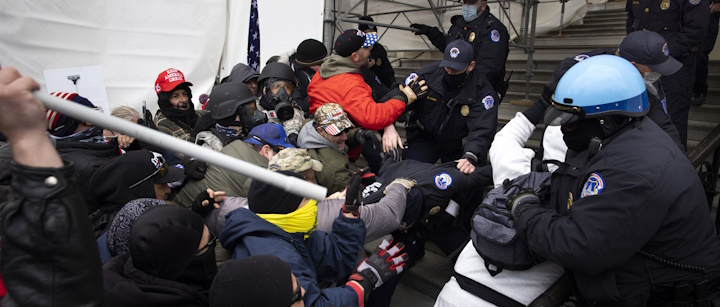
The clemency extended to all defendants regardless of the severity of their crimes, including approximately 400 individuals who were still incarcerated at the time of Trump’s inauguration. These prisoners had either pleaded guilty or been convicted of various offenses, with many serving sentences for violent felonies against law enforcement officers.
According to Department of Justice data, by the fourth anniversary of January 6, approximately 1,583 people had faced criminal charges related to the Capitol riot. Of these, 327 pleaded guilty to felonies and 682 to misdemeanors. Among those admitting to felonies, 172 specifically pleaded guilty to assaulting law enforcement officers, with 69 acknowledging they used dangerous or deadly weapons in these attacks.
Trump has repeatedly referred to the incarcerated January 6 defendants as “hostages,” suggesting unfair treatment. This characterization contradicts the legal record, as those imprisoned had been processed through the justice system with appropriate due process.
“These people are not hostages,” said retired U.S. District Court Judge Shira Scheindlin on CNN. “They’re not heroes, they’re not political prisoners. They are criminals. They attacked people. They assaulted people.”
During a Fox News interview, Trump downplayed the violence against police officers, describing them as “very minor incidents.” However, Justice Department records document that more than 140 police officers were assaulted during the riot, suffering injuries ranging from cuts and bruises to more serious trauma including concussions, rib fractures, and a mild heart attack.
Chuck Wexler, executive director of the Police Executive Research Forum, told the New York Times: “You would be hard-pressed to find another day in history like this when the police encountered this level of violence in one event.”
The DC Police Union expressed “dismay” over the pardons, stating that “anyone who assaults a law enforcement officer should be prosecuted to the fullest extent of the law, without exception.”
Trump also made unsubstantiated claims that “outside agitators” were responsible for the violence and that “obviously the FBI was involved.” A Department of Justice inspector general report contradicts these assertions, finding no evidence that FBI undercover employees were present in the protest crowds. While 26 confidential human sources were in Washington that day, the investigation confirmed none were authorized to enter restricted areas or encouraged others to commit illegal acts.
FBI Director Christopher Wray had previously testified that “this notion that somehow the violence at the Capitol on January 6th was part of some operation orchestrated by FBI sources and agents is ludicrous.”
Trump further claimed that January 6 defendants received disproportionately harsh sentences compared to murderers, stating, “You have murderers in Philadelphia, you have murderers in Los Angeles that don’t even get any time.” This claim contradicts Justice Department statistics showing that people convicted of murder in 2018 received an average sentence of about 50 years and typically served around 18 years before release.
Both Pennsylvania and California have mandatory minimum sentences for first- and second-degree murder that far exceed the sentences given to most January 6 defendants. In Pennsylvania, first- and second-degree murder carries a minimum sentence of life imprisonment, while California mandates at least 25 years for first-degree murder and 15 years for second-degree murder.
The clemency proclamation represents one of Trump’s most significant early actions upon returning to office, fulfilling a campaign pledge but raising questions about the accuracy of the justifications provided for the sweeping pardons.
Fact Checker
Verify the accuracy of this article using The Disinformation Commission analysis and real-time sources.

12 Comments
Pardoning individuals convicted of violent crimes against law enforcement is highly questionable. I’d like to see a balanced analysis of the legal justifications and potential consequences of these clemency decisions.
Absolutely, the optics and potential ramifications of these pardons are concerning. Maintaining the rule of law and accountability for criminal acts should be paramount, regardless of political affiliation.
This is a troubling development that deserves close scrutiny. Pardoning those involved in the Capitol attack, including those convicted of assaulting officers, sends a problematic message. I hope there is rigorous public debate on the merits of these actions.
Well said. The details and reasoning behind these pardons need to be thoroughly examined and publicly discussed. Maintaining the integrity of the justice system should be a top priority.
While I understand the desire for clemency, the scale and nature of these pardons seem inappropriate given the gravity of the offenses. I’d like to see a balanced analysis from legal experts on the validity and implications of these decisions.
Agreed. The claims made in defense of these pardons appear to be at odds with the available facts. Transparency and accountability are essential, especially when it comes to such consequential actions.
While I understand the desire for leniency, the scale and nature of these pardons seem inappropriate given the gravity of the offenses. I’m curious to hear legal experts weigh in on the validity and implications of these actions.
Agreed, the details here warrant close examination. The claims made in defense of these pardons appear to be at odds with the available facts. I hope there is thorough public discourse on this issue.
Pardoning individuals involved in the violent Capitol attack is highly controversial and concerning. I hope there is a thorough investigation into the reasoning and process behind these clemency decisions.
Yes, the severity of the crimes committed on January 6th should not be downplayed. Pardoning those who assaulted law enforcement is deeply troubling and sets a dangerous precedent.
This is a complex issue with valid concerns on both sides. While pardons can be a tool for clemency, the details and justifications here seem questionable. I’d like to see an impartial analysis of the facts and legal arguments surrounding these pardons.
Agreed, the claims made by the former president around these pardons deserve closer scrutiny. Transparency and accountability are important when it comes to such consequential decisions.