


Listen to the article
President Trump’s assertion that he has nullified Biden’s autopen-signed pardons faces steep legal hurdles, experts say.
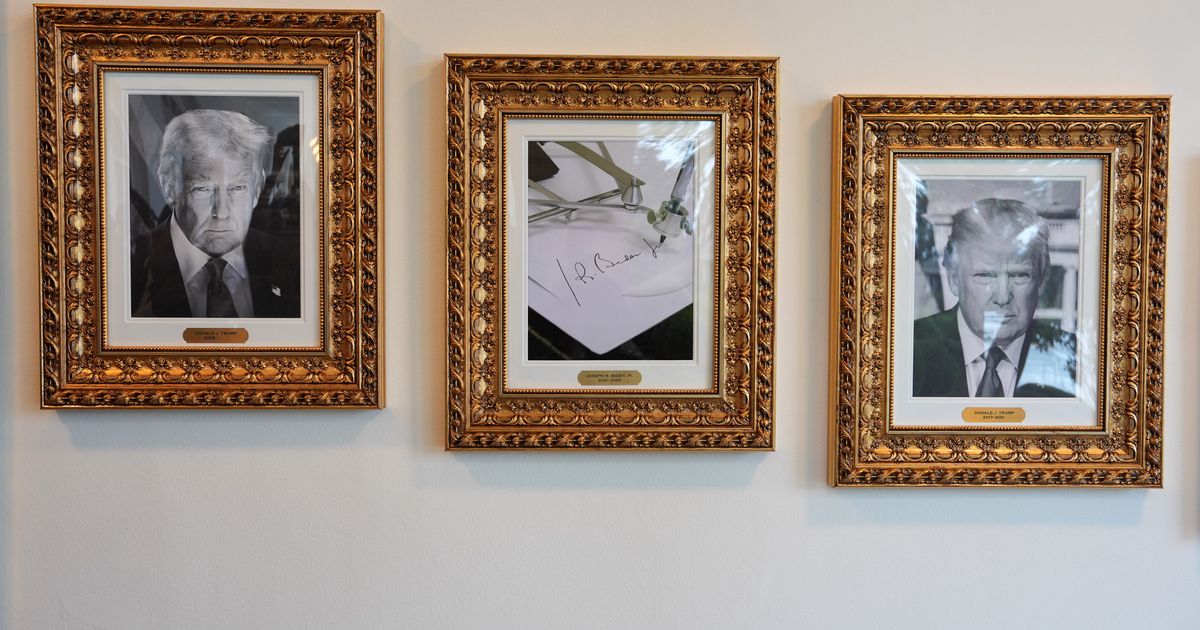
Former President Donald Trump declared on December 2 that pardons and other official documents signed using an autopen during President Joe Biden’s administration are “null, void, and of no further force or effect.” The announcement, made on Trump’s social media platform Truth Social, specifically targeted individuals who received pardons or commutations through this mechanical signature process.
“Anyone receiving ‘Pardons,’ ‘Commutations,’ or any other Legal Document so signed, please be advised that said Document has been fully and completely terminated, and is of no Legal effect,” Trump wrote.
Legal scholars, however, have pushed back against Trump’s claim, noting there is no constitutional foundation for a sitting president to invalidate pardons granted by predecessors.
“There is no viable way for the Justice Department to try to revive any impacted criminal charges against pardonees,” said Bradley Moss, a Washington, D.C.-based attorney specializing in national security law.
The controversy stems from allegations by Trump and his allies that Biden’s consistent signature across various documents indicated unauthorized use of an autopen. This narrative gained traction alongside concerns about Biden’s age and fitness for office during the final months of his presidency.
Biden directly addressed these accusations in a June interview with The New York Times, calling Trump and other Republicans “liars” for suggesting he was unaware of what he was signing. “I made every decision,” Biden stated, explaining that he had orally granted all the pardons and commutations but employed an autopen to expedite processing for numerous recipients.
Constitutional experts point out that the pardon power outlined in Article II makes no mention of signature requirements. Throughout American history, presidents including Barack Obama, John F. Kennedy, and Thomas Jefferson have utilized mechanical signing devices for official documents.
“The president possesses the power to pardon, but there is no specification (unlike for signing of bills) that this pardon be in writing,” explained Bernadette Meyler, a Stanford University constitutional law scholar.
A 2005 Justice Department memo issued during the George W. Bush administration further supports this view, stating: “The President need not personally perform the physical act of affixing his signature to a bill he approves and decides to sign in order for the bill to become law.”
For Trump’s declaration to have any practical effect, legal experts say the administration would need to formalize the process through proper channels—not simply a social media post. Federal authorities would then need to rearrest pardoned individuals or reinstitute charges against them, actions that would immediately trigger legal challenges.
Such cases would likely reference established precedent dating back to 1869, when a federal court ruled that “when a pardon is complete, there is no power to revoke it, any more than there is power to revoke any other completed act.”
If the administration attempted to prosecute someone previously pardoned by Biden, “that person could argue that they have been validly pardoned, and the judge could dismiss the claim then and there,” explained Michigan State University law professor Brian Kalt. The burden would fall on the Justice Department to prove Biden did not authorize the pardons—a claim directly contradicted by Biden’s public statements.
While there have been rare instances of presidents revoking their own pardons before implementation, there is no precedent for a president invalidating pardons granted by predecessors.
Frank O. Bowman III, emeritus law professor at the University of Missouri, summed up the legal consensus: “Biden has said he intended to issue the pardons. To me, that’s the end of the story.”
The White House has not issued an official response beyond referring inquiries back to Trump’s Truth Social statement.
Fact Checker
Verify the accuracy of this article using The Disinformation Commission analysis and real-time sources.

16 Comments
Interesting legal debate over the validity of Biden’s autopen-signed pardons. While Trump claims he can nullify them, legal experts say there’s no constitutional basis for that. Curious to see how this plays out in the courts.
Indeed, the legal scholars make a strong case that a sitting president can’t simply invalidate pardons granted by a predecessor. It will be worth watching how this unfolds.
This dispute over the validity of Biden’s autopen-signed pardons highlights the ongoing partisan tensions in US politics. While Trump may score political points with his base, the legal analysis suggests his claims are unlikely to hold up in court.
You’re right, this is yet another example of the deep political divisions in the country. Regardless of one’s views, it’s important to rely on the expertise of legal scholars and uphold the integrity of the justice system.
This debate over the validity of Biden’s autopen-signed pardons is a complex legal issue, but the analysis from experts indicates Trump’s claims are unlikely to hold up. It’s important to rely on the rule of law rather than political posturing.
Absolutely. The legal scholars make a compelling case that a sitting president cannot simply invalidate pardons granted by a predecessor, regardless of political affiliation. Upholding the integrity of the justice system should be the priority.
I’m curious to see if Trump’s challenge to the autopen-signed pardons gains any traction. The legal analysis suggests it’s a long shot, but it could still create uncertainty and controversy.
Agreed, even if Trump’s claims are ultimately rejected, the mere fact that he’s making them could sow confusion and division. The focus should be on upholding the rule of law, not political gamesmanship.
This seems like another attempt by Trump to undermine the legitimacy of Biden’s presidency. While he may try to challenge the pardons, the legal consensus appears to be that his claims lack merit.
You’re right, this feels more like political posturing than a valid legal argument. The experts cited make it clear there’s no precedent for a president to invalidate another’s pardons.
This seems like another example of Trump trying to undermine democratic institutions for his own political gain. While he may score points with his base, the legal experts make a compelling case that his claims have no basis.
Absolutely. Trump’s track record of making unfounded claims to cast doubt on legitimate government processes is well-established. The scholars cited here provide a reality check on the validity of his latest assertions.
It’s concerning to see a former president attempting to invalidate pardons granted by his successor. While Trump may believe he has a legal argument, the consensus from experts seems to be that his claims are unfounded.
I agree, the apparent lack of legal standing for Trump’s position is troubling. Regardless of one’s political affiliation, the peaceful transfer of power and respect for the rule of law should be paramount.
It’s concerning to see a former president like Trump making such bold claims about invalidating official government actions. The legal experts cited here make a strong case that his assertions lack any constitutional basis.
Agreed, this seems like a troubling attempt to undermine the legitimacy of the current administration. While Trump may believe he has a valid argument, the consensus from legal scholars suggests his claims are unfounded.