


Listen to the article
In a sweeping legal challenge, twenty states and Washington, D.C. have filed a lawsuit against the Trump administration over new federal homelessness policies that critics argue will increase street homelessness. The coalition claims the administration has fundamentally altered the Department of Housing and Urban Development’s Continuum of Care program without proper authorization, threatening billions in funding for permanent supportive housing initiatives.
Led by New York Attorney General Letitia James, the lawsuit contends the administration has redirected funds away from long-term housing solutions toward short-term transitional programs with work and treatment requirements. California Governor Gavin Newsom, whose state joined the legal action, accused the administration of “slashing federal money for permanent housing and replacing it with transitional housing tied to work mandates or treatment requirements.”
According to the filing, the policy changes put more than $3 billion in federal homeless-services grants at risk, potentially affecting over 170,000 people currently receiving housing support nationwide.
The legal complaint outlines three primary allegations: that HUD exceeded its statutory authority in implementing the changes; that the rule violates the Administrative Procedure Act, which governs how federal agencies develop regulations; and that the administration has infringed on Congress’s constitutional power to determine federal spending priorities.
The Trump administration has defended the shift as part of a broader strategy emphasizing accountability and faster transitions out of homelessness. Officials maintain the changes will improve outcomes by focusing on treatment and employment rather than simply providing housing. The case will now proceed through federal court, where judges must determine whether HUD’s actions fall within its legal authority.
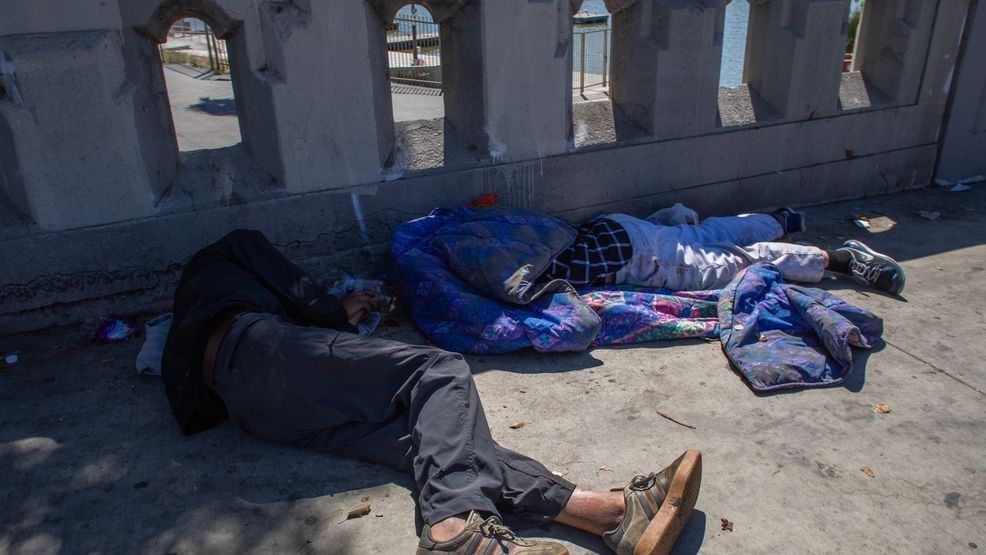
This federal policy dispute comes amid a significant shift in local approaches to homelessness following last year’s Supreme Court decision that upheld states’ rights to prohibit public camping. Cities across the country have implemented new enforcement measures including curfews, encampment clearances, and expanded policing, visibly altering urban landscapes in many communities.
However, homelessness experts caution that these enforcement actions may be addressing visibility rather than the underlying problem. A recent analysis from the National Alliance to End Homelessness concluded that sweeps and camping bans typically do not reduce homelessness and can instead create additional barriers to housing stability. The report documents how enforcement often results in lost identification documents, destroyed personal belongings, missed case management appointments, and accumulating fines that make it harder for people to secure permanent housing.
At the heart of these policy conflicts is a fundamental disagreement about the “Housing First” approach, which prioritizes getting people into stable housing without requiring sobriety or treatment participation as preconditions. The Trump administration has criticized this model, arguing it has evolved into a “housing-only” approach that fails to address underlying mental health and addiction issues.
The Capital Research Center, a conservative think tank, has highlighted California’s experience, noting a 47.1% increase in unsheltered homelessness after the state mandated that all homelessness funding follow Housing First principles between 2015 and 2019. However, housing advocates point out that the report fails to establish causation and ignores other factors affecting homelessness rates, including skyrocketing housing costs in major metropolitan areas.
These concurrent developments—a high-stakes federal lawsuit and proliferating local enforcement actions—represent sharply divergent approaches to addressing homelessness. As communities struggle with visible encampments and limited resources, the policy battle reflects deeper questions about the proper balance between housing assistance, behavioral health services, and enforcement measures in addressing one of America’s most persistent social challenges.
The outcome of the lawsuit could significantly reshape federal homelessness policy for years to come, affecting how communities nationwide approach the growing crisis of housing insecurity.
Fact Checker
Verify the accuracy of this article using The Disinformation Commission analysis and real-time sources.

6 Comments
It’s good to see states and cities pushing back against these federal policy changes that could jeopardize critical funding for homeless services. Homelessness is a serious issue that requires thoughtful, evidence-based solutions.
This is an important challenge to the administration’s homelessness approach. Redirecting funds away from long-term housing solutions toward more restrictive transitional programs doesn’t seem like the right way to address this complex social issue.
Homelessness is a difficult problem without easy answers, but the administration’s policy changes seem to be moving in the wrong direction. I hope the Supreme Court carefully considers the potential impact on vulnerable populations.
The administration’s shift from permanent housing to transitional programs with work and treatment requirements is concerning. Homelessness is a complex issue, and limiting long-term solutions could exacerbate the problem. I hope the court finds a balanced approach.
I agree, permanent supportive housing is often a more effective and humane approach than short-term transitional programs with strict requirements. This policy change seems misguided.
This is an interesting legal challenge to the Trump administration’s homelessness policy. It seems the changes could put a lot of funding and housing support at risk for vulnerable people. I’m curious to see how the Supreme Court will rule on this.