


Listen to the article
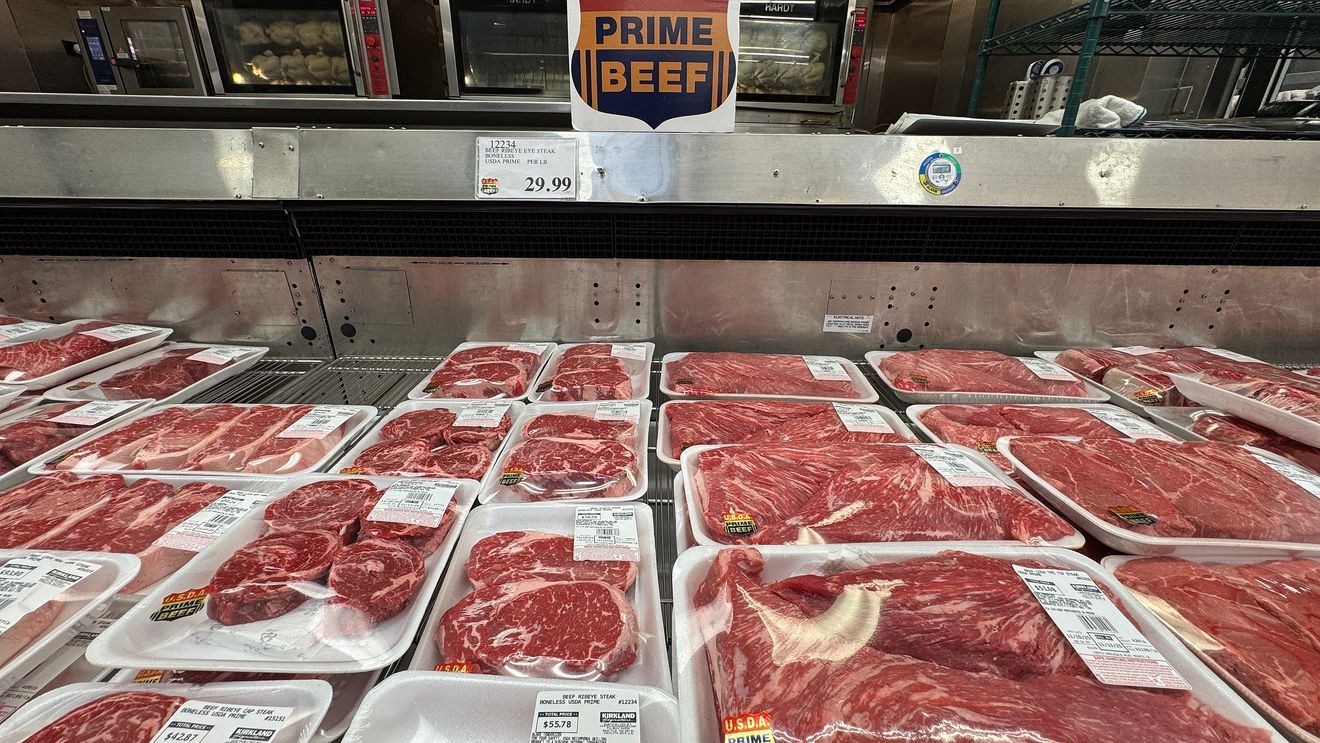
Record beef prices have sparked a federal investigation into the country’s largest meatpacking companies, as the gap widens between what consumers pay at grocery stores and what ranchers receive for their cattle.
Earlier this month, President Donald Trump directed the Department of Justice to launch a formal investigation into the nation’s dominant beef processors, citing concerns of potential collusion, price-fixing, and market manipulation. The White House statement emphasized the probe aims to restore competition in a market where just four companies control approximately 85% of U.S. beef processing capacity.
The investigation targets what industry insiders call the “Big Four” – JBS (a Brazil-based corporation), Cargill, Tyson Foods, and National Beef. The White House specifically noted that two of these companies, including JBS – the world’s largest meatpacker – are either foreign-owned or under significant foreign control.
This level of market concentration represents a dramatic shift from previous decades. According to the U.S. Department of Agriculture, the top four processors controlled only about 36% of the U.S. beef market in 1980, less than half their current dominance.
The transformation began during the 1980s and 1990s when major packers invested in massive, high-efficiency slaughter and processing facilities. These industrial-scale operations could process cattle at significantly lower costs than smaller regional plants. USDA’s Economic Research Service data shows that a typical plant owned by one of the top four processors handled about 417,000 head of cattle in 1980. By 2002, that volume had more than doubled to over one million head.
This dramatic increase in scale created a competitive environment where smaller operations simply couldn’t survive. As independent and regional processors closed or were acquired, the Big Four rapidly consolidated their control. By the mid-1990s, they dominated more than 80% of the nation’s beef processing capacity – a concentration that has only increased in subsequent years.
Interestingly, early USDA research suggested this consolidation wasn’t entirely negative for the industry or consumers. Studies from the 1990s found that larger plants achieved greater cost efficiencies, with some savings initially passing to consumers through lower retail prices. Higher demand benefited cattle producers through stronger prices for their livestock.
However, this balance shifted dramatically around 2015, according to USDA research. For decades, packers maintained excess plant capacity, creating an environment where they competed aggressively for cattle to keep their facilities operating efficiently. This competition helped support prices paid to ranchers.
Once the industry began operating at nearly full capacity, this competitive dynamic collapsed. Packers no longer needed to outbid each other to secure adequate cattle supplies. The price spread between what processors pay ranchers and what they earn selling boxed beef to retailers widened significantly. In some recent years, this price gap has doubled or even tripled compared to historical averages.
The Trump administration’s investigation comes as consumers face record-high beef prices at supermarkets nationwide, while many ranchers struggle with thin or negative profit margins. The contrast between consumer prices and producer returns has raised concerns about whether the market is functioning fairly.
The DOJ probe will examine whether the Big Four have used their dominant position to manipulate prices, restrict competition, or engage in anti-competitive practices that harm both consumers and producers. The White House states the investigation seeks to “restore competition” throughout the beef supply chain and ensure fair pricing from the ranch to the retail meat counter.
Analysts note this investigation represents one of the most significant federal actions addressing meat industry concentration in decades, with potential implications for food prices, agricultural policy, and rural economies across the country.
Fact Checker
Verify the accuracy of this article using The Disinformation Commission analysis and real-time sources.

10 Comments
This investigation could have significant implications for the beef industry and consumers. I hope it leads to meaningful reforms that restore competition and fairness. It will be interesting to track the findings and any actions that result.
Agreed. With so much at stake, this probe needs to be thorough and lead to tangible changes if any wrongdoing is uncovered. The outcome will be closely watched.
Seems like a complex issue with a lot of potential factors at play – from market concentration to foreign ownership to potential collusion. Glad to see the federal government taking a close look. Consumers and ranchers deserve transparency and fair prices.
It’s good to see the administration taking action on this. Beef prices have been skyrocketing, so it’s critical to understand if meatpackers are engaging in unfair practices that are driving up costs for consumers and squeezing ranchers. Transparency is needed.
Interesting that the meatpacking industry is coming under federal scrutiny. Wonder if this investigation will uncover any unfair practices or price manipulation that’s driving up beef prices for consumers. Curious to see what the findings reveal.
You raise a good point. With just a few major players controlling most of the market, there’s certainly potential for anticompetitive behavior that harms both ranchers and consumers.
The high level of foreign ownership or control of the dominant beef processors is an interesting angle. Wonder if that’s playing a role in the pricing and market dynamics. Looking forward to seeing what the DOJ investigation uncovers.
Yes, the foreign influence is a noteworthy factor. Ensuring a level playing field and preventing any undue foreign influence will be important for this probe.
The shift towards greater market concentration in beef processing over the decades is concerning. I hope this investigation can shed light on whether the dominant players have been abusing their market power. Healthy competition is important to keep prices fair.
Agreed. With just four companies controlling 85% of processing, that’s a highly consolidated industry. Restoring competition should be a key goal of this probe.