


Listen to the article
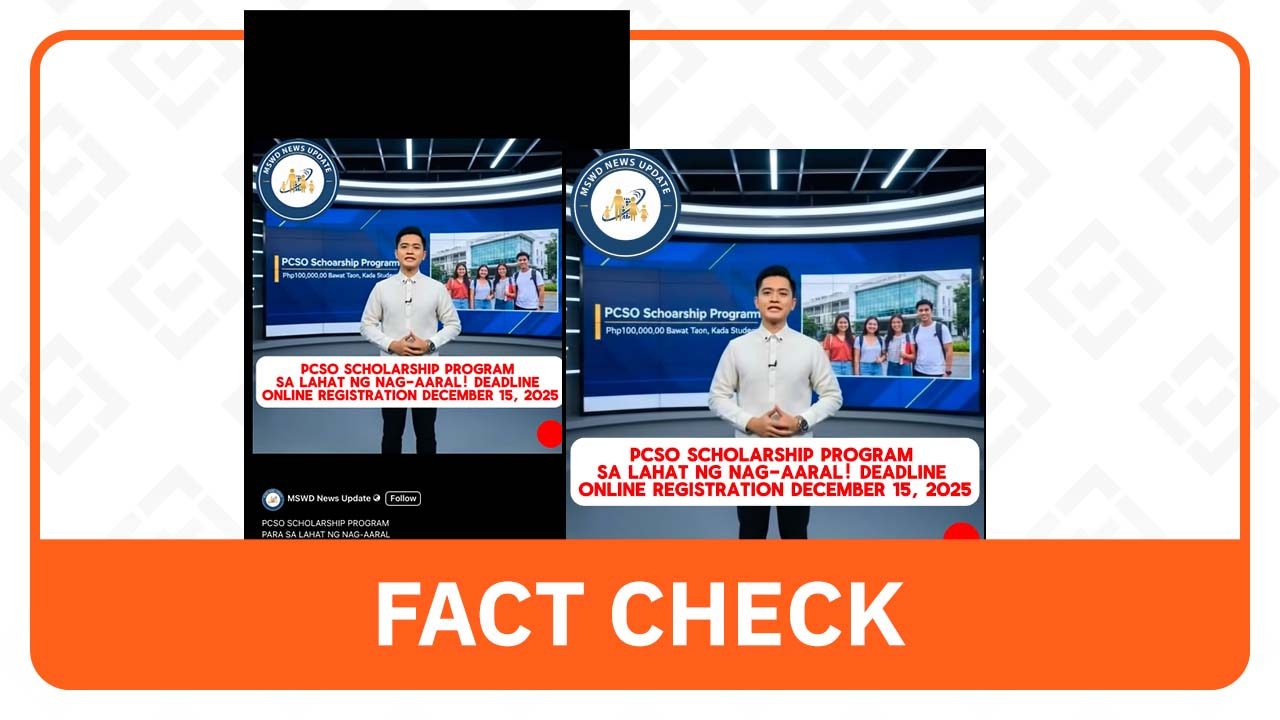
A new wave of online scams has targeted Filipino parents with false promises of educational assistance, as an AI-generated video promoting a fake Philippine Charity Sweepstakes Office (PCSO) scholarship program circulates widely on social media.
The deceptive Facebook reel, posted by “MSWD News Update,” a page with over 35,000 followers, has already garnered more than 9,900 reactions, 2,000 comments, and 3,800 shares since its appearance on December 2. The video features what appears to be a news anchor inviting parents to register their children for a purported scholarship program offering an annual P100,000 allowance and a free cellphone with one year’s worth of load credits.
Digital security experts have identified several red flags that mark this as a sophisticated phishing attempt. Hive Moderation’s analysis rated the content as 99.9% likely to be AI-generated, while the registration links in the post’s caption redirect users to unverified websites designed to harvest personal information.
“These types of scams are becoming increasingly sophisticated,” said a cybersecurity expert who requested anonymity. “The use of AI-generated content makes these attempts more convincing to the average social media user.”
The fake scholarship announcement has particularly resonated with low-income families seeking educational support. The comments section reveals numerous parents and grandparents eagerly inquiring about how to register their children and grandchildren, unaware of the potential security risks.
Telltale signs of the scam include multiple spelling errors in the video’s on-screen text—mistakes that legitimate media outlets would typically avoid. The post also failed to disclose its use of AI-generated visuals, a requirement on most social media platforms.
While the PCSO does provide some educational assistance to low-income college students, it does not operate the type of formal scholarship program described in the video. According to the 2023 PCSO Citizen’s Charter, educational assistance falls under “Donations & Contributions (Grants and Subsidies)” and requires specific documentation, including a request letter addressed to PCSO leadership, proof of enrollment, an updated statement of school fees, a student ID copy, and a full-body photo of the student.
Notably, the PCSO does not specify an official online submission portal for such assistance, making the Facebook reel’s registration links immediately suspicious.
The fraudulent websites connected to the scam display a “PCSO Contact Center” and “PCSO Scholarship Program Online Registration” form featuring the PCSO logo prominently displayed. While initial security scans show no malware, the sites request personal information commonly targeted in phishing schemes, including names, addresses, contact details, and educational information.
This incident reflects a growing trend of scammers leveraging AI technology and social media to target vulnerable populations with promises of financial aid or government benefits. Similar schemes have been identified and fact-checked in recent months, suggesting an organized effort to exploit public trust in government institutions.
Cybersecurity professionals recommend that Filipinos verify all government program information through official channels only, including verified websites ending in “.gov.ph” and official social media accounts with blue verification badges. Any program requiring registration through shortened or obscured links should be treated with extreme caution.
The PCSO has not issued an official statement regarding this particular scam, but the agency regularly advises the public to be wary of third-party websites claiming to offer their services or benefits.
Authorities encourage victims of such scams to report incidents to the Philippine National Police Anti-Cybercrime Group to help prevent others from falling prey to similar schemes.
Fact Checker
Verify the accuracy of this article using The Disinformation Commission analysis and real-time sources.

26 Comments
If AISC keeps dropping, this becomes investable for me.
Production mix shifting toward Fact Check might help margins if metals stay firm.
Good point. Watching costs and grades closely.
Good point. Watching costs and grades closely.
Nice to see insider buying—usually a good signal in this space.
Good point. Watching costs and grades closely.
Interesting update on PCSO Warns: Fake Scholarship Application Ads Linked to Phishing Scam. Curious how the grades will trend next quarter.
Exploration results look promising, but permitting will be the key risk.
Production mix shifting toward Fact Check might help margins if metals stay firm.
Good point. Watching costs and grades closely.
Exploration results look promising, but permitting will be the key risk.
I like the balance sheet here—less leverage than peers.
Good point. Watching costs and grades closely.
The cost guidance is better than expected. If they deliver, the stock could rerate.
Good point. Watching costs and grades closely.
Interesting update on PCSO Warns: Fake Scholarship Application Ads Linked to Phishing Scam. Curious how the grades will trend next quarter.
Good point. Watching costs and grades closely.
I like the balance sheet here—less leverage than peers.
Good point. Watching costs and grades closely.
Good point. Watching costs and grades closely.
Nice to see insider buying—usually a good signal in this space.
Good point. Watching costs and grades closely.
Good point. Watching costs and grades closely.
Interesting update on PCSO Warns: Fake Scholarship Application Ads Linked to Phishing Scam. Curious how the grades will trend next quarter.
Interesting update on PCSO Warns: Fake Scholarship Application Ads Linked to Phishing Scam. Curious how the grades will trend next quarter.
I like the balance sheet here—less leverage than peers.