


Listen to the article
Oklahoma’s Data Center Boom Clouded by Misinformation and Secrecy
Oklahoma’s rapidly expanding data center industry is generating significant economic activity across the state, but a fact-checking investigation by The Frontier has revealed numerous misleading claims surrounding these massive projects.
The investigation examined statements from public officials, industry representatives, and media reports about data centers in Oklahoma, finding several instances where information shared with the public fails to align with documented facts.
One prominent misconception involves Oklahoma’s “Behind the Meter” legislation. Former Democratic state legislator Jason Dunnington claimed during a television interview that the law “requires data centers to generate and pay for their own electricity rather than drawing power from the public grid.” This claim, subsequently repeated in news reports by KOTV and KWTV, was found to be false.
Senate Bill 480, passed during the 2025 legislative session and signed by Governor Kevin Stitt, actually permits but does not require data centers to build their own power generation facilities. The legislation allows companies to transmit electricity from their own power facilities without Oklahoma Corporation Commission oversight, provided any unregulated generation includes a natural gas component.
The investigation also revealed that Dunnington, who made these claims, is a registered lobbyist for several technology industry groups with direct interests in Oklahoma’s data center development, including Intersect Power and MidAmerica Industrial Park in Pryor. This relationship was not disclosed to viewers during his television appearance.
When confronted about the inaccuracies, Dunnington defended his statements and indicated he was forwarding The Frontier’s inquiry to his attorney. Griffin Media, which owns the stations that aired the interview, did not respond to requests for comment.
Another misleading claim concerns power costs for residential customers. At a July 16 Tulsa County Commissioners meeting, Public Service Company of Oklahoma (PSO) representative Michael Gordan stated that the massive Project Clydesdale data center would not negatively impact residential customers’ power bills. The Frontier rated this claim as “mixed.”
While Project Clydesdale is paying for a new substation and transmission infrastructure, the center will be grid-connected and not generate its own power. Simultaneously, PSO is seeking regulatory approval for rate increases averaging $10 monthly per customer to finance over $1.2 billion in new generation capacity, partly due to increased demand from data centers and other large industrial users.
In testimony to the Oklahoma Corporation Commission, PSO has acknowledged the growing power demands from new customers, including data centers. The utility claims it has implemented protective measures for existing customers, including different rate schedules for larger users and financial security requirements for new industrial customers.
The investigation also challenged industry claims about increased transparency. Emily Sullivan, president of Oklahoma’s AFCOM chapter, a data center trade group, asserted that data centers are becoming less secretive, stating: “Historically, these projects were secretive — code names, closed-door deals. Now, we’re seeing more transparency.”
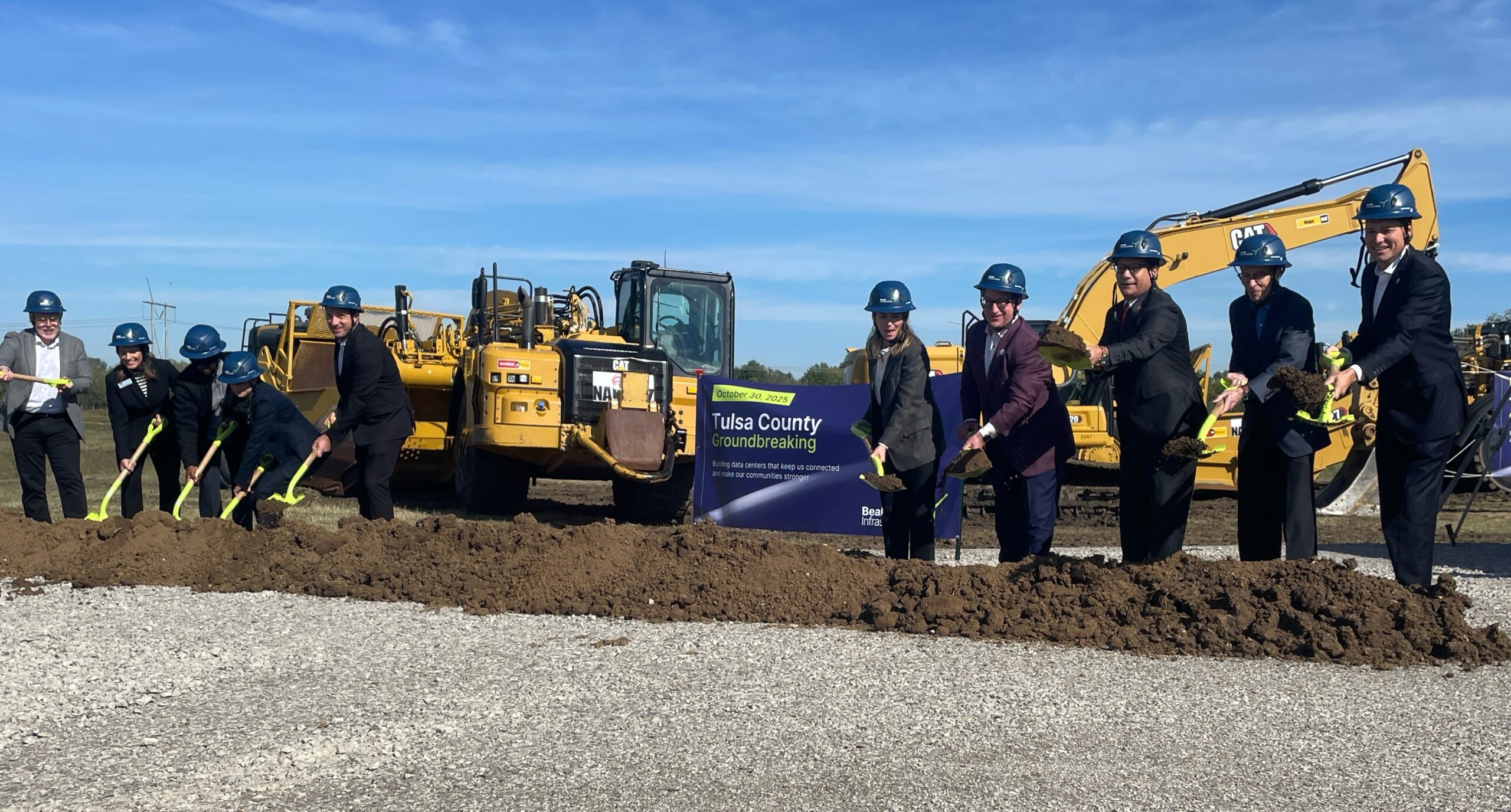
The Frontier rated this claim “mostly false,” noting that several major data center projects in Oklahoma continue operating behind veils of secrecy. Voters in Stillwater approved a power agreement for an unnamed company in November 2024, only learning months later that Google would operate the facility. Similarly, Beale Infrastructure’s developments in Tulsa County (Projects Clydesdale and Anthem) and Coweta (Project Atlas) have not revealed their end users, despite the latter being described as “one of the major U.S. tech giants.”
This investigation highlights the complex relationship between data centers, utilities, local governments, and Oklahoma residents, as the state navigates the opportunities and challenges of becoming a major data center hub. While these facilities bring economic development, questions remain about transparency, energy costs, and the accuracy of information shared with the public.
Fact Checker
Verify the accuracy of this article using The Disinformation Commission analysis and real-time sources.

13 Comments
It’s concerning to see misleading claims being made about Oklahoma’s data center industry. Transparency and factual reporting are crucial for holding companies and officials accountable.
Absolutely. The public deserves accurate information, not distortions, when it comes to major economic developments in their state.
This fact-checking investigation highlights the need for greater scrutiny and accountability around Oklahoma’s data center industry. Accurate, transparent reporting is crucial for the public interest.
The investigation’s findings on the “Behind the Meter” legislation are eye-opening. It’s important that the public understands the nuances of these policies and doesn’t accept unsubstantiated claims at face value.
Agreed. Clear and truthful communication from lawmakers and industry leaders is essential for building public trust and making informed decisions.
This data center boom in Oklahoma raises a lot of interesting questions about the balance between economic growth and transparency. I hope the authorities take these issues seriously and provide more clarity.
Yes, finding that balance is crucial. The public deserves to know the full picture, both the benefits and potential drawbacks of these large-scale projects.
The findings in this report underscore the importance of critical analysis and independent verification when it comes to claims made about major economic initiatives. Transparency should be a top priority.
Well said. Reliable, unbiased information is essential for the public to make informed judgments about the costs and benefits of these projects.
This investigation raises valid questions about the accuracy of information being shared with the public regarding Oklahoma’s data center development. Fact-checking is crucial for maintaining trust.
The discrepancies between official claims and documented facts highlighted in this report are concerning. Robust oversight and transparency are essential for ensuring the public’s interests are protected.
Absolutely. Data centers can have significant impacts on local communities, so it’s vital that decision-making processes are open and truthful.
It’s good to see a fact-checking investigation shining a light on potential misinformation around Oklahoma’s data center industry. This kind of scrutiny is important for holding everyone accountable.