


Listen to the article
The Trump administration’s recent military operations against suspected drug smuggling vessels in the Caribbean Sea and Pacific Ocean have sparked controversy, with President Donald Trump making bold claims about their effectiveness in saving American lives.
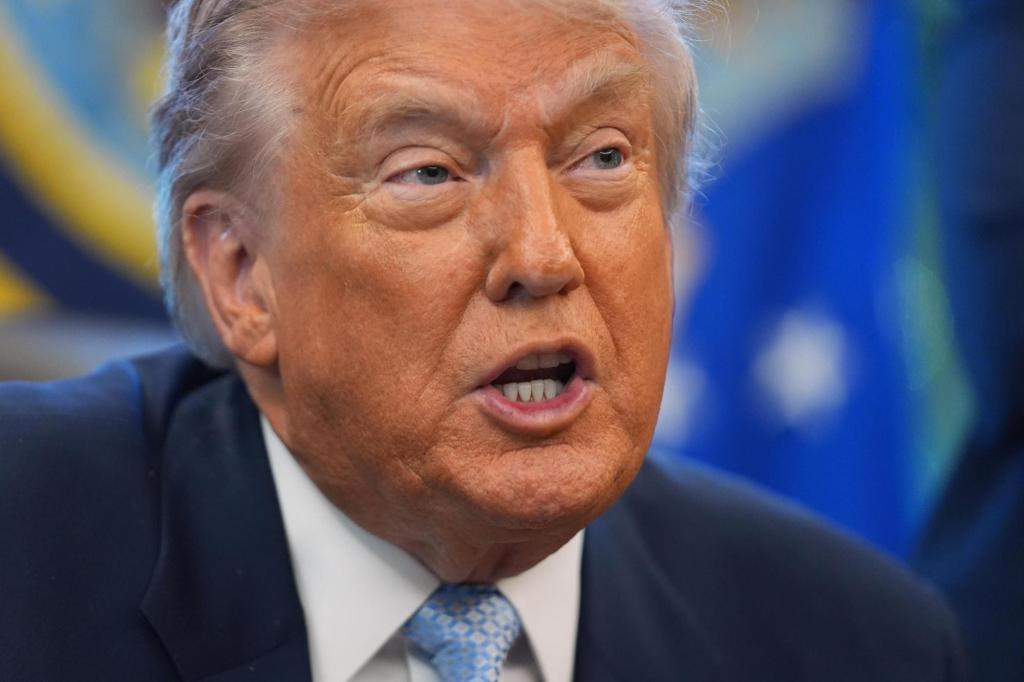
Since September, U.S. forces have conducted 21 strikes on boats in these waters, with the most recent attack occurring on November 15. Trump has repeatedly asserted that “every boat we knock out, we save 25,000 American lives,” a claim he reiterated Monday while announcing a new initiative to expedite visa interviews for World Cup visitors to the United States next year.
Public health experts, however, have strongly challenged the president’s assertions, calling them mathematically impossible and scientifically unsupported.
“The statement that each of the administration’s strikes on alleged drug-smuggling boats saves 25,000 lives is absurd,” said Carl Latkin, a Johns Hopkins University public health professor who specializes in substance use research. “The evidence is similar to that of the moon being made of blue cheese. If you look carefully, you will see a resemblance. However, a close analysis of this claim suggests that it lacks all credibility.”
The latest preliminary data from the Centers for Disease Control and Prevention (CDC) reveals approximately 97,000 drug overdose deaths in the U.S. during the 12-month period ending June 30—down 14% from an estimated 113,000 in the previous 12-month period. Final CDC reports show 53,336 overdose deaths in 2024 and 75,118 in 2023.
Using Trump’s calculation, the 21 military strikes would have prevented 525,000 fatal drug overdoses in just two months—a figure that far exceeds the actual number of overdose deaths that typically occur during such a period. This essentially suggests the administration is saving more lives than would have ever been lost, a mathematical impossibility.
Lori Ann Post, director of the Institute for Public Health and Medicine at Northwestern University, explained that “there’s no empirically sound way to say a single strike ‘saves 25,000 lives,'” even when considering broader interpretations that include preventing substance use disorders and their societal effects. Post, who studies drug overdose deaths and economic drivers of the opioid crisis, noted the lack of verifiable cargo data and published models linking boat strikes to changes in drug use patterns.
“The math and the data are not there,” Post emphasized.
When asked for evidence supporting the president’s claims, White House spokesperson Anna Kelly defended Trump’s statements, saying, “President Trump is right—any boat bringing deadly poison to our shores has the potential to kill 25,000 Americans or more.”
Trump has justified these military actions by claiming the U.S. is in “armed conflict” with drug cartels and alleging the vessels are operated by foreign terrorist organizations. Neither the president nor his administration has publicly confirmed the quantity of drugs allegedly destroyed in these operations.
The geographic focus of these strikes also raises questions about their effectiveness in addressing the current overdose crisis. CDC data shows that opioids accounted for 73.4% of drug overdose deaths in 2024, with 65.1% specifically attributed to illegally manufactured fentanyl. However, fentanyl typically enters the U.S. via land routes from Mexico, where it is produced using chemicals imported from China and India—not through maritime channels in the Caribbean.
Latkin further explained that the president’s claims ignore market realities. “It’s incredibly naive to think that reducing the supply in one place will eradicate the problem because it’s such a massive business,” he said, comparing it to thinking that closing a few fast food restaurants would significantly improve Americans’ health when many other similar establishments remain operational.
The U.S. has been battling an evolving overdose crisis for decades, beginning with prescription opioids in the 1990s, followed by heroin, and now dominated by illicit fentanyl. Recent CDC data shows a continued decline in overdose deaths that began in 2023, which experts attribute to multiple factors including the end of the COVID-19 pandemic, increased availability of naloxone and addiction treatments, and potential changes in the drugs themselves.
Fact Checker
Verify the accuracy of this article using The Disinformation Commission analysis and real-time sources.

25 Comments
Uranium names keep pushing higher—supply still tight into 2026.
Good point. Watching costs and grades closely.
Good point. Watching costs and grades closely.
Silver leverage is strong here; beta cuts both ways though.
Good point. Watching costs and grades closely.
Good point. Watching costs and grades closely.
Uranium names keep pushing higher—supply still tight into 2026.
If AISC keeps dropping, this becomes investable for me.
Good point. Watching costs and grades closely.
Good point. Watching costs and grades closely.
Interesting update on No Evidence That Strikes on Alleged Drug Vessels Save 25,000 Lives. Curious how the grades will trend next quarter.
Silver leverage is strong here; beta cuts both ways though.
I like the balance sheet here—less leverage than peers.
Good point. Watching costs and grades closely.
Good point. Watching costs and grades closely.
Nice to see insider buying—usually a good signal in this space.
Good point. Watching costs and grades closely.
Exploration results look promising, but permitting will be the key risk.
Good point. Watching costs and grades closely.
The cost guidance is better than expected. If they deliver, the stock could rerate.
Good point. Watching costs and grades closely.
Good point. Watching costs and grades closely.
If AISC keeps dropping, this becomes investable for me.
Good point. Watching costs and grades closely.
Good point. Watching costs and grades closely.